


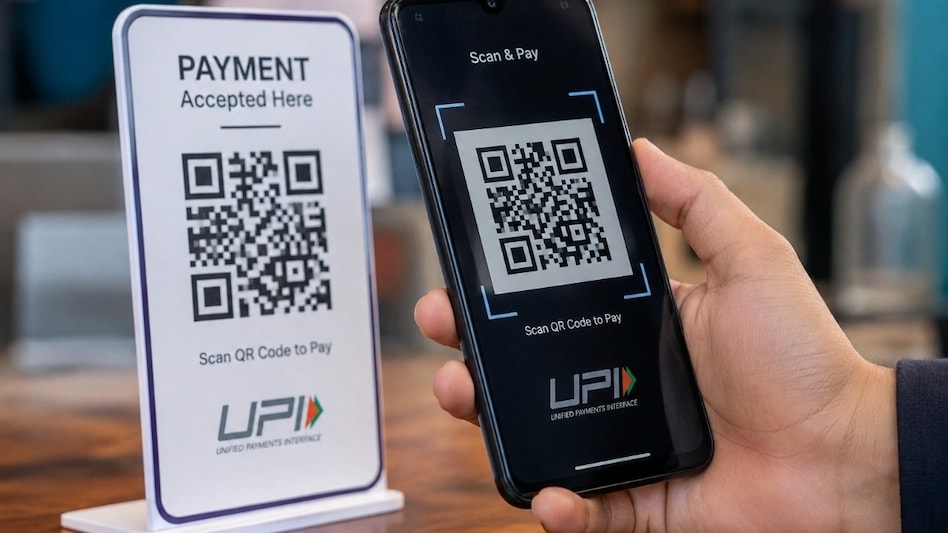
 The move comes amid growing concerns within the banking and fintech industry over the financial sustainability of India's rapidly expanding UPI ecosystem.
Large merchants and e-commerce platforms could soon bear a nominal Merchant Discount Rate (MDR) on Unified Payments Interface (UPI) transactions as the government explores a framework aimed at ensuring the long-term sustainability of India's digital payments ecosystem, according to sources familiar with the discussions.
Sources told Business Today TV that the proposal under consideration is driven primarily by cost recovery rather than revenue generation. Banks and payment ecosystem participants are estimated to be incurring annual losses of nearly ₹5,000-6,000 crore due to the absence of MDR on UPI transactions.

 'Methodology is very robust': Former statisticians back GDP base year revision
 FCNR deposit bonanza: Economists explain why deft liquidity management will be key
 ‘Painful to hear allegations of data jugglery’: MoSPI secretary Saurabh Garg says every data is verifiable
 ₹1,800 crore Ultravolt bet: Aditya Birla Group enters wires and cables market, targets top two spot in 5 years
 $136 billion forex inflow gives rupee a lift, takes it to two-month high
 Maruti Suzuki Sees Strong Demand Ahead; ‘No Reason Why We Should Not Sustain Volumes’: Partho Banerjee
 Ultravolt: Birla’s New Wires & Cables Bet | Kumar Mangalam Birla Explains The Opportunity
 Why Did India’s GDP Fall From ₹86L Cr To ₹80L Cr? | MoSPI Secy Dr. Saurabh Garg Explains
 India Back To ‘A’ Rating After 38 Years: N K Singh Explains The Big Economic Shift
 Exposing The GDP Controversy: Why Subhash Garg's Math Is Flawed
 Coal India, Finolex Cables, Gulf Oil, Federal-Mogul Goetze among stocks to turn ex-dividend tomorrow, details here
 Fintech smallcase launches US stock, ETF portfolios for Indian investors
 Sensex plunges over 2,100 points in 3 minutes; what happened in final 5 minutes?
 Britannia, Tata Consumer, Marico: What should investors do as commodity inflation rise
 How EV-themed stocks could impact sentiment on Maruti Suzuki counter Maruti Suzuki Sees Strong Demand Ahead; ‘No Reason Why We Should Not Sustain Volumes’: Partho BanerjeeUltravolt: Birla’s New Wires & Cables Bet | Kumar Mangalam Birla Explains The OpportunityWhy Did India’s GDP Fall From ₹86L Cr To ₹80L Cr? | MoSPI Secy Dr. Saurabh Garg ExplainsIndia Back To ‘A’ Rating After 38 Years: N K Singh Explains The Big Economic ShiftExposing The GDP Controversy: Why Subhash Garg's Math Is Flawed












