












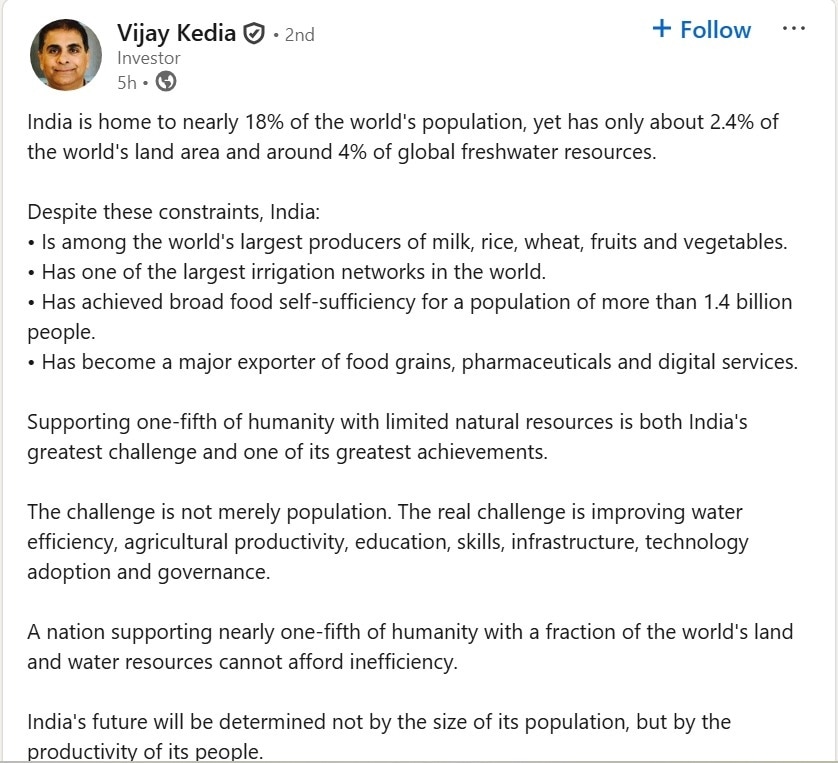



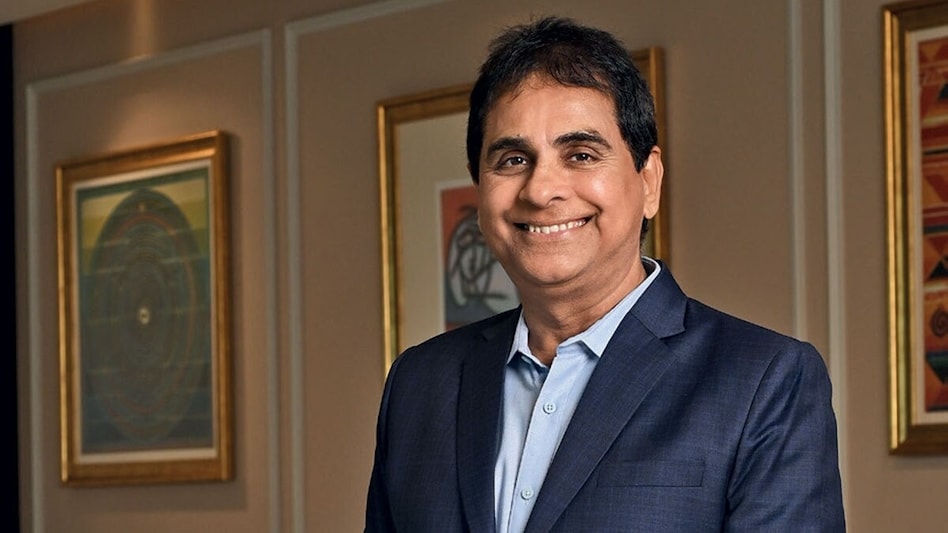
 Vijay Kedia calls India’s rise a global achievement
Ace investor Vijay Kedia on Thursday said India's future would depend not on the size of its population but on the productivity of its people. He highlighted the country's ability to support nearly one-fifth of humanity despite limited land and water resources.
Don't Miss: Oil at $140, rupee near 100? Gita Gopinath warns India faces tough economic shock

 Mahindra takes battery-as-a-service to entire electric SUV line-up
 Closing Auction Session: Why the system expected to reduce volatility is still seeing occasional wild swings
 Reliance Industries denies Subhash Chandra’s media allegations
 Silver may be cheaper than gold as 2026 draws to a close: Report
 India paid 29% more for cooking gas after Hormuz strikes: Report
 CMF Buds Neo Review | Tech Gear | Business Today
 Gen Z Is Changing Politics? D.K. Shivakumar On Youth Power & Rahul Gandhi’s Outreach
 Babita Singh Reporting, Part-Timers, Bandar & More: 5 OTT Releases To Watch This Weekend
 Using AI To Write? You Could Be Caught! Anthropic's Invisible Watermark Explained
 Shah Rukh, Salman & Madhuri-Backed Pernia’s Pop-Up Shop Parent Eyes ₹680 Cr IPO
 Jio Platforms IPO gets SEBI nod: Rs 27,500 crore debt repayment plan, $100 billion valuation in focusClosing Auction Session: Why the system expected to reduce volatility is still seeing occasional wild swings
 RIL-backed penny stock hits 52-week low; firm clarifies on high trading volume
 Happiest Minds shares slip despite IT stocks surge; here's what is weighing on the stock
 BEL, Solar Industries shares remain Nuvama's top defence picks; here's what it said on BDL, Data Patterns, HAL
 India’s 15-metre giant: The sleeper bus changing the future of long-distance travel
 Apple’s CEO History: Who led the company before Steve Jobs and Tim Cook?
 September 9 surprise: Apple could unveil more than just a new iPhone
 Special FD rates in August 2026: DCB Bank, Indian Bank, Federal Bank and Union Bank offer higher returnsCMF Buds Neo Review | Tech Gear | Business Today


