


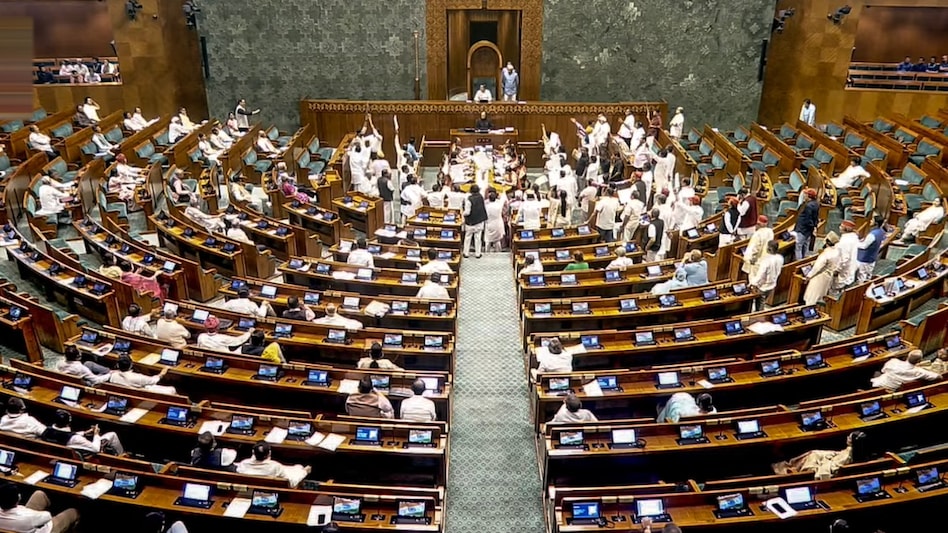
 FCRA bill sent to a JPC, report to be submitted in Winter Session
The Lok Sabha on Wednesday approved a motion to send the Foreign Contribution (Regulation) Amendment Bill, 2026, to a 31-member Joint Parliamentary Committee (JPC) for detailed scrutiny amid strong Opposition protests and demands for withdrawal of the legislation.
The motion was moved by Minister of State for Home Nityanand Rai as Opposition MPs raised slogans demanding the presence of Home Minister Amit Shah in the House. The proposed JPC will have 21 members from the Lok Sabha and 10 from the Rajya Sabha, with the respective members to be nominated by Speaker Om Birla and Rajya Sabha Chairman CP Radhakrishnan.

 NTPC and Adani apply under Rs 37,500 crore coal gasification scheme
 'India's fintech story has been amazing... A big champion of this is UPI': PM Modi
 Why Titan Company stock is top jewellery pick ahead of festive season
  Chandigarh suspends Uber, Rapido licences for 6 months for failing to comply with rules
 Fake PMO ID, armed bodyguard: Two detained at Mumbai venue ahead of PM Modi event
 “Files Used To Get Stuck”: PM Modi Takes Dig At Delays, Hails 2,800 Km Freight Corridor
 Indegene’s Growth Story: Global Expansion, AI & The Future Of Healthcare Tech
 Ambareesh Baliga Turns Bullish On Specialty Chemicals, Bets On Archean Chemicals & Vinati Organics
 Gold Loan Rise Faces Risk? Ambareesh Baliga Flags Correction Threat For NBFCs
 Hindustan Copper Set To Rise 10-12% From Current Market Price
 Nifty 50 returns have been flat for 2 years. What should investors expect over the next 12 months? DSP mutual fund’s Sahil Kapoor explains
 Hindustan Copper shares jump nearly 5%; what's next on tech charts?Why Titan Company stock is top jewellery pick ahead of festive season
  Archean Chemical, Vinati Organics: Specialty chemical stocks to buy during correction
 Sensex slumps 555 points; Nifty briefly slips below 23,400 amid CAS volatility
 New EPF advance rules: Withdrawal provisions made easier for members
 UGC-NET candidates in Delhi alert: BRICS Summit may cause traffic delays, here’s what NTA advises
 'Mahanayak' Uttam Kumar@100: PM Modi shares special reel, Govt to issue ₹100 silver coin
 'From files to final track': PM Modi hails completion of India’s 2,843 km Dedicated Freight Corridor
 ₹1.38 crore worth of expired, mislabelled food seized from Amazon, Swiggy Instamart facilities in Bengaluru












