


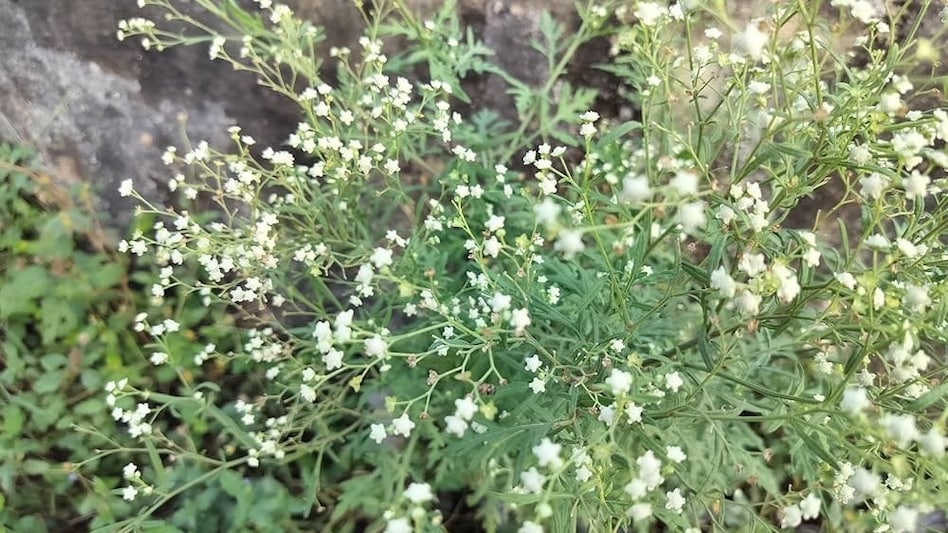
 It competes with crops and native vegetation for space and nutrients, reducing agricultural productivity and threatening biodiversity.
 It did not arrive as a dangerous pest or an exotic species deliberately brought into India. It came quietly, mixed with food grain at a time when the country was battling a severe shortage of food. More than seven decades later, that accidental arrival has become one of India's most persistent invasive-weed problems.
Parthenium hysterophorus, commonly known as gajar ghas, Congress grass or carrot weed, is now found across large parts of the country. The plant, native to tropical and subtropical regions of the Americas, is believed to have entered India with wheat imported from the United States in the early 1950s. ICAR says it was first noticed around Pune in 1955-56. (Indian Council of Agricultural Research)

 India adds 2.6 AI jobs for every role lost, but a widening skills gap threatens freshers: Report
 Nearly $500 billion in debt issued in 2026: Is big tech borrowing too much for AI boom?
 US may scrap 60-day job search window: What it means for Indians facing job loss on H-1B visas
 99.95% punctuality record: How Delhi Metro beat New York & Paris subways at the reliability game
  Mahindra Group ropes in Cummins India MD Shveta Arya as Chief Strategy Officer
 FIIs Could Return As Rupee Stabilises | Dikshit Mittal's Big Currency Call
 Where Is Smart Money Going? LIC Mutual Fund Reveals Its Biggest Sector Bets For Investors
 How Much Health Insurance Cover Is Enough? Expert Shares The Ideal Sum Insured For Every Family
 Corporate Health Cover Vs Personal Health Insurance: What Every Employee Must Know
 Large Cap, Mid Cap Or Small Cap Funds: Which Mutual Fund Should You Choose For Better Returns?
 Samvardhana Motherson Q1 earnings: Management eyes topline of $108 billion by 2030
 Upcoming IPOs: 5 mainboard issues to Rs 7,500 cr next week; three other to make D-st debut
 Poonawalla Fincorp: Planning to buy the NBFC stock? Here's what expert says
  Adani Green shares down 16% from July high; is it time to buy this Adani stock? Targets
 Short-term buy ideas: 2 stocks that Pradip Halder is betting on
 Monsoon forecast till August 15: IMD issues heavy rainfall alert for these regions
 Too little darkness: How artificial light at night is harming humans and wildlife
 From India to Texas: How the nilgai became a feral invasive species in US
 Jharkhand exam row: Govt mulls cancelling exams, 3 PSC members resign; students hold firm
 Air India Phuket-Delhi flight: Civil Aviation Ministry grounds both pilots amid probe










