


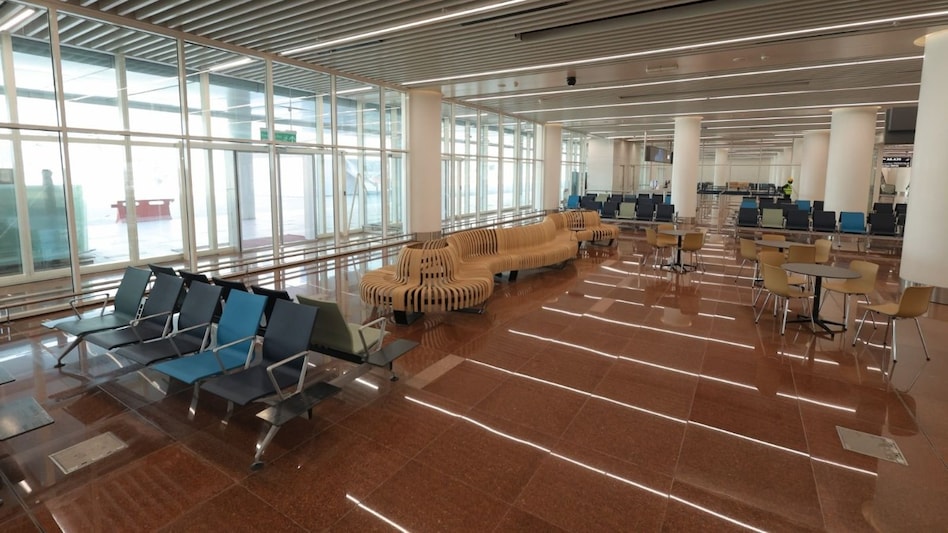
 The launch of the airport marks a key milestone in strengthening India’s aviation infrastructure. Envisioned as a major international gateway for the NCR, the facility will complement operations at Indira Gandhi International Airport.
India’s infrastructure push gets a major lift as Prime Minister Narendra Modi is set to inaugurate the Noida International Airport, signalling a big step in expanding the country’s aviation capacity. Positioned as a second major gateway for the National Capital Region, the project underscores India’s ambition to emerge as a global aviation hub.
The Prime Minister will visit Uttar Pradesh on March 28, 2026, where he will first undertake a walkthrough of the terminal building at Noida International Airport in Gautam Buddha Nagar around 11:30 am. This will be followed by the inauguration of Phase I of the airport at noon, after which he will address a public gathering.

 Will RBI raise interest rates in October? Here’s what experts have to say
 Bitter Friday for Nestlé: Russia seizes assets as Moscow targets Western firms over Ukraine support
 West Asia impact: Saudi Aramco halts European crude allocations after East-West pipeline attack
 Tata Electronics partners with Japanese, Malaysian firms to boost semiconductor manufacturing in India
 From selling gold to spending ₹3.5 lakh: iPhone 18 Pro fever hits India as fans queue up on sale day
 “Unacceptable And Unprofessional”: MEA Rejects Pakistan’s Claims Over INS Kolkata Collision
  Commodity Trading For Beginners: How MCX & NCDEX Work | Trading Basics | Money Today
 US Fed Rate Hikes A Headwind For Foreign Flows? | Jibi Jacob | Jefferies
 ₹25 Billion FII Outflow: What Could Bring Foreign Investors Back? | Jefferies' Jibi Jacob
 India’s Private CapEx Picks Up: Christopher Wood On The Market Outlook
 Jindal Supreme, SS Retail, Hero Motors IPOs subscribed up to 181 times on final day; details here
 Sensex, Nifty post sixth weekly loss; TCS, Titan among top laggards, slip up to 4%
 How AI collapse could benefit Indian equity market; Jefferies' Christopher Wood explains
  Banks are no more secular growth story, prefer NBFCs: Chris Wood
 Jefferies' Christopher Wood sees gold at $10,000 'sooner or later'; likes India's small, midcaps
 Canada visa processing: Indians get faster visitor visas, Super Visa wait hits 70 days
 Countries with the highest take-home pay: Switzerland tops global ranking, Check full list here
 Fueling India’s tech surge: NaBFID lines up ₹3,000 crore loans for data hubs
 Panic button: California governor issue order for mandatory kill switch on advanced rogue AIWest Asia impact: Saudi Aramco halts European crude allocations after East-West pipeline attack












