


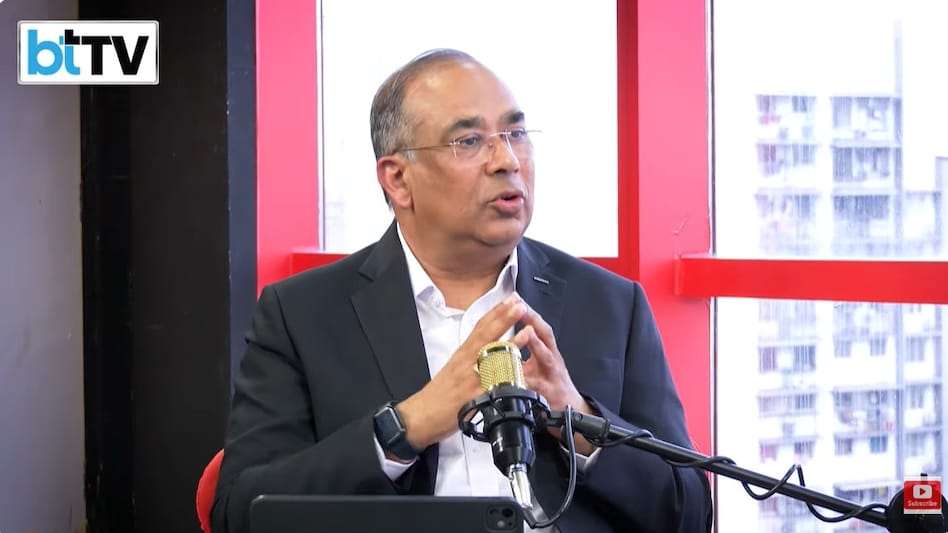
 Sunil Mathur said AI will be critical if India is to achieve its ambition of raising manufacturing's share of GDP from 15% to 25%.
Artificial intelligence (AI) is set to transform manufacturing jobs rather than eliminate them, according to Sunil Mathur, Managing Director and CEO of Siemens India, who believes the technology will create new opportunities while making continuous upskilling essential for workers.
Speaking on the Business Today Podcast, Mathur sought to address growing concerns that automation and AI will replace human workers in factories. "I am much more positive and much more optimistic on the question of jobs," he said. "I think jobs will change. They won't go away, but jobs will change. The nature of jobs will change. When we went from the bicycle to the motorcar, jobs changed. When we went from the motorcar to the airplane, jobs changed. And productivity changed. And growth rates changed, right?"

 'Methodology is very robust': Former statisticians back GDP base year revision
 ‘Painful to hear allegations of data jugglery’: MoSPI secretary Saurabh Garg says every data is verifiable
 ₹1,800 crore Ultravolt bet: Aditya Birla Group enters wires and cables market, targets top two spot in 5 years
 $136 billion forex inflow gives rupee a lift, takes it to two-month high
 India competitively better placed amid uncertain times, says Piramal Group chairman Ajay Piramal
 Auto Industry Price Hikes Remain Marginal: Hyundai India MD Tarun Garg
 EXCLUSIVE | MoSPI Secretary Saurabh Garg On 7.8% GDP | Rejects Data Manipulation Claims
 AI Is Moving To The PC: Dell’s Jacinta Quah On India’s 51% Adoption
 From Air Marshal To Ram Lalla’s Guardian: Meet The New CEO Of Ayodhya’s Ram Temple Trust
 Global Bond Carnage: Why Global Bond Yields Are Exploding - And What It Costs You
 Fintech smallcase launches US stock, ETF portfolios for Indian investors
 Sensex plunges over 2,100 points in 3 minutes; what happened in final 5 minutes?
 Britannia, Tata Consumer, Marico: What should investors do as commodity inflation rise
 How EV-themed stocks could impact sentiment on Maruti Suzuki counter
  HDFC Bank, PNB, SBI, RBL, Federal Bank, Axis, ICICI, Kotak Bank: Share price targets
 ‘We are grateful to India’: Zelensky praises India’s push to end Russia-Ukraine war during Jaishankar talks
 At Davos 2026, Gita Gopinath was asked about India's GDP data methodology. Her response
 Who is the 'Frontier Professional'? Meet the New AI worker and why India is leading the way₹1,800 crore Ultravolt bet: Aditya Birla Group enters wires and cables market, targets top two spot in 5 years'Methodology is very robust': Former statisticians back GDP base year revision












