


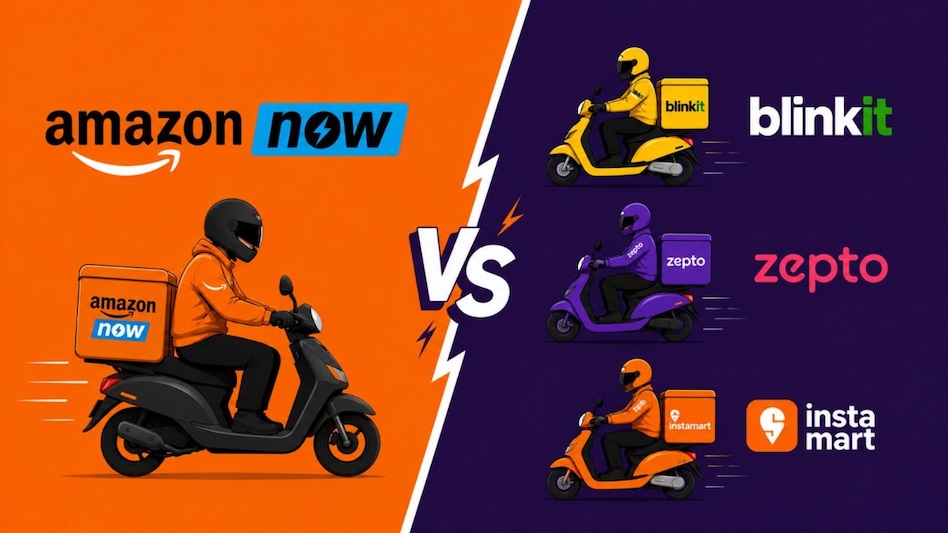
 Amazon may have a formidable presence in the e-commerce market, it has been a late entrant in the highly competitive quick commerce market, dominated by the likes of Zepto, Blinkit and Swiggy Instamart.
It’s mid-day. The sun is blazing. Still, several farmers have queued up here at a collection centre set up by Amazon in Manchar, near Pune, bringing in different types of vegetables. The produce will be weighed sorted and within hours moved to local processing centre in nearby Chakan and then to the micro-fulfilment centres in and around Pune and beyond, from where it will reach your doorstep.
Amazon may have a formidable presence in the e-commerce market, it has been a late entrant in the highly competitive quick commerce market, dominated by the likes of Zepto, Blinkit and Swiggy Instamart. As it plays catch up, Amazon is rapidly scaling up its quick commerce platform Amazon Now and it’s this network of collection centres and fulfilment centres that will be key to its growth.
“Even if you take Pune as an example, in January or February, we didn’t have a single store (dark stores or micro-fulfilment centres as Amazon calls them). Today in May we are already touching 40,” Karan Chugh, Director of operations at Amazon India, tells Business Today.
On a national level, the company currently has 360 micro-fulfilment centres (MFCs), with plans to have close to 1,000 by the end of the year. Roughly it is opening two new MFCs per day, Chugh says.
Amazon's reach
Similarly, Amazon is also scaling up its collection centres as it looks to increase its sourcing of fresh produce directly from farmers. Just in Maharashtra, its collection centres will more than double from the current 10 this year, according to Srikant Sree Ram, Director Amazon Fresh at Amazon India.
“We now have a facility in Pollachi in Tamil Nadu, to source coconuts. Similarly, we have opened a facility in Solan, Himachal Pradesh, Paota in Rajasthan, in Haryana and we also recently opened in Madhya Pradesh and Bihar,” said Sree Ram. Prices at which Amazon buys this produce from farmers are typically linked to local markets or APMCs (agricultural produce marketing committees) and the farmers typically receive their payments in their bank accounts within hours.
All the backend expansion Amazon now is doing is a crucial step as a part of the company’s stated intent to scale Amazon Now to 100 cities by the end of this year.
Last year, Amazon had announced an investment of Rs 2,000 crore in infrastructure, associates, wellness and safety initiatives. This year, the company has announced investment of Rs 2,800 crore, Chugh said.

 NSE IPO opens tomorrow: Brokerage weighs growth prospects, valuation; what GMP indicates
 EPFO wage ceiling raised: ₹15,000 to ₹25,000, 51 lakh more employees get cover from Sept 17
 Paytm, LIC among 10 stocks attracting Rs 51,000 crore in MF inflows in August
 '96% transactions will not be affected,' says former Infosys CFO Mohandas Pai on UPI MDR
  ‘Must urgently reimagine our partnerships’: EU opens doors to Canada to become first ‘associate member’
  Indian Markets At A Crucial Juncture: Nifty, Crude, Fed & Smallcaps | Jaipuria
 Nifty At 23,200: Crude Oil, U.S. Fed Rate Hike Fears & Market Outlook Explained
 “7.8% Growth Is Not Random”: FM Sitharaman Credits India’s People, Industry And MSMEs
 Indian I.T. Stocks: Why AI Disruption & Weak Growth Are Making Investors Rethink Their Bets
 MobiKwik Exclusive: Who Pays For UPI Now? Upasana Taku On MDR & Merchant Impact
 NSE IPO opens tomorrow: Brokerage weighs growth prospects, valuation; what GMP indicates
 Paytm, KRN Heat Exchanger, Ather Energy, Vishal Mega Mart: Expert shares key entry levels, targets
 FOMC outcome: How stock market may react if Fed rate is hiked by 25 bps today
  Exit PTC India shares on rally, average L&T Technology Services on dips: Market expert
 Sensex, Nifty snap two-session fall; US Fed outcome in focus for market cues
 Nibav Home Lifts Consumer Case Study Examines How Transparent Services Are Building Long-Term Trust
 GST, stamp duty drive state revenues: Own tax collections rise 14% in first four months of FY27
 Waiting until Diwali to buy a car? These five reported launches do not all have official dates—check before delayingIndian Markets At A Crucial Juncture: Nifty, Crude, Fed & Smallcaps | JaipuriaNifty At 23,200: Crude Oil, U.S. Fed Rate Hike Fears & Market Outlook Explained












