The event was inaugurated by Varundeep Sachi, Chair of the ICF India Coaching Conclave, jury chairperson of the ICF India Coaching Excellence Awards and president of the ICF Bengaluru Charter Chapter. Delegates also heard a message from the International Coaching Federation (ICF) and an opening address by Vijayalakshmi S, MCC, secretary and treasurer of the ICF Global Enterprise Board.
Don't Miss:RBI wants banks to have an AI ‘kill switch’: Here’s what it means for customers
The opening keynote, "Leadership at the Speed of Thought", was delivered by Tony Latimer, who challenged participants to rethink leadership in a world marked by uncertainty, complexity and accelerating change.
Coaching mastery in a changing world
The conclave featured three learning tracks designed to examine the future of coaching, leadership, organisations and technology.
Track I, "The Future-Ready Practitioner: Coaching Mastery for a DAFT World", focused on helping coaches strengthen their skills for an increasingly dynamic, ambiguous, fast-paced and tenuous environment.
Delegates attended Sai Kaustuv Dashgupta's session on designing happiness, inclusion and resilience through storytelling, as well as a panel discussion titled "Niches of Coaching: Generating Business as a Solopreneur".
The track also included Sanjeeva Singh's session, "The Making of a Champion: Lessons in Grit, Focus and Growth for Coaches & Corporates", and a workshop by Shweta HandaGupta, "Batman vs Superman: Using Leadership Team Coaching to Align the Superheroes", which explored how team coaching can strengthen collective leadership.
Focus on organisational transformation
Track II, "The Strategic Pivot: Architects of Corporate Culture and Resilient Performance", examined leadership, culture building and organisational transformation.
Sanjay Shesh's session, "From Groups to Great Teams", highlighted the role of team coaching in building aligned and high-performing teams.
Participants also observed a live executive coaching immersion, "Lead From Within", led by Jagdish Kini, while senior business leaders took part in the CXO panel discussion "Shaping Tomorrow's Workforce: Coaching Meets Corporate Transformation".
Exploring AI's role in coaching
Technology and artificial intelligence were the focus of Track III, "The Augmented Coach: Leveraging AI and Digital Frontiers for 2030".
Pramod Agarwal's session, "What Will Technology Be in 2030?", explored emerging technological possibilities and their implications for leadership and coaching.
The track also featured discussions on "AI & ML in Executive Coaching" and "From Coaching Conversations to Coaching Systems: AI's Role in Organisations".
A key feature throughout the conclave was the Coaching Experience Lab, where delegates participated in live coaching conversations, peer-learning sessions and interactions between coaches and corporate leaders.
Coaching excellence awards
The first day concluded with the ICF India Coaching Excellence Awards 2026, a flagship initiative of the ICF Bengaluru Charter Chapter.
Organisers said the awards programme, which began with three categories a few years ago, expanded to 16 categories this year. The awards recognised excellence among coaches, organisations, HR leaders, educational institutions, universities, NGOs and coaching-led initiatives.
The honours celebrated contributions to coaching culture, leadership development, inclusion, social impact and organisational transformation.
Day two focuses on future-ready institutions
The second day opened with a keynote address by Nirmaljeet Singh Kalsi, who spoke about human capability, education, skilling, leadership and the role of coaching in building future-ready institutions and societies.
A session titled "Success Stories of Coaching" showcased examples of coaching impact across industries, organisations and leadership settings.
In Track I, Krishna Prakash presented "Cultivating Presence: An Indic View", while Sunil Kumar Sarangi discussed the "Future of Coaches in Academia" and the expanding role of coaching in educational institutions.
The track concluded with Rekha Hatkanagalekar's workshop, "The Magic of Psychodrama in Coaching", which explored experiential approaches to personal and organisational transformation.
Track II featured Kavitha Rao's workshop, "Work in 2030 Coaching Imperatives: Corporate Coach Interaction", bringing together coaches and business leaders to discuss the future of work, leadership and capability building.
The track also hosted an HR roundtable titled "The Future of Leadership Development: Integrating Coaching into Organisational DNA".
Meanwhile, in Track III, Sandeep Kaul and Debeshi Chakraborty led the workshop "AI as a Potential Partner for Coaches".
One coaching community
One of the defining moments of the conclave was the panel discussion "One India, One Coaching Community: The Road to 2030", which brought together presidents of ICF chapters from across the country.
The discussion focused on collaboration, professional excellence, accessibility, advocacy and the collective responsibility of advancing coaching in India.
The conclave concluded with "Gratitude in Action: A Playful Celebration of Our Coaching Journey", facilitated by Sushma Banthia.
The final session was a fireside chat with actor, traveller, communicator and storyteller Ashish Vidyarthi, who spoke about resilience, reinvention, authenticity, curiosity and lifelong learning.
His message reflected the broader theme of the conclave — embracing change while remaining connected to purpose.



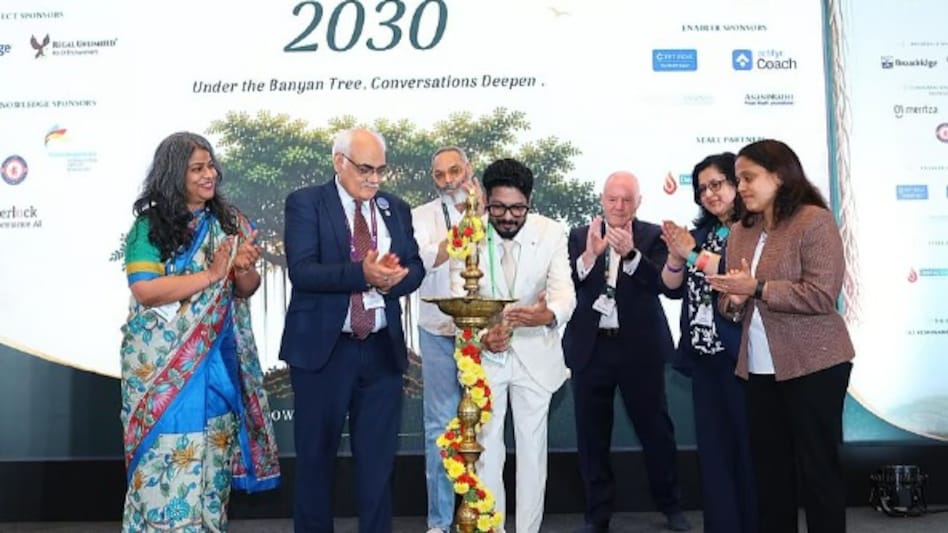 Varundeep Sachi, Chair ICF India Coaching Conclave.
 SEBI flags prima facie manipulation in Sensex closing auction session, blocks two entities
 SUVs are the talk of the town, so why is Škoda still betting on the sedan in India?
 One day, One university: Modi government's new outreach plan to reach Gen Z students
 No rate cut yet: RBI signals patience as food, fuel inflation risks persist
 N Chandrasekaran exit: Uncertainty looms over Tata AGM; here's what experts say
 Nifty Falls For 7th Straight Session: Is This A Buying Opportunity? Sharad Avasthi Explains
 “Invest In India, Invest In U.P”: Ashwini Vaishnaw’s Big Pitch For Japan At Business Conclave
 Empowering Conscious Enterprise Leadership
 Bonds, AAA Debt Provides Strong Cushion To Portfolio
 7 Types Of Income That Are Taxable For Senior Citizens | Tax Guide | Personal Finance | Money Today
 Market Closing Auction: Sebi asks brokers to accept orders in first five minutes
  Sensex, Nifty extend losing streak amid weak global cues; what's ahead for Dalal Street?
 Ambit, Motilal Oswal see over 25% upside in this renewable energy player
 Samvardhana Motherson: Easy gains no longer in sight, says analyst after stock hits record high
 This Aluminium foil hack can fix your damp walls and save thousands - check how it works
 NBCC cancels e-auction of 262 luxury homes in Delhi’s Chanakyapuri
 India beat Pakistan 5-3, advance to next round of Hockey World Cup












