














 Pilot bodies allege that the crisis stems not from the rules but from IndiGo’s prolonged under-hiring.
IndiGo began fresh pilot recruitment only in November 2025 — months after the Directorate General of Civil Aviation’s (DGCA) revised Flight Duty Time Limitations (FDTL) norms were notified and well into their final phase of implementation — raising questions over whether delayed manpower planning contributed to the airline’s severe operational disruptions.
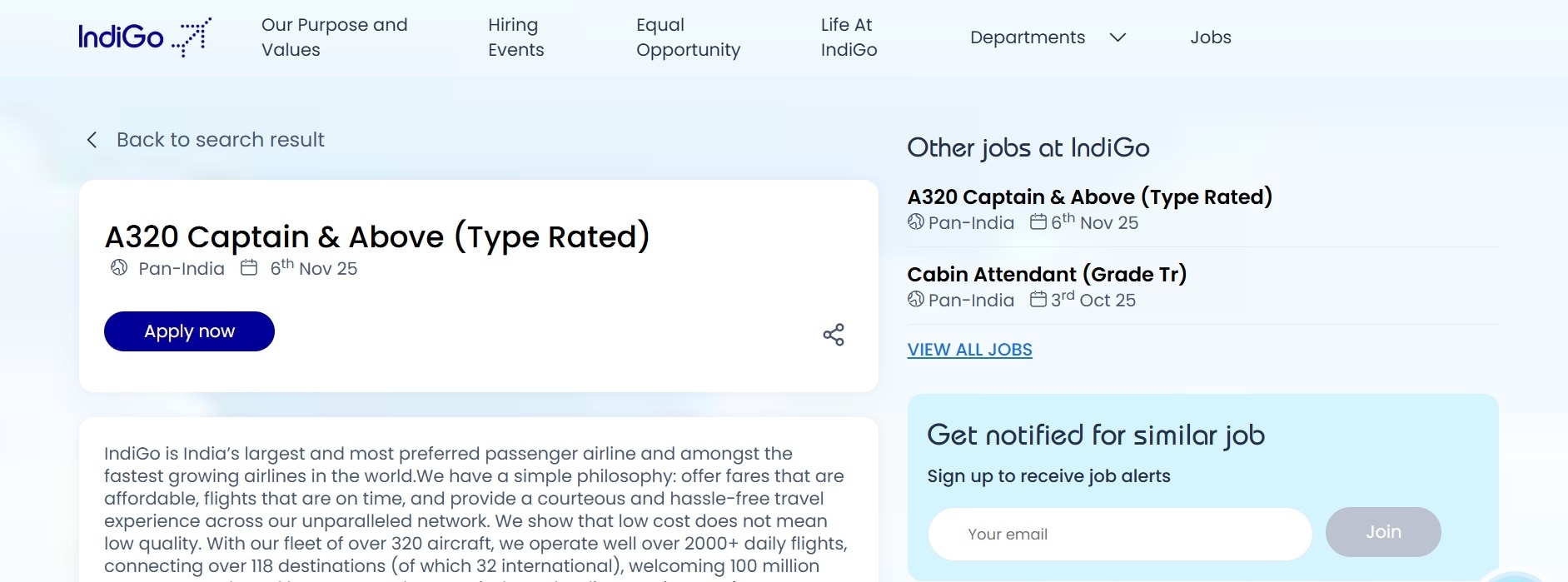
IndiGo's website shows on November 5, 2025, the airline issued a recruitment call for A320 captains and senior positions, inviting Indian nationals and Overseas Citizen of India (OCI) cardholders below the age of 62 with a minimum of 3,000 total flying hours and at least 100 hours as Pilot-in-Command (PIC) post line release on the A320 family.
 Trump says the US could just decide to stay in Iran and ‘keep the oil’ like Venezuela
 ‘If it’s not under human control, it’s not worth pursuing’: Satya Nadella's warning on AI
 Anthropic sets sights on Nasdaq for potential October IPO, eyes $2 trillion valuation: Report
 Stock market holiday: Why NSE, BSE will remain closed on September 14
 Gold and silver ETFs beat equity ETFs in FY26: What investors should make of the shift
 Amit Shah Hails India’s Rise From Fragile Five To Top Five, Politics Of Performance Since 2014
 MEA Details BRICS Summit Outcomes as India Pushes Practical and People-Centric Cooperation
 Modi@25: Amit Shah Highlights 25 Years Of Leadership, Governance And 2047 Vision
 “Development And Environment Are Complementary”: PM Modi On Sustainability At BRICS
 Modi@25: Amit Shah Announces Seva Sankalp Campaign From Sept 17 To Mark Modi’s 25 Years Of Service
 SoftBank shares tumble 13% as OpenAI, Anthropic raise AI safety alarm
 IPOs this week: NSE, Hero Motors, SS Retail, Jindal Supreme, Sonaselection; check GMP, key datesStock market holiday: Why NSE, BSE will remain closed on September 14
 Avoid jewellery; stick to ETFs, bars and coins for investment this festive season: Navneet Damani
 SEBI’s CAS proposals: Expert weighs in on new expiry-day settlement price methodology
 Saudi pipeline shutdown threatens to wipe out 4% of global oil exports within days: Report
 Gold, silver prices on September 14: Check latest rates in Delhi, Mumbai, Kolkata, other citiesSoftBank shares tumble 13% as OpenAI, Anthropic raise AI safety alarmIPOs this week: NSE, Hero Motors, SS Retail, Jindal Supreme, Sonaselection; check GMP, key dates
 China spies on us, we spy on China too: Trump after Iran satellite images report


