


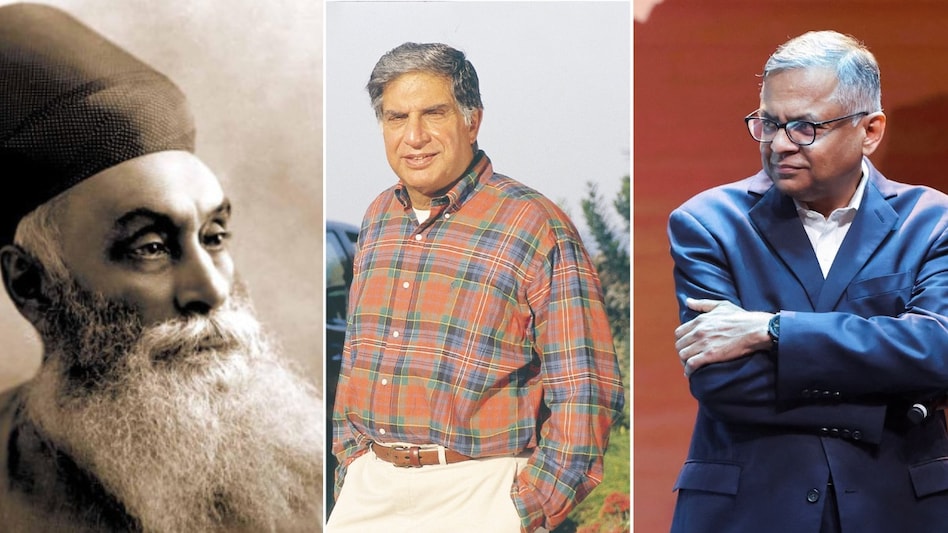
 Here's the complete list of every chairman who has ever led the House of Tata — and the legacy each one leaves behind.
Tata Sons succession: 157 years. Six chairmen. One empire that today touches almost every Indian household — salt, steel, cars, coffee, code. It started with Jamsetji Tata's audacious vision in 1868, passed through JRD Tata's 50-year stewardship, survived a bitter boardroom battle with Cyrus Mistry, and was rebuilt by Ratan Tata into a global powerhouse.
Now, in a twist nobody saw coming, current chairman N Chandrasekaran has announced he's stepping down when his term ends in 2027 — leaving the Tata Group searching for its next leader. From salt to software, here's how 7 extraordinary individuals shaped one of the world's most trusted business houses — and why Chandrasekaran's sudden exit has everyone talking.

 ASM Technologies stock hits record high as RK Damani entity, Asha Mukul Agrawal back fund raising
 IDBI Bank sale: Timing of Fairfax deal announcement being worked out, say government sources
  Cabinet clears Rs 10,783 crore railway projects: 656-km network expansion across 5 states; check full details
 AEL, Adani Power, Adani Ports, Adani Energy: Why Adani stocks are rising today
 BPCL, IOC, HPCL shares unfazed as Brent crude hits $100 a barrel for first time since July
 NSE IPO To Rentomojo: What Investors Need To Know About India’s IPO Boom
 Daily Calls: Ask Your STOCK MARKET TODAY QUERIES | Market Update | Share Market News Today
 Market Commentary: Sanjay Sinha On Nifty, Stocks & The Next Big Market Move
 How To Invest In Gold Ahead Of Festive Season | Money Today | Personal Finance
 What’s Hot: Stocks, Gold & Big Money Moves | Daily Markets Show | September 09 | Business Today
 ASM Technologies stock hits record high as RK Damani entity, Asha Mukul Agrawal back fund raising
 Sensex, Nifty extend losing run; investor wealth drops by over Rs 4 lakh crore in three days
 Craftsman Automation stock offers buy-on-dips opportunity, says analyst; shares price target
  ZEE, Apex Frozen, Power Mech, TVS Srichakra among stocks to turn ex-dividend on September 10
 Quest's Rakesh Vyas prefers private defence plays over PSU majors; here's whyNSE IPO To Rentomojo: What Investors Need To Know About India’s IPO BoomASM Technologies stock hits record high as RK Damani entity, Asha Mukul Agrawal back fund raising
 BGMI Bloodline Awakening goes live: KRAFTON brings supernatural twist, 50 free redeem codes
 Delegates from Nepal, Bangladesh, Malaysia, other nations to attend ELTAI education eventCabinet clears Rs 10,783 crore railway projects: 656-km network expansion across 5 states; check full details












