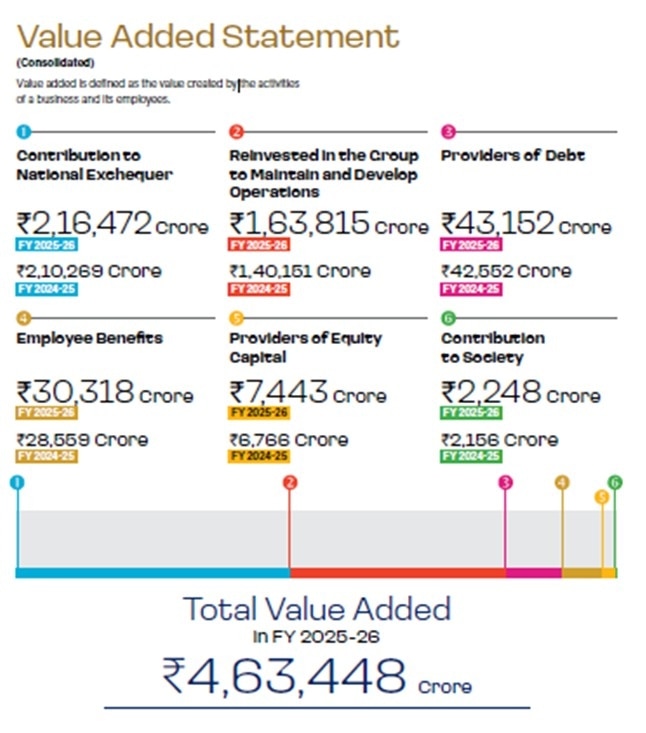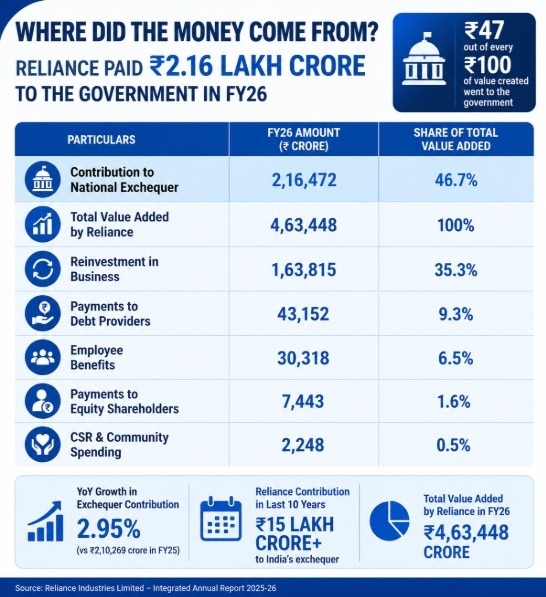



 The Mukesh Ambani-led conglomerate contributed nearly ₹47 to the government for every ₹100 of value it created in FY26, according to its latest integrated annual report.
Reliance Industries paid ₹2,16,472 crore to the national exchequer in FY26, marking a 2.95% increase from the previous financial year and reinforcing its position as one of India’s largest contributors to government revenues. The company said the amount included taxes, duties, levies and other statutory payments made during the year.
The Mukesh Ambani-led conglomerate contributed nearly ₹47 to the government for every ₹100 of value it created in FY26, according to its latest integrated annual report.

 Iran, Oman agree on new Hormuz routes: What it means for oil, ships and global trade
 'Stop knocking out diesel facility, it's causing shortage': Trump tells Zelensky to halt strikes on Russia
 The next time govt takes a financial risk, ISB professor says it should be on start-ups
 India is the second-best BRICS performer, but that is not enough: Economist Surjit Bhalla
 BRICS Summit 2026: PM Modi warns against turning critical supply chains into geopolitical tools
  Amit Shah Hails India’s Rise From Fragile Five To Top Five, Politics Of Performance Since 2014
 MEA Details BRICS Summit Outcomes as India Pushes Practical and People-Centric Cooperation
 Modi@25: Amit Shah Highlights 25 Years Of Leadership, Governance And 2047 Vision
 “Development And Environment Are Complementary”: PM Modi On Sustainability At BRICS
 Modi@25: Amit Shah Announces Seva Sankalp Campaign From Sept 17 To Mark Modi’s 25 Years Of Service
 Avoid jewellery; stick to ETFs, bars and coins for investment this festive season: Navneet Damani
 SEBI’s CAS proposals: Expert weighs in on new expiry-day settlement price methodology
 Large caps stocks under pressure as rising US bond yields, crude prices weigh on foreign flows
  SEBI proposes bringing unexecuted Iceberg orders into closing auction
 SEBI proposes new expiry-day settlement formula for derivatives after CAS concerns'Stop knocking out diesel facility, it's causing shortage': Trump tells Zelensky to halt strikes on Russia
 Mushroom galouti from Awadh, gucchi from Kashmir, this is no ordinary veg menu: Harsh Goenka defends BRICS menu
 Why ASEAN AU GCC And BIMSTEC Were Invited To BRICS Summit 2026
 Cyril Ramaphosa Invites PM Modi To South Africa Next Year, Praises India’s Tech And Space ProgressThe next time govt takes a financial risk, ISB professor says it should be on start-ups