


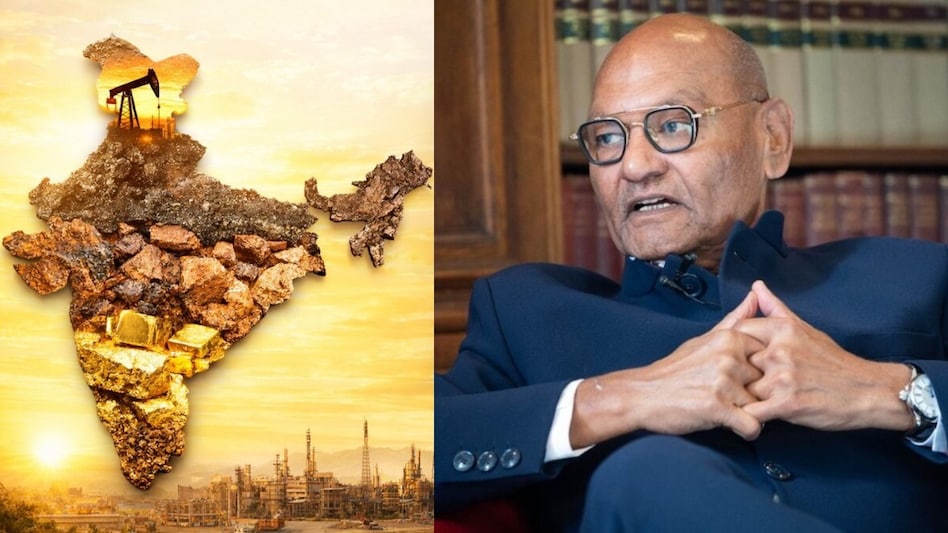
 Amid Iran war shocks, Anil Agarwal calls for faster mining and oil production in India
Vedanta Group Chairman Anil Agarwal voiced his frustration on Tuesday over India's heavy import reliance on energy and raw materials, saying the country is "painfully" exposed to global supply shocks triggered by the ongoing Iran war and the effective closure of the Strait of Hormuz.
US-Israel-Iran war LIVE Updates
"It is painful to see India face the adverse consequences of a war we have nothing to do with, particularly because of raw material security," Agarwal said, stressing that India does not need to import "90% of our oil, or 95% of our copper or 99.5% of our gold or any other metal resources."
He called on the government to empower entrepreneurs and expedite resource production at home to reduce dependency on volatile global markets. "Mother Earth has given us the best geology. The last 40 years of practice in the minerals, metals and oil industry have taught me this. Now is the time, with this positive government, to give entrepreneurs freedom," he said.
Drawing on his own experience building Vedanta from modest beginnings, Agarwal pointed to past privatisation acquisitions, including stakes in Hindustan Zinc and BALCO, and the company's expansion in oil and gas through assets acquired from global firms.
"In Hindustan Zinc and BALCO, we succeeded," he said, citing tenfold growth in zinc and twentyfold growth in aluminium production under Vedanta's stewardship. He outlined ambitious targets for the future, including producing 1 million barrels of oil per day and 100 million tonnes of iron ore annually.
"In oil and gas, our vision is to produce 1 million barrels per day. In iron ore, my vision is to produce 100 million tonnes, 33% of today’s production level. There are many more underperforming government assets that can perform the same way."
The Vedanta chairman, however, said regulatory complexity and government interference remain major hurdles to unlocking India's resource potential. "Most of the advanced countries have become prosperous by developing natural resources, including oil and gas. In India, the system has to stop creating hurdles. It needs to take a long-term view, as this government is not revenue-minded but, production-minded. It must facilitate. Instead of notices and judicial activity, all businesses need to receive recognition and respect. Benefit of doubt should pass onto them."
According to Agarwal, greater trust and simpler regulation would reduce the disincentives that have previously driven companies like Rio Tinto to exit Indian projects. "Some may remember the case of Rio Tinto which had invested in a diamond mine in Madhya Pradesh. It could have made India a global hub for diamond production, but they exited because of a complex, interfering and discouraging system."
His remarks came as India, which imports the bulk of its oil, gas, and other key commodities, grapples with the fallout of an intensified Iran war that has disrupted critical energy supply lines and heightened price volatility. The ongoing crisis, marked by near‑standstill maritime traffic through Hormuz, has underscored geopolitical risks to Asian energy imports.
Vedanta operates across nine key sectors, including metals such as zinc‑lead‑silver, aluminium, copper, iron ore, steel, nickel; energy in oil and gas and power; and emerging areas such as glass substrate and semiconductors, placing the group at the centre of discussions on India’s raw material security.

 Exam reforms: Tech titan Nandan Nilekani picked by PM Modi to fix national public examination system
  'Tax officers struggled for own land': Nirmala Sitharaman slams laidback attitude of govt depts
 CBDT issues new crypto reporting guidance: No new tax, but exchanges must track and report all transactions
 Did Cockroach Janta Party's 'Chalo Sansad' 2.0 threat trigger Dharmendra Pradhan's resignation? What we know so far
 'Will discharge my responsibilities with complete humility': Pralhad Joshi after being appointed Education Minister
 AI Data Centers, Aerospace & Gas Turbines: What's Powering Indo-MIM's Future Growth?
 Best Healthcare Stocks: Gaurang Shah's Outlook On Apollo Hospitals, Fortis & The Manipal Health IPO
 Is Indo-MIM's IPO Valuation Justified? Here's Why The Company Sees Strong Growth Ahead
 Treasury Bills Explained: Why T-Bills Are One Of The Safest Short-Term Investment Options
 FDs vs Markets: Where Should You Keep Your Short-Term Money?
 Nifty, Sensex, Nifty Bank outlook for today: GIFT Nifty up 140 points; key levels to watch
 Top stocks in news: NTPC, Jindal Steel, Bank of Baroda, NBCC, IDFC First, TCPL, SBI Cards, REC
 Gland Pharma stock: Price target of Rs 3,250 likely in medium term, says analyst
  Metal recycling stocks to buy: Gravita, Pondy Oxides, Jain Resource among top picks
 TRIL shares: Should you average the falling stock? Here's 'fixed and final' stop lossNifty, Sensex, Nifty Bank outlook for today: GIFT Nifty up 140 points; key levels to watch
 Accused the disciplinary officer of bias? Supreme Court says they shouldn't decide your case—even if you later withdrew the allegation
 Quote of the Day by Anand Mahindra: 'The Rise credo is about accepting no limits...'Top stocks in news: NTPC, Jindal Steel, Bank of Baroda, NBCC, IDFC First, TCPL, SBI Cards, REC
 EPF member passed away? Here's how family members can claim provident fund, pension and insurance benefits









