












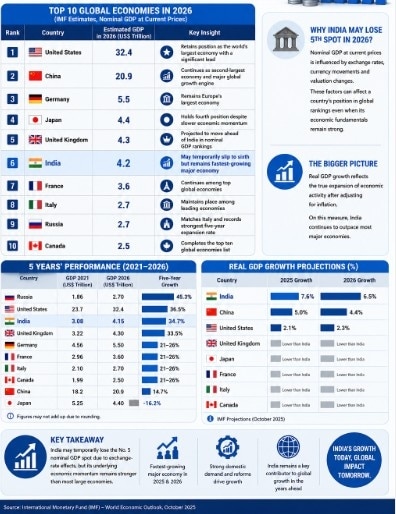



 India’s GDP at current prices (nominal GDP) is projected to be $4.15 trillion.
According to IMF estimates, the global economy in 2026 continues to be dominated by large, developed nations, particularly the United States and China, but emerging economies are increasingly becoming key contributors to global growth. The latest nominal GDP figures suggest that India may temporarily lose its position as the world’s fifth-largest economy and move behind the United Kingdom. However, the change in ranking does not necessarily signal weaker economic fundamentals. Nominal GDP at current prices is affected by exchange rates, currency movements and valuation changes, which can influence a country’s position in global rankings.
Many economists consider real GDP growth a better measure of underlying economic strength, as it captures the actual expansion of economic activity after adjusting for inflation. On this basis, India continues to stand out among major economies. IMF projections show India growing at 7.6% in 2025 and 6.5% in 2026, making it the fastest-growing major economy and highlighting its increasing role in driving global growth.

 Maximum prison term for GST offences rationalised, says finance ministry FAQ
 Jio Platform IPO price to be set at Rs 1,065-1,119, says report; check details
 ‘Vote chori’ proof will be submitted to President, says Rahul Gandhi after INDIA bloc meeting
 'Navi' triumphs over Trump! Indian-origin Navanethem Pillay wins 2026 Nobel Peace Prize
 Tata Sons boardroom battle: Why India Inc fears a wider crisis of ownership rights
 Silver Investment Outlook: Why Gen Z Should Watch This Metal's Long-Term Growth Potential
 Gold Price Outlook: Is This the Right Time to Invest? Expert Sees Potential for New Highs
 India Slams US PERM Suspension, Says JD Vance’s ‘Indentured Servants’ Remark Is Offensive
 Govt Plans Tighter Rules For Prescription Drug Ads, Pharmacies And Wholesalers In Focus
 Apple May Unveil Touchscreen MacBook, OLED iPad Mini In October: What To Expect
 Market on the back foot, opportunities ahead: where should investors put their money?
 Poonawalla Fincorp Q2 earnings: Net profit zooms 405%, NII at Rs 1,589 crore
  Vedanta, TCS shares to turn ex-dividend; Ola rights issue; 2 stock splits next week
 IPO rush: Rs 50,000 crore worth IPOs to hit Street by Diwali; Jio, Avada to lead fundraise
 Adani Ports, GMR Airports rise up to 5% amid block deal reports; check details
  World’s best cities for quality of life 2026: Canberra tops list, Europe dominates; Check list here
 Elon Musk calls Mukesh Ambani 'real boss of India', amid push for Starlink in India
 DMRC issues revised metro closure update ahead of Oct 10; check affected stationsTata Sons boardroom battle: Why India Inc fears a wider crisis of ownership rights‘Vote chori’ proof will be submitted to President, says Rahul Gandhi after INDIA bloc meeting


