









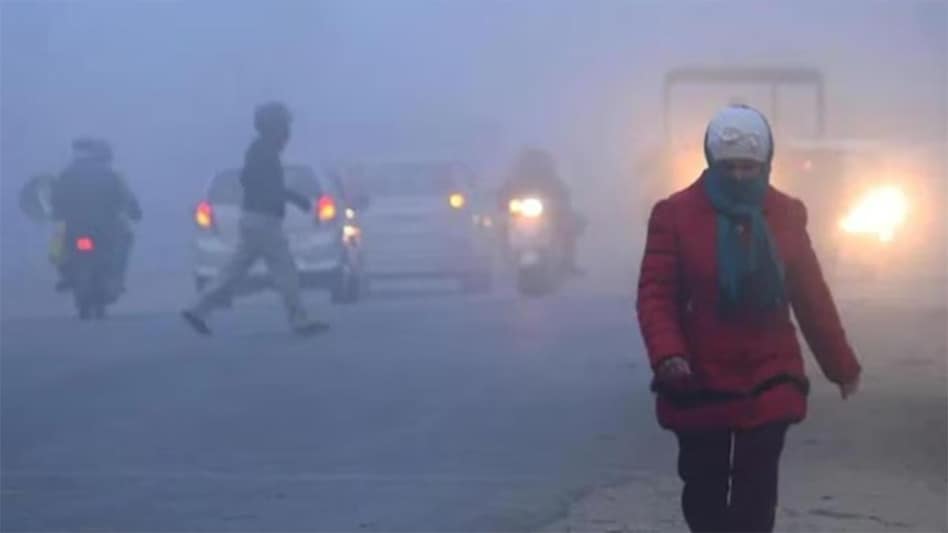
 The Met department said the visibility in Palam was recorded at 100 meters at 6.10 am.
 The Met department said the visibility in Palam was recorded at 100 meters at 6.10 am.
Dense fog and severe cold wave conditions continued to bother residents of the national capital Delhi even on Wednesday. As many as 10 flights, scheduled to depart from Delhi's Indira Gandhi International Airport (IGI), were delayed because of dense fog in the morning. Flights between Delhi and other areas including Shimla, Kathmandu, Chennai, Jaisalmer, Mumbai, Varanasi, Srinagar, Jaipur, and Guwahati were delayed due to fog and cold in the national capital. According to the Met department, the visibility in Palam was recorded at 100 meters at 6.10 am.
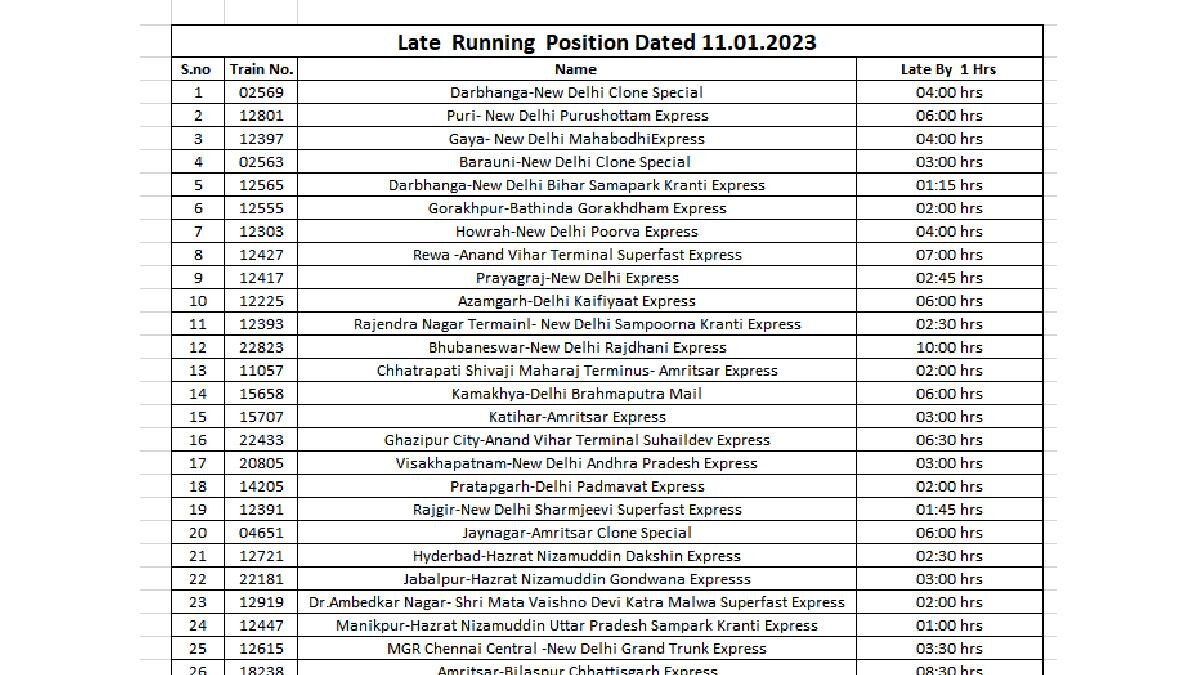
On the other hand, 26 trains were running late in the Northern Railway region on Wednesday due to poor visibility due to fog.
Another cold wave
Delhi and many cities in the northern region have been facing severe cold wave conditions since the beginning of this year. As per India Meteorological Department’s definition, a cold wave is declared in the plains of India when the minimum temperature dips to 4 degrees Celsius or falls 4.5 degrees below normal to 10 degrees Celsius or below. The cold wave this season was the third worst cold spell in 23 years.
An IMD official told ANI, "From the year 2000 to the year 2023, we find that the 3-9 Jan cold spell was the third worst cold spell in the last 23 years."
On Wednesday, Safdarjung recorded a minimum temperature of 5.9 degrees Celsius around 6.10 am.
The IMD has said that cold wave conditions will ease in northwest India and no cold wave conditions will bother North India in the next four days.
But there could be another spell of the cold wave from January 14, as per IMD scientists. Senior India Meteorological Department (IMD) official RK Jenamani told ANI the second cold spell in North India is predicted to begin on January 14, which would see light rain and drizzle in Punjab, Haryana, Chandigarh, Delhi, Western UP, and North Rajasthan.
He added that the long spell of intense cold in North India is due to a large gap between two western disturbances, which meant frosty winds from the snow-clad mountains for a longer-than-usual period.
Delhi-NCR has recorded below-normal maximum temperatures this month so far due to dense fog that reduced sunshine hours.
 BT EXPLAINER: What does the quashing of one-time spectrum charges mean
  Centre to work with West Bengal to review reach of key welfare schemes
  RBI's FCNR(B) bet could bring ₹5.2-6.2 lakh crore into India, ease rupee pressure: SBI Research
 Tata Sons’ crucial June 12 board meeting: Here's what to look out for
  Ola Electric shares climb over 103% in three months; is more steam left in the EV stock?
 Anthropic's Mythos AI Is Coming: Revolutionary Tool Or New Cyber Threat?
 TCS Chairman's Big AI Prediction: 5 Lakh AI Agents Could Work Alongside Employees
 Gold & Silver Demand Weak, But Discounts Are Shrinking: Is A Buying Wave Coming Soon?
 EXCLUSIVE: Manoj Bajpayee Reveals Untold Story Behind India's 1991 Economic Crisis | Governor
 Iran Conflict Raises Fuel Costs, Airlines Cut Flights As IATA Slashes 2026 Profit Outlook
 Why global defence buyers are turning to India for drones and critical componentsOla Electric shares climb over 103% in three months; is more steam left in the EV stock?
 After a near-5x rally from IPO, brokerage sees 38% more upside in this small-cap metal stock
 Tata Steel shares rise 36% from 52-week low; price targets, outlook for investors
  Infosys, TCS, Tech Mahindra, HCL Tech, Wipro: Check fresh target prices