


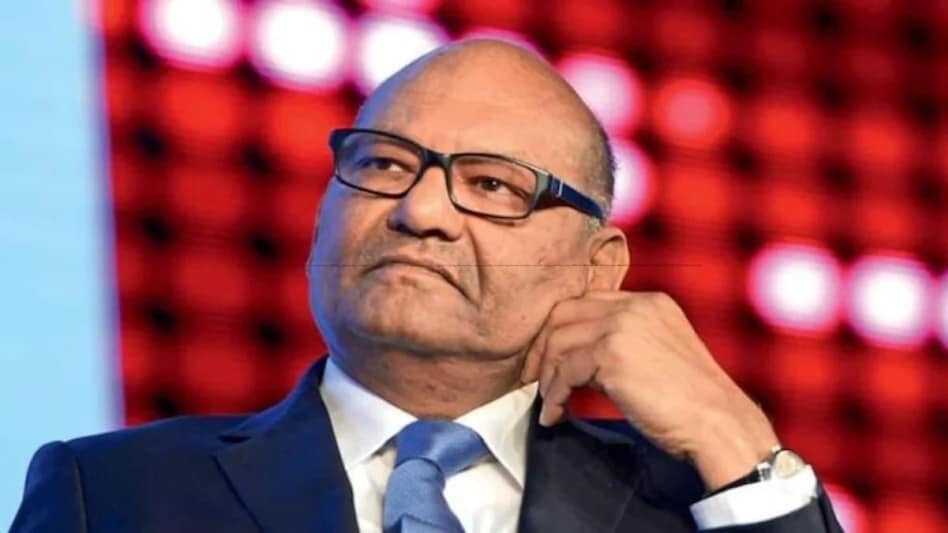
 Anil Agarwal also said that Ramayan carries a simple message for the youth.
 In a fresh pitch for strengthening India’s entrepreneurial ecosystem, Anil Agarwal, Chairman of Vedanta Group, has urged policymakers and society to place greater trust in wealth creators, arguing that dynamic entrepreneurship — backed by philanthropy — can accelerate India’s rise as a global economic power.
In a post on X (formally twitter), Agarwal pointed to the historical role played by American industrialists in shaping the United States’ economic foundations. Referring to a documentary series 'The Men Who Built America' on the History Channel, the Vedanta chief highlighted five business leaders — Cornelius Vanderbilt, Andrew Carnegie, John D Rockefeller, J P Morgan, and Henry Ford — as architects of core industries such as infrastructure, steel, oil, banking, and automobiles.

 90% EVs exported out of India are from Maruti Suzuki: MD & CEO Hisashi Takeuchi
 India's $30 trillion goal needs 8-10% growth, $400 billion more annual investment: Jayant Sinha
 1.1 billion barrels gone: IMF warns that global oil market is running out of safety cushions
 From Devbhoomi to industrial destination: Uttarakhand’s manufacturing moment
 India’s deep-tech startups face a new test: Crossing the valley of death
 #IndiaAt100 : Adipen Bose Nandhiji On Conscious Capitalism- Can Profit & Purpose Coexist?
 #IndiaAt100 : Hisashi Takeuchi On Driving India’s Manufacturing Revolution
 #IndiaAt100 : Manufacturing For Viksit Bharat | Can Industry Power India’s $30-Trillion Dream?
 #IndiaAt100 : Tarun Garg On Hyundai & India’s Manufacturing Powerhouse Ambition
 #IndiaAt100 : CM Pushkar Singh Dhami On Uttarakhand’s Industrial Growth & India’s Next Leap
 Cupid, NTPC Green, NTPC, Raymond Realty, HAL shares: Key technical levels to watch
 Defence stock with Rs 2,654-crore order book hits record high; here's why
  GACM Technologies: FII holding jumps to 29%; penny stock in focus
 Puravankara shares rise 5% on fresh order win
  20 high-conviction ideas for up to 95% upside | stocks to buy
  Panvel adds 42,330 homes outpacing Navi Mumbai as airport-led realty boom takes shape
 NHAI’s ₹350 monthly toll pass now available: who can apply? Check eligibility and benefits
 90 million litres of glacier water every day: How Ladakh is reviving 1,000 acres of farmland#IndiaAt100 : Adipen Bose Nandhiji On Conscious Capitalism- Can Profit & Purpose Coexist?#IndiaAt100 : Hisashi Takeuchi On Driving India’s Manufacturing Revolution












