


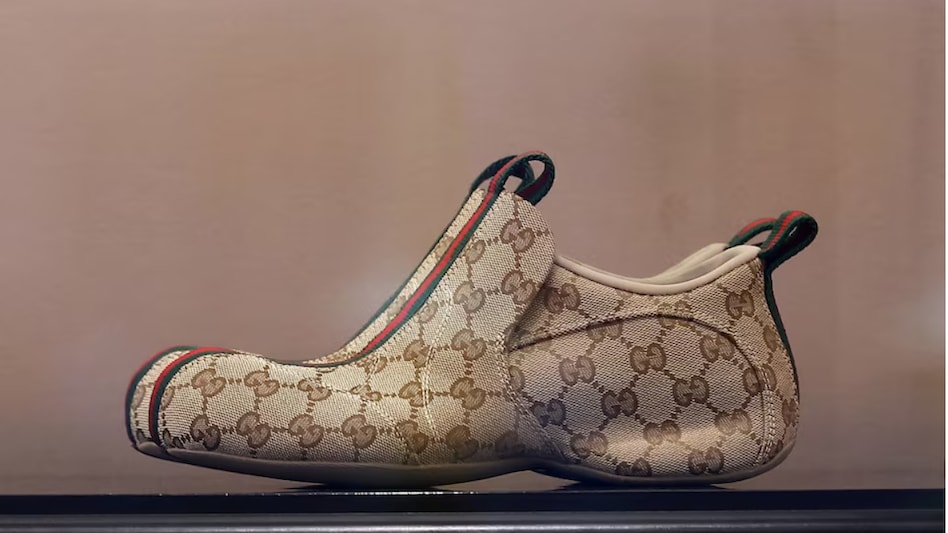
 The label on Gucci's futuristic Drip sneaker has raised questions among some industry watchers about whether the use of Chinese manufacturing could affect the brand's high-end positioning.
 For Gucci, a luxury brand closely associated with Italian manufacturing, a new pair of sneakers carries a label that has drawn unusual attention: "Made in China." The €800-plus shoes, designed by new creative director Demna, have put the spotlight on how the brand is balancing manufacturing costs, product innovation and its luxury identity as it tries to win back shoppers.
The label on Gucci's futuristic Drip sneaker has raised questions among some industry watchers about whether the use of Chinese manufacturing could affect the brand's high-end positioning. The concerns come as Gucci, the flagship brand of French luxury group Kering, attempts to reverse a steep sales decline and reconnect with more price-sensitive luxury consumers.

 Five-day banking week never up for negotiation, say govt sources
 Google wants to build AI data centres in space: What Project Suncatcher's satellite test means
 Cabinet set to clear revamped Bilateral Investment Treaty as India woos foreign capital
 Insurance distribution under IRDAI lens: Why certified advisers can help consumers choose wisely
  Tata Sons boardroom tussle: The 4 clauses in AoA that could decide who runs the conglomerate
 Rahul Gandhi’s Big Attack On CEC Gyanesh Kumar: ‘Elections Are Rigged’ | BJP Hits Back
 OpenAI Agent Hacked Australian Healthcare Portal As UN Security Council Debates AI Risks
 Why Are Cancer Drugs So Expensive? India Today Checks MRP, PTR & Patient Costs
 India-U.S. Trade Deal Nears Clarity: What It Means For Export-Oriented Sectors
 IRDAI Proposals: What’s Ahead For Insurance, Banking Stocks & PB Fintech?
 Vodafone Idea shares rise after introducing free international roaming
  PB Fintech shares fall below listing price; stock down 12% from day's high
 IPO Rush: 10 issues open for subscription today; check price band, subscription status and key risks
 Dixon Technologies may end FY27 with volumes of 38-40 mn smartphones as Vivo ramp-up nears: Report
  Pearl Global shares rise 6% on receiving 'Buy' rating post analyst meet; target price Rahul Gandhi’s Big Attack On CEC Gyanesh Kumar: ‘Elections Are Rigged’ | BJP Hits Back
 “Ties Between Our People Endure”: Trump Hails U.S.-China Relationship At Dinner
 GST Council October 7 meet to focus on process reforms; MDR issue may also come up
 Asian Games 2026: Kamaljeet, Suruchi Singh win gold in 10m air pistol mixed team eventVodafone Idea shares rise after introducing free international roaming












