












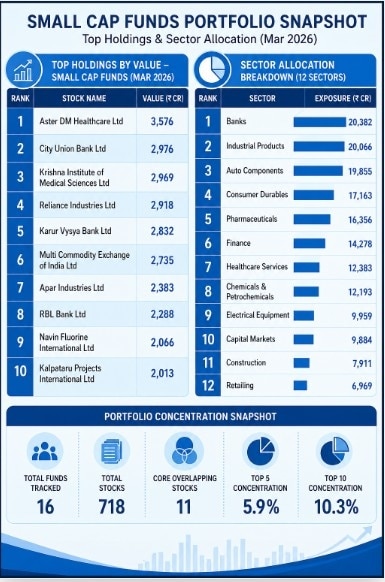



 Sector allocation shows a pro-cyclical tilt, led by banks (₹20,382 crore), followed by industrial products (₹20,066 crore) and auto components (₹19,855 crore).
Small-cap mutual funds have staged a sharp comeback over the past month, delivering double-digit returns of around 10% and outperforming both mid-cap and large-cap peers. The rebound follows a phase of correction and has revived investor interest in the segment, even as debate continues over whether the rally marks the start of a sustained upcycle or merely a short-term recovery.
Latest portfolio disclosures from 16 tracked small-cap funds for March 2026 offer a clearer view of how fund managers are positioning amid this rebound. The data points to a well-diversified allocation strategy, with no excessive concentration in any single theme or sector.

 'Vietnam revised GDP by 25% in 2019': Economist explains why last year's estimate changed
 NITI Aayog launches new platforms to scale up electric truck adoption
 'Beginning first round of reductions': JLR confirms 4,000 job cuts over next 2 years
 Honda outsells Hero MotoCorp for second straight month in August
  India goes big on defence: Rs 1.10 lakh crore acquisition plan cleared. What Army, Navy, IAF will get
 Non-Local Electric Bus Software Is A National Security Risk, Warns Eka Mobility Chairman Sudhir Mehta
 Mounjaro Sales Surge 502%: Why GLP-1 Drugs Are Taking Over India’s Pharma Market
 Auto Stocks Outlook: Why Investors Should Be Cautious Despite New Model Launches And Strong Demand
 U.S.-Iran War, Elevated Crude Hit Indian Stocks: Can Nifty Reverse Its Downward Trajectory Now?
 Crude Oil, Gold & Silver: What’s The Next Big Move? | Kunal Shah
 Tata Steel, Hindustan Copper, Lloyds Engineering shares: Expert weighs in; names top pharma, broking bets
 Adani Power secures LoI to acquire GVK Energy; details here
 Two upper circuits for Sterlite Technologies shares as firm discloses FY29 targets
 Sensex falls 383 points, Nifty settles at 23,779; IT, metals among top drags
 APL Apollo Tubes, KDDL, Globus Spirits among 11 stocks to turn ex-dividend tomorrow
 Axis MF launches Nifty500 Low Volatility 50 Index Fund: Key details, risks and what investors gain
 HUF tax planning: Why choosing the new regime could cost you deductions in 2026-27
 Japan Inc is betting on India’s wealthy: Why MUFG, Mizuho, Daiwa and SMBC are buying into wealth managers
 AI jobs boom is here: How US hiring is rising across tech, construction and infrastructure
 She listens, takes notes and gets paid: How this 67-year-old Colombian woman turned neighbourhood gossip into a business that bought her two houses


