












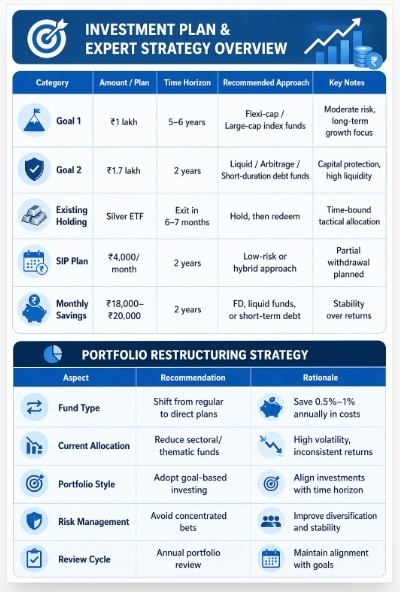



 . Investors should consider exiting underperforming sectoral funds (while accounting for any applicable exit loads) and avoid similar concentrated bets.
My parents are both in their mid-50s (father 56 years, mother 52 years). I am seeking guidance on restructuring my parents’ mutual fund portfolio, which I believe has underperformed compared to the average. I am 23 years old, a complete beginner in investing, but have recently started learning about personal finance and mutual funds through books and online resources. I now want to take charge of my parents’ investments instead of relying on a fund manager.
Current portfolio (parents):

 India to modify Su-30MKI jets for 300-km Russian air-to-air missile: What it means for IAF
 ‘No one is prepared for the consequences’: OpenAI chief scientist calls for ‘extreme caution’ over AI’s rapid progress
 Manika Plastech IPO opens on Sept 11; check price band, issue size, GMP and other key details
 JSW Infra shares: Jefferies trims target after FY26 annual report, says this
  Jio’s ₹3,599 anniversary plan vs Airtel and Vi: Which annual recharge offers the most value?
 AI SANA | Tech News Of The week | Dyson Toothbrush, iPhone 18 Pro Colours | Business Today
 Luxury Car Market Growing 9-10%; Mercedes-Benz Weighs Further Price Hikes
 Metropolis Healthcare Bets On AI, Expansion And Deeper Penetration
 Delhi PG Collapse: Unsafe Buildings, Missing Safety Checks & The Accountability Question
 Equity, FDs, Gold & More: How Couples Should Plan Their Investments Together
 Multibagger return in just 2 sessions! Choice sees 42% upside potential in this recent debutant
 Ion Exchange shares jump nearly 11%; brokerage assigns 'Buy', check target
 Pricol shares rise 4%; buy stock for 22% upside, says Axis Securities
 Black Box shares gain most in 19 weeks amid market crash; more details
  UltraTech Cement’s cables & wires entry: Will peer stocks face near-term pressure?AI SANA | Tech News Of The week | Dyson Toothbrush, iPhone 18 Pro Colours | Business Today
 Delhi building collapse: MCD suspends South Zone Deputy Commissioner Rakesh Kumar
 Mutual Funds achha hai: Pune techie builds ₹9 crore asset by 32, eyes ₹25 crore target in 8 years Luxury Car Market Growing 9-10%; Mercedes-Benz Weighs Further Price HikesMetropolis Healthcare Bets On AI, Expansion And Deeper Penetration


