












 “A ₹23 lakh option would shake the entire pricing strategy,” said one Dubai property expert.
 “A ₹23 lakh option would shake the entire pricing strategy,” said one Dubai property expert.
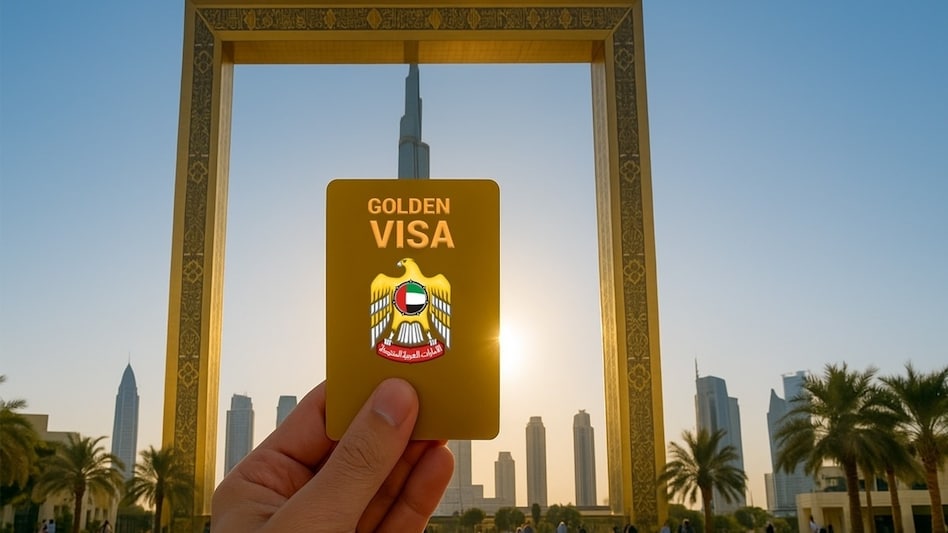
A golden visa to the UAE for just ₹23 lakh? That viral claim spreading across Indian social media has reportedly been denied by top Dubai insiders.
There’s no such pilot, no new rules—just confusion and hype, as per an Economic Times report.
The buzz began with reports that the UAE was offering a new “nomination-based” golden visa to Indian and Bangladeshi citizens at a dramatically reduced cost—down from ₹4 crore to ₹23 lakh.
But consultants working on the ground say the story doesn’t add up.
Iqbal Marconi, former CEO of the ECH Group, reportedly contacted the General Directorate of Residency and Foreigners Affairs (GDRFA) and found no trace of such a programme. “They say they have no such information,” he was quoted as saying in the report. “So, the news is likely to be untrue.”
Other senior consultants echoed that view, noting that nomination-based golden visas without an investment requirement have existed since 2019—but are rare, discretionary, and unchanged.
“This is not new. There’s been no official update,” said a Mumbai-based advisor. Industry insiders confirm that the only confirmed recent policy shift is that crypto investors are now excluded from eligibility.
Meanwhile, real estate–linked golden visas still demand a minimum AED 2 million (₹4.66 crore) investment. If a low-cost visa were truly available, it would upend Dubai’s real estate market, where Indian investors account for nearly 8% of annual transactions.
“A ₹23 lakh option would shake the entire pricing strategy,” said one Dubai property expert.
But a UAE official speaking off the record confirmed in the report: “Golden Visas are not for sale.” All nominations undergo strict vetting, and final decisions rest solely with the government—not consultants, not agents.
So far, there has been no official announcement from the UAE government or mention in Emirates News Agency. Whether a policy shift is underway—or whether the buzz was simply premature—remains unclear.
 'There will be no exemptions': Trump threatens 50% tariffs on country supplying military weapons to Iran
 RBI found no material concern at HDFC Bank, says Governor Malhotra
 BT EXPLAINER: Kalpakkam fast breeder reactor goes critical: What it means
 GST Council meeting may take place after state polls
 Indian stocks boom as guns fall silent in West Asian ceasefire; oil plunges, Hormuz opens
 “No LPG Shortage In India”: Govt Cracks Down On Black Marketing, Seizes 56,000 Cylinders In Big
 ₹26,000 Cr Kamala Hydro Project Approved | Big Boost For Northeast Power
 India Hits 1 Billion Tonnes Coal Output Again, Says No Power Shortage Ahead
 RBI Policy Decoded After War De-Escalation | What It Means For Your Money
 Where Is The Smart Money Moving In Debt? | Fixed Income Strategy
 Sensex, Nifty outlook for tomorrow: Stock market strategy; resistance, support levels
 DCB Bank shares jump 7%; expert says management has 'HDFC Bank-like pedigree'
 Rs 90,000 crore deployed in markets by mutual funds in March, says Shweta Rajani
 Suzlon, Tata Power, Adani Power, Adani Green, NPTC, Inox Wind: Q4 preview, target prices
 HDFC, ICICI, SBI, Kotak Bank among 23 BFSI stocks to ‘Buy’ - Target prices