












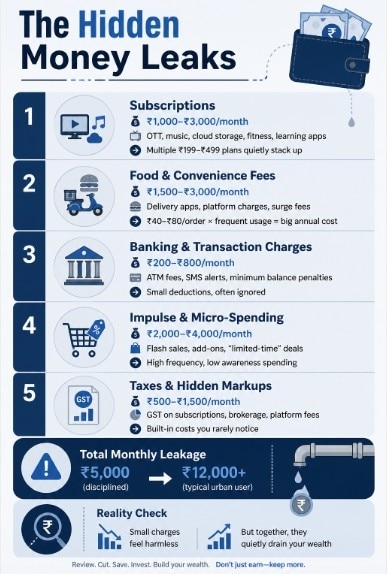



 India’s urban professionals today run on subscriptions — OTT platforms, cloud storage, fitness apps, music streaming, and learning tools.
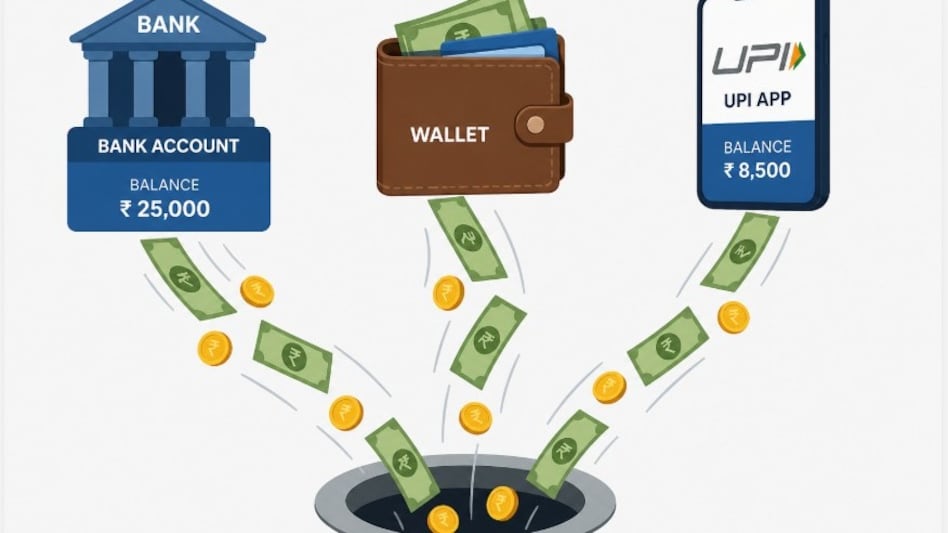
If you track your expenses, the obvious culprits are rent, EMIs, and groceries. But what quietly erodes your wealth are the small, recurring deductions — subscriptions, platform fees, and hidden taxes—that rarely get noticed. Individually insignificant, collectively they can drain anywhere between ₹5,000 and ₹15,000 per month, or over ₹1 lakh annually.
Subscription trap

 Made-in-India cars are winning over Japan! Maruti powers nearly two-thirds of Suzuki's global production
 Amazon bets big on value commerce as Bazaar grows 5X, expands beyond Tier-2 and Tier-3 India
 Inflation heats up: Food prices rise, crude crosses $100; what it means for your wallet
 US could cut the 40-hour workweek to 32 hours: Here's what the new bill proposes
 Festive rush: Flight fares soar for domestic routes on Diwali weekend
 Why Crude Oil Prices Are Rising Again Now?
 Modi Xi Meet After 7 Years In India Signals Possible Reset In Bilateral Ties
 BRICS Summit 2026: India Secures New Delhi Declaration After Intense Negotiations
 BRICS Summit 2026: Modi’s Big Diplomatic Win As New Delhi Declaration Gets Backing
 Dario Amodei, Sam Altman, Elon Musk Back AI Slowdown Call Amid Growing Safety Concerns
 Varun Beverages shares slip 25% from 52-week high; more downside ahead?
 Uno Minda gets 'IND A1+' credit rating for commercial papers from India Ratings
  Karnataka Bank, Pondy Oxides, ITDC, Blue Dart among stocks to turn ex-dividend on September 15
 Stock market outlook: Crude oil prices, US Fed's policy decision among key factors to watch out for this week
 Raghav Productivity Enhancers' subsidiary bags patents for quartz processing
 Saudi Arabia's huge mineral discovery: 110 million tonnes of rare earth, uranium-rich ore found in Madinah
 Delhi HC rejects Vimal Elaichi maker's plea against notices to Shah Rukh, Ajay Devgn, Tiger ShroffAmazon bets big on value commerce as Bazaar grows 5X, expands beyond Tier-2 and Tier-3 India
 Massive win for BJP in Rajasthan local polls, Congress loses Kota where Rahul Gandhi launched student campaign
 Pakistan-origin dry dates enter India via UAE despite ban; DRI seizes 362 tonnes


