












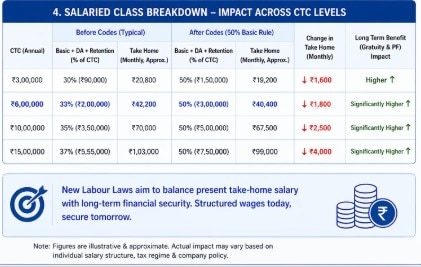



 Provident fund contributions remain a key variable in determining the real impact.
The new labour laws effective April 1 introduce a fundamental shift in salary structuring by mandating that basic pay, DA, and retention allowance must form at least 50% of total CTC. While overall compensation remains unchanged, the internal restructuring significantly impacts take-home salary and long-term benefits such as PF and gratuity.
What changes in salary structure?

 ASM Technologies stock hits record high as RK Damani entity, Asha Mukul Agrawal back fund raising
 NPCI, NVIDIA unveil open AI training environment for banking agents using synthetic data; check details
 IDBI Bank sale: Timing of Fairfax deal announcement being worked out, say government sources
  Cabinet clears Rs 10,783 crore railway projects: 656-km network expansion across 5 states; check full details
 AI becomes new battleground for payment gateways, finds Zoho survey
 IDBI Bank Stake Sale: Fairfax Bid, ₹53,000 Cr Valuation & Deal Delay Explained
 Adani Group Plans $2.5 Billion Offshore Loan To Refinance Cement Acquisition Deb
 Sugar Exports Under Pressure: Tight Stocks, Ethanol Diversion & Weather Risks Cloud
 Brent Crude Crosses $100: India’s Oil Basket Hits $108.9; What It Means For Markets
 Crude Nears $100: Rakesh Vyas On The Impact On Indian Stocks & Nifty
 Cupid's Aditya Kumar Halwasiya ups stake again; buys 15 lakh sharesASM Technologies stock hits record high as RK Damani entity, Asha Mukul Agrawal back fund raising
 Sensex, Nifty extend losing run; investor wealth drops by over Rs 4 lakh crore in three days
 Craftsman Automation stock offers buy-on-dips opportunity, says analyst; shares price target
  ZEE, Apex Frozen, Power Mech, TVS Srichakra among stocks to turn ex-dividend on September 10
 'India's aviation infra better than West': Milind Deora after London flight diverted amid UK disruption
 India’s ethanol production exceeds E20 requirement, govt seeks new uses: PM Advisor Tarun KapoorIDBI Bank Stake Sale: Fairfax Bid, ₹53,000 Cr Valuation & Deal Delay Explained
 Before Apple owned it, someone else had the iPhone name — here’s what happened
 Ahead of Apple’s September 9 event, seven verified facts explain India’s rapid rise as an iPhone production base


