











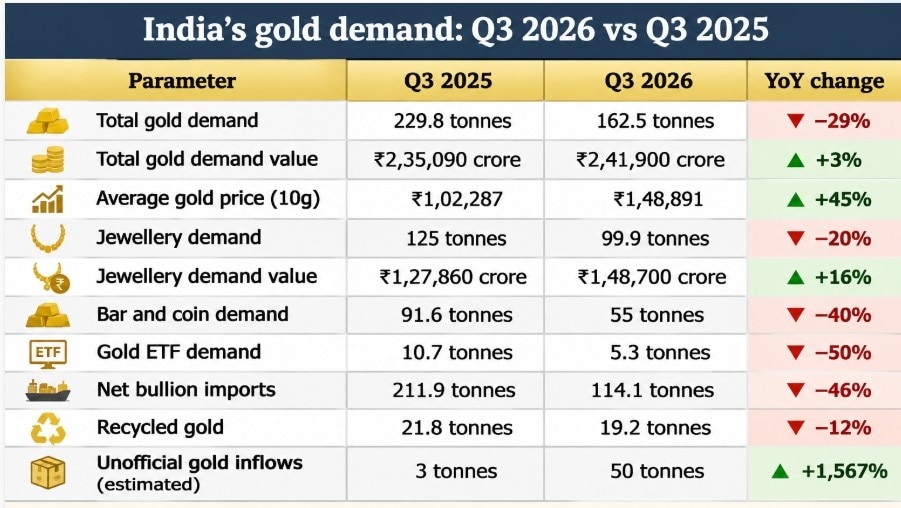



 Average domestic prices climbed 45% year-on-year to ₹1,48,891 per 10 grams during the quarter, compared with ₹1,02,287 in Q3 2025.
India's gold demand plunged 29% in the July–September quarter of 2026, but consumers spent more money on the precious metal than a year earlier. With domestic gold prices rising 45%, Indians are purchasing smaller quantities while continuing to allocate substantial sums to jewellery and investment gold.
India's gold consumption declined to 162.5 tonnes in the third quarter of 2026 from 229.8 tonnes a year earlier, according to the World Gold Council's (WGC) latest Gold Demand Trends report released on Tuesday. However, the value of demand increased 3% to ₹2,41,900 crore from ₹2,35,090 crore in the corresponding quarter last year.

 BT Exclusive: Indian IT sector needs to rediscover its growth model, says Raamdeo Agrawal
 iPhone Duo is selling faster than Apple can make it, and there’s no end in sight: CEO John Ternus admits
 RIL shares see rare consensus as all 33 recommendations turn 'Buy'
 Delhi pollution: Farm fires in Pakistan's Punjab to choke Delhi-NCR further? NASA pics suggest so
 BT BIG STORY: Car sales hit a high during the festive season. Will rising prices slam the brakes?
 Markets In Samvat 2083: Top Investment Opportunities & Risks | Jyotivardhan Jaipuria & Anshul Saigal
 Bank of Baroda Q2 Results: Net Profit Jumps 36% | Top Management Exclusive
 Aashish Somaiyaa On Gold Outlook,Multi-Asset Funds Raise Allocation To 12-13% After Price Correction
 Aashish Somaiyaa On Gold Outlook: Multi-Asset Funds Raise Allocation To 12-13% After Correction
 Top 3 Wealth Creators For Samvat! Raamdeo Agrawal Reveals His Biggest Sector Bets

 NSEIX extends trading hours to 23.5 hours a day from GIFT city; expands global market access
 ITC stock: FII stake falls to nine-quarter low, down 49% from record high; what's next?
 Sensex, Nifty extend winning run to fourth session; key reasons behind market rally
 Allied Blenders and Distillers shares rise 3% as arm expands Rangeela Vodka portfolio
 Diwali picks: Adani Power, ICICI Bank, M&M CG Power among top stocks to buy; check details
 North Korea denies role in $6.3 billion Binance hack, calls claim a ‘grave political provocation’NSEIX extends trading hours to 23.5 hours a day from GIFT city; expands global market accessMarkets In Samvat 2083: Top Investment Opportunities & Risks | Jyotivardhan Jaipuria & Anshul SaigalITC stock: FII stake falls to nine-quarter low, down 49% from record high; what's next?Bank of Baroda Q2 Results: Net Profit Jumps 36% | Top Management Exclusive


