















 The due date for taxpayers not requiring audit is July 31, 2026.
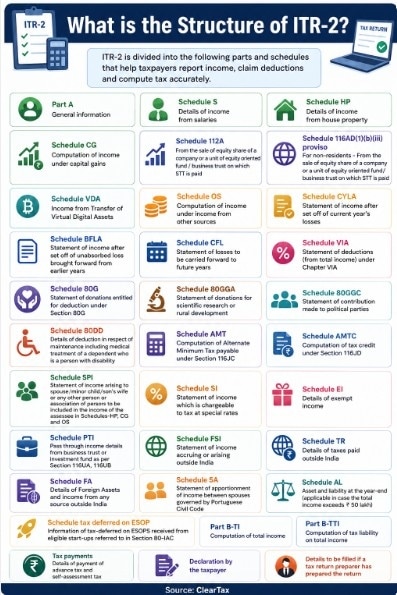
The Income Tax Department has enabled both the online filing facility and Excel utility for ITR-2 for Assessment Year (AY) 2026-27 on its e-filing portal, allowing eligible taxpayers to begin filing returns for Financial Year (FY) 2025-26. The move expands filing options and gives taxpayers flexibility in choosing between online and offline modes.
For many taxpayers, choosing the correct return form is the first and most important step. Filing with the wrong form can lead to notices, delays, or return defects. Here is a practical guide to help taxpayers understand whether ITR-2 applies to them and how they can file it.

 India is the second-best BRICS performer, but that is not enough: Economist Surjit Bhalla
 BRICS Summit 2026: PM Modi warns against turning critical supply chains into geopolitical tools
  China will push for a 'Greater BRICS': Ex-foreign secretary decodes Delhi summit, says test will come in 2027
 'India must seriously evaluate exiting UN': Zoho's Sridhar Vembu
 'Need to reflect 2026, and no longer 1945': UN endorses PM Modi’s push for UNSC overhaul in BRICS 2026
 “BRICS’ Relevance Is Growing”: PM Modi As 18th BRICS Summit Draws To Close
 “BRICS Must Involve Citizens”: PM Modi On Expanding Friendship, Partnership And Cooperation
 Gen Z Wealth Creation: Why Patience, Long-Term Investing & Compounding Matter For Young Investors
 Mastercard’s Vision For India’s Digital Economy
 BRICS Summit 2026 LIVE | PM Modi Announces Integrated Early Warning System For Global Crises
 Avoid jewellery; stick to ETFs, bars and coins for investment this festive season: Navneet Damani
 SEBI’s CAS proposals: Expert weighs in on new expiry-day settlement price methodology
 Large caps stocks under pressure as rising US bond yields, crude prices weigh on foreign flows
  SEBI proposes bringing unexecuted Iceberg orders into closing auction
 SEBI proposes new expiry-day settlement formula for derivatives after CAS concerns
 Amit Shah Hails Modi Govt 7.8% Growth, Strong Defence & Viksit Bharat 2047India is the second-best BRICS performer, but that is not enough: Economist Surjit Bhalla“BRICS’ Relevance Is Growing”: PM Modi As 18th BRICS Summit Draws To Close
 PM Modi Meets Philippines President Marcos On Sidelines Of BRICS Summit 2026
 Russian President Vladimir Putin Departs Delhi After Participating In BRICS Summit 2026


