


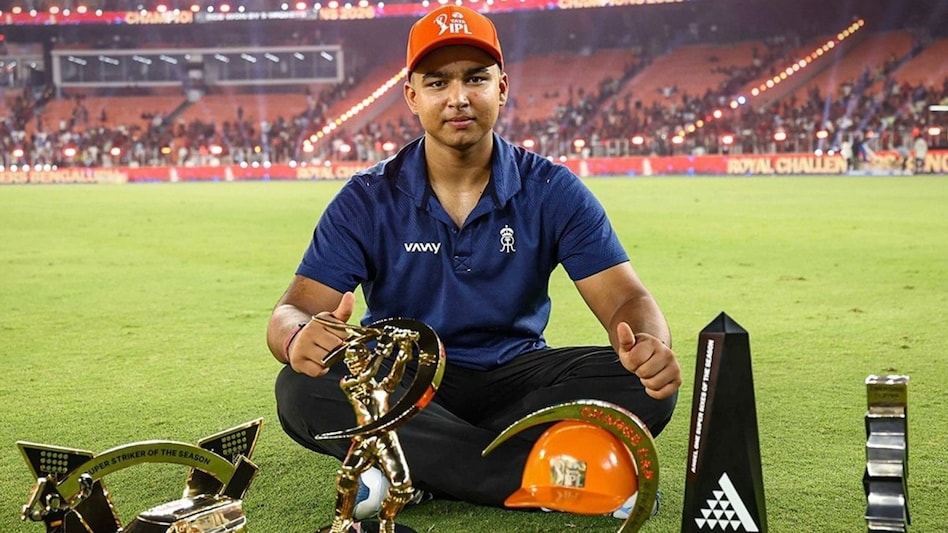
 Since his income is earned through cricket, endorsements, and sponsorships, Vaibhav Sooryavanshi's earnings are taxable in his own hands and are not clubbed with his parents' income. (BCCI/IPL)
Teen cricket sensation Vaibhav Sooryavanshi has reportedly built a net worth of around ₹7 crore at just 15 years of age through IPL contracts, tournament winnings, sponsorships and endorsement deals. His remarkable rise has also brought attention to an important financial question: how does the Income Tax Department treat earnings made by minors?
Under Indian tax laws, a person below the age of 18 is considered a minor. While minors can earn income from various sources, the taxation rules are different from those applicable to adults. In most cases, a minor's income is not taxed separately but is added to the income of a parent under the "clubbing of income" provisions.

 HDFC Bank penalises top officials, including CEO and CFO, in MSRDC case. Here’s why
 Where are the jobs: Youth unemployment remains high; fewer jobs for those with higher education in India
 What’s slowing the next phase of GCC growth?
 576 individuals reported gross income exceeding ₹100 crore in AY 2025-26
 NFO alert: SBI MF floats Nifty Midcap 150 Momentum 50 ETF FOF; why should you choose it
 Infosys Fined In France: 70-Hour Work-week Debate Returns After €175,000 Labour Penalty
 I.T. Sector Outlook: Is the Worst Over for Indian I.T. Stocks After Long Underperformance?
 France And Spain Wildfires Threaten Cap Ferret Mansions And Bordeaux Wine Country
 Maruti Suzuki Eyes 25-30% SUV Growth, Says CNG Demand Has Overtaken Diesel
 "Don't Divert Focus From Students' Future": Rijiju Urges Oppn To Debate Anti-Paper Leak Bill
 Tata Power Q1 profit rises 11% to Rs 1,176 crore; revenue up 6%, capex tops Rs 5,300 crore
 HDFC Bank concludes internal review into MSRDC deposit arrangements; CEO, CFO among 3 fined Rs 1 lakh
 How Narayana Murthy's era, Vishal Sikka's stint and Salil Parekh's tenure differed; big task awaits next Infosys CEO
 BEL Q1 results: Net profit rises 9%, revenue at Rs 5,533 crore
  Sensex, Nifty snap five-session losing run; investors add Rs 5.1 lakh crore in wealth
 Only 26 of every 100 young Indian graduates have salaried jobs; just 4 enjoy basic employment benefits: Report
 Apple iPhone 18 vs Google Pixel 11: Which flagship model should you wait for?HDFC Bank penalises top officials, including CEO and CFO, in MSRDC case. Here’s whyTata Power Q1 profit rises 11% to Rs 1,176 crore; revenue up 6%, capex tops Rs 5,300 crore
 CCTV Captures Thrissur-Kozhikode Bus Crash In Malappuram, One Killed And Around 20 Injured










