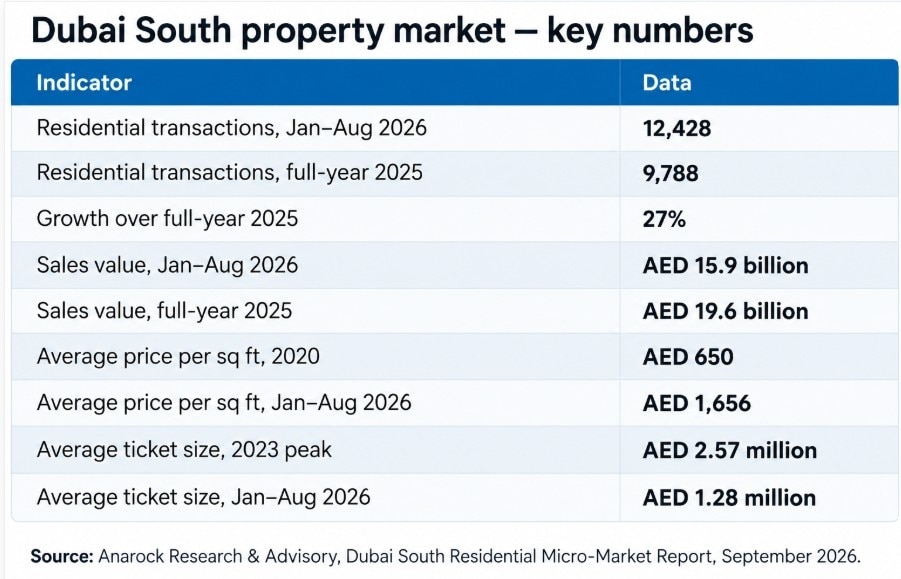



 Dubai South recorded 12,428 residential transactions between January and August 2026, surpassing the 9,788 transactions recorded during the whole of 2025 by 27%
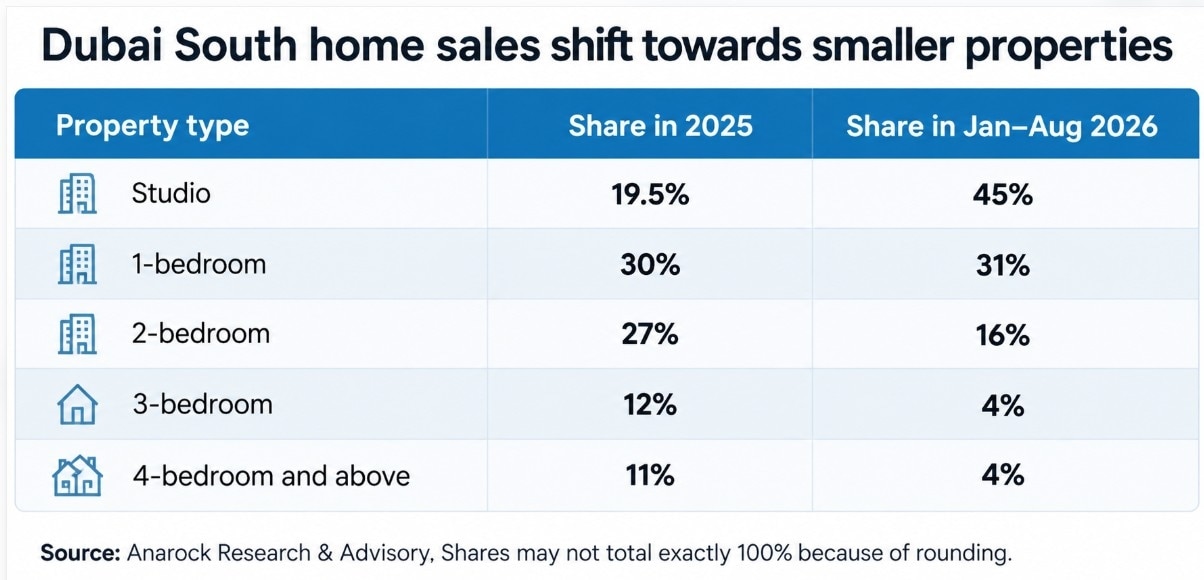
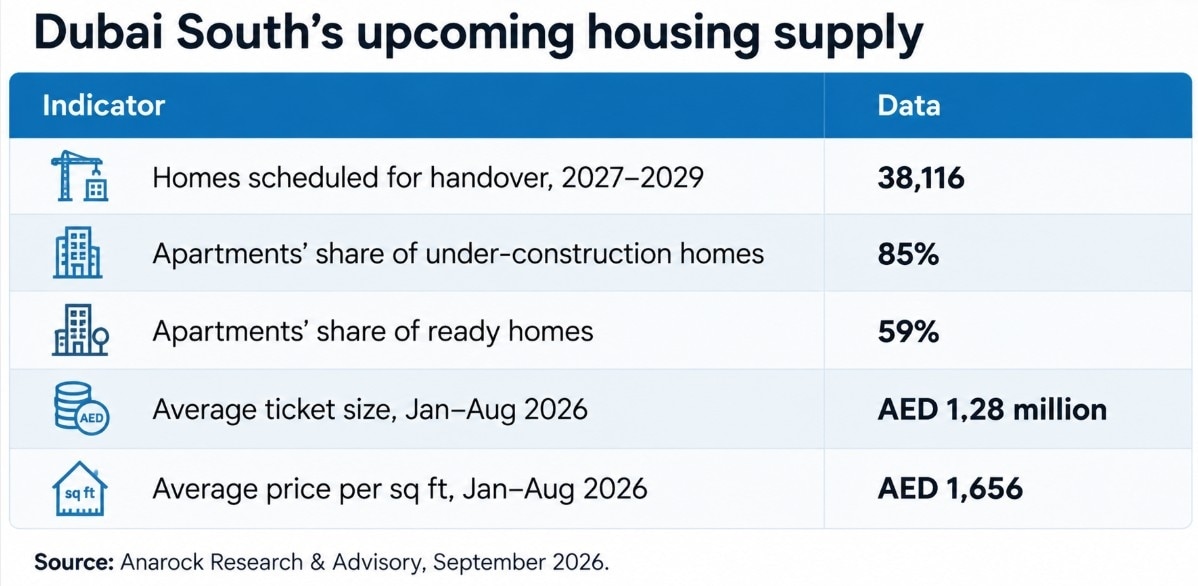
Dubai South’s residential property market is witnessing a sharp shift towards smaller homes, even as prices per square foot continue to rise. Transaction volumes have surged, studios are gaining market share, and average purchase values have declined from their 2023 peak, raising questions about affordability and the changing profile of buyers.
Dubai South recorded 12,428 residential transactions between January and August 2026, surpassing the 9,788 transactions recorded during the whole of 2025 by 27%, according to Anarock Research & Advisory’s September 2026 Dubai South Residential Micro-Market Report. The value of residential sales reached AED 15.9 billion during the eight-month period, equivalent to 81% of the AED 19.6 billion recorded in 2025.

 Noel Tata challenges Chandrasekaran's reappointment as Tata Sons chairman, seeks board meeting video
 Sugar season 2026-27 begins on schedule, 107 mills start crushing; ISMA expects stable prices
 Why banks are seeing strong growth in corporate credit despite geopolitical uncertainties
 'It's not AI, it's Arrogant India': Veteran investor warns India is losing FPIs' trust
 Jio's record IPO paid bankers less than half of what Hyundai paid
 Silver Prices Crash Over 50% From Peak | Is This The Right Time To Buy Before Wedding Season?
 ‘Yeh Dil Maange More’: Piyush Goyal On India’s Maritime Vision, Sagarmala And Seafarer Training
 Market Masters: Manish Sonthalia’s Wealth Creation Masterclass For Diwali 2026
 DCB Bank Q2 Results | CEO Praveen Kutty On Record Profit, Growth And Asset Quality
 Piyush Goyal’s $85 Trillion Trade Vision: 9 FTAs, 38 Nations and More Deals In The Pipeline
 Jio's record IPO paid bankers less than half of what Hyundai paid
 Kotak Mahindra Bank, JSW Steel, Jindal Steel, Shree Cement, Nuvoco, AU SFB: Brokerage outlook, share price targets
 Who is Avadhut Sathe? The trader behind the academy at the centre of Sebi’s ₹546 crore order
 Sensex, Nifty snap four-session losing run; tentative relief or more recovery ahead?
 Tata Motors shares: Why this Tata stock fell today; worth buying now?
 Refund claim takes an AI twist. Customer said boba drinks spilled, café finds packaging did not match. Here’s what happened next
 Financial Horoscope Today, October 27, 2026: Earnings Will Increase for Libra, Know the Financial Horoscope of 12 Zodiac Signs
 India makes more electronics, but how much value does it actually add?Noel Tata challenges Chandrasekaran's reappointment as Tata Sons chairman, seeks board meeting video
 Jio Platforms IPO allotment status: How to check on BSE, NSE and KFin Technologies