


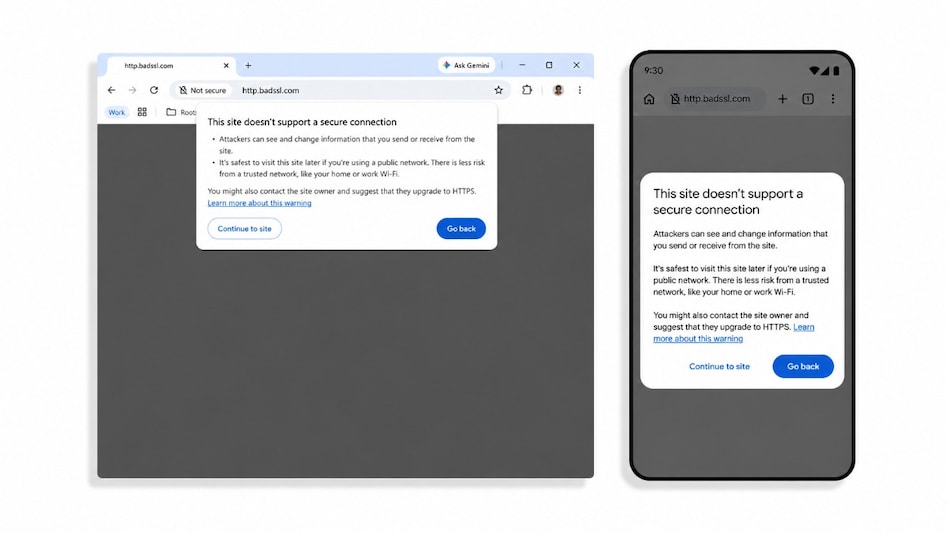
 Google Chrome will ask you before connecting to insecure HTTP websites to improve browsing safety.(Photo:Google)
Google Chrome is adding another layer of protection against insecure websites by asking for your permission before connecting to sites that don't use HTTPS. The change aims to address a limitation of the browser’s existing “Not Secure” warning, which can go unnoticed and may not appear during short-lived HTTP connections, such as redirects.
According to Google’s Chrome Security team, the new protection was initially enabled earlier this year for users enrolled in Chrome’s Enhanced Protection mode in Safe Browsing. Google is now extending it to all users by default.

 Market crash: Why stock portfolios are bleeding; will selloff deepen? | BT Explainer
 Jio Platforms IPO: Retail portion fully booked; issue subscribed 3.5x on Day 2
 eMudhra shares plunge 14%, take three-day fall to 34%; here's why
 SpaceX's AI push: Elon Musk-led company offers 20% pay rise if employees relocate to Memphis or Southaven. Details here
 Jio Platforms IPO: What retail investors should know before the October 23 closing date
 Tiger Shroff Firing Case: Was Salman Khan The Original Target? 4 More Arrested
 U.S. Secretary Marco Rubio Visits Reliance Refinery Amid $110 Crude Oil Prices | India-U.S. Energy Ties
 Elon Musk’s $3.5 Trillion Merger Plan: How Tesla–SpaceX Tie-Up Could Reshape AI And Space
 PROMO | 23rd Edition Of Business Today’s Most Powerful Women Awards 2026: Celebrating India’s Women Leaders
 Chennai Floods Again! Why Does Tamil Nadu Face The Same Monsoon Crisis Every Year?

 360 ONE WAM shares rise as UBS acquires 4.8% stake through warrant conversionMarket crash: Why stock portfolios are bleeding; will selloff deepen? | BT Explainer
 Indian Hotels shares jump 6% after Q2 results, guidance; here are target prices
 Jio Platforms IPO: Applying in two categories? Avoid these mistakesJio Platforms IPO: Retail portion fully booked; issue subscribed 3.5x on Day 2Tiger Shroff Firing Case: Was Salman Khan The Original Target? 4 More Arrested
 Amitabh Bachchan takes break from social media after being advised rest for a few daysU.S. Secretary Marco Rubio Visits Reliance Refinery Amid $110 Crude Oil Prices | India-U.S. Energy Ties
 ‘70% is from data centres’: HFCL MD Mahendra Nahata on fibre optic cable demand boom
 Airbnb changes house rules for guests. Here’s what hosts can no longer ask you to do













