


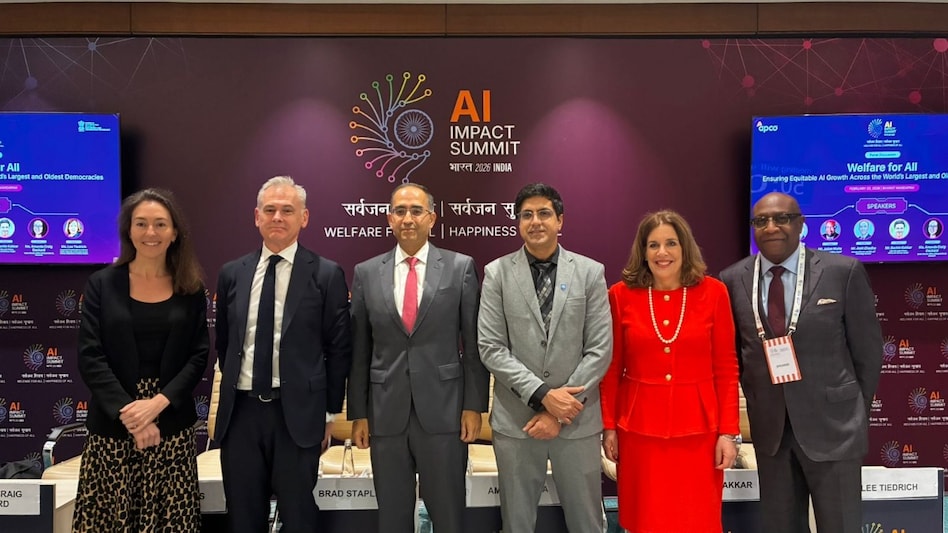
 Kakkar also noted India’s Digital Public Infrastructure (DPI), which includes Aadhaar and UPI, providing a unique ecosystem for secure AI deployment that other nations lack.
 On February 20, Google’s Engineering Site Director, Sachin Kakkar, became a part of a panel discussion at the India AI Impact Summit 2026. During the discussion, Kakkar argued about how India is in need of standardised AI regulation.
He said copy-pasting AI laws or policy structures from regions like the EU or the US, and applying them in India without adapting for India’s economic structure, could restrict its ability to build its own AI ecosystem.

 AI revenue is surging at Indian IT firms, but how much is adding to growth?
 Festive spending in urban India to drop 6% to ₹1.97 lakh crore amid inflation: Survey
 India to overtake Japan as world’s fourth-largest economy in 2027: IMF projections
 BT Explainer: What the SC verdict on Yes Bank’s AT-1 bonds means for the lender and will it alter AT1 bonds as such?
 Stock market: India back on investors’ radar as they warm to ‘non-AI stories’, says HSBC
 Jio IPO: Mukesh Ambani's Big ₹30,213 Crore Bet, Reliance Employees Asked To Invest?
 Flying Cars Are Here? Elon Musk Shows Tesla Roadster Flying Through Air In Stunning Demo
 Ramakrishna P, CEO, India Mobile Congress Talks To Us About India’s Next Digital Frontier
 Market Recovery: Gaurang Shah Picks Banking, Defence, Power And Cement Stocks For Fresh Bets
 Will IDBI Employees Lose Jobs? DIPAM Secretary Arunish Chawla Clears The Air On Pension & Benefit
 CCL Products shares fall 9% on Q2 results; brokerages see up to 30% upside
 PNB Q2 earnings: Net profit rises 13%, asset quality improves
  BT Explainer: What changes for investors post revision of new Closing Auction System
  PC Jeweller shares hit 52-week high; stock jumps 75% YTD; what analysts say
 Federal Bank Q2 earnings: Net profit at record high, asset quality improves
  iPhone Duo pre-orders: Delivery dates shift to January 2027 within minutes
 E20 fuel and older petrol cars: Could engine damage lead to an insurance claim rejection?
 'Inspired by Bangladesh...': Harsh Goenka’s post sparks attention
 India’s 10-year bond yield may rise to 7.6% as US Treasury yields remain elevated: SBI Research
 Saif Ali Khan rents out two commercial units in Mumbai for ₹22.76 lakh per month












