With artificial intelligence (AI) reshaping the consumer and technology market, Ternus will have to start from scratch and rebuild Apple's operating model. On the other hand, he will also have to drive the company amid challenges like memory supply crunches, growing component costs, shifting global manufacturing geography, and intensifying regulatory scrutiny.
Must read: Tim Cook’s 15-year Apple legacy: How he transformed the company after Steve Jobs
Analyst Tarun Pathak, Research Director at Counterpoint Research, describes it as a “transformative phase” for Apple amid hardware diversification, supply chain challenges, and growing pressure for AI. Despite Apple has mature ecosystem, any modest changes in growth, margins or customer upgrade behaviour could have a major impact.
Tim Cook's legacy beyond iPhone
While Steve Jobs was the man behind Apple, Cook made the company an iconic consumer hardware maker globally. Under his leadership, Apple’s annual revenue quadrupled, and it was achieved through supply chain execution, operational discipline, and smart margin preservation across its product categories.
Beyond iPhones, Cook introduced new hardware categories like Apple Watch and AirPods. He also built Apple’s Services ecosystem, consisting of the App Store, iCloud, Apple Pay, and Apple Music, which is said to be a strategic juggernaut. Reportedly, the service business alone became worth more than $100 billion annually.
"Tim Cook concludes a transformative CEO tenure that saw Apple's revenue quadruple and its valuation soar into the trillions, leaving behind a formidable legacy of growth across both hardware and services," Pathak told Business Today. "Under his era, Apple's strength has been relentless execution and supply chain management at scale. Apple has been able to maintain margins, clock record revenues even in mature product categories, successfully launched new products like Watch and AirPods and scale them into successful product lines."
Must read: How Tim Cook positioned India as the pillar of Apple’s long-term growth beyond the iPhone
Why did Apple choose John Ternus?
Ternus comes from a hardware background and has spent two decades leading engineering on the iPhone, iPad and Mac. His two decades at Apple and product-engineering background could become an advantage amid AI transforming the tech industry.
Prabhu Ram, VP-Industry Research Group, CyberMedia Research (CMR) told Business Today, “Under John Ternus, Apple is likely to place greater strategic weight on hardware execution, silicon integration and AI-enabled product experiences.” Ram also talked about Johny Srouji taking over Hardware Engineering and Hardware Technologies, and how their synergy could benefit Apple.
“Ternus brings deep product-engineering experience across iPhone, iPad, Mac and other major hardware platforms, while Johny Srouji's expanded role as Chief Hardware Officer brings Hardware Engineering and Hardware Technologies under a single leadership structure. This points to tighter integration across silicon, hardware engineering, product architecture and software, with AI increasingly becoming a reason to upgrade rather than simply another software feature,” Ram said.
Apple has a huge installed base, but convincing millions of existing users to buy new hardware requires more than adding another AI button. The company needs experiences that are materially better because of AI.
However, Pathak argues that AI is currently bringing various changes across chip design, on-device compute power, and how products are interacting with users. He also highlighted that Apple will need to manage new challenges in its supply chain while developing new types of products beyond smartphones.
Also read: The Tim Cook story: From Steve Jobs’ no. 2 to Apple CEO
“While smartphones are here to stay, there are new product categories like smart glasses, fitness bands, rings or even AI pins which are making their debut. Though in initial stages, some of these categories have the potential to be mass market products, which Apple needs to keep an eye on, and this is where John's hardware background will come in handy,” Pathak noted.
Apple plans for September 2026
Apple has finally revealed the launch date for its new hardware products, which is said to include iPhone 18 Pro models, the first-ever foldable iPhone and a Siri overhaul reportedly built in part on a Google Gemini model, all under Ternus. “The combination could allow Apple to move more aggressively on new form factors and computing experiences, including foldables, AI-native devices and potentially wearables beyond the current Apple Watch portfolio,” Ram says.
However, the real challenge for Ternus will be to bring Apple’s AI strategy to consumers that finally payoff, after delays and failed promises. Pathak also says that scaling Apple's privacy-first AI approach into use cases that people genuinely find valuable could be the biggest strategic challenge. Apple will have to make AI feel indispensable across devices while maintaining its privacy positioning. Therefore, Apple's next generation of products will be judged not simply on processor performance, cameras or battery life, but on how AI changes user experiences.
The supply-chain test
As Ternus starts his tenure as CEO, he will face an important but less visible challenge: Managing how Apple buys components and materials needed to make its products.
Tim Cook built his reputation around Apple's strategic supply chain, but now it comes with several roadblocks that now fall under Ternus leadership. Reuters reported in June that Apple expected to raise prices because of rising memory and storage costs. Cook himself called the current memory market “a hundred-year flood,” unlike anything he'd seen in more than 40 years in the industry.
For Ternus, the issues will mainly surround its ability to secure enough supply without allowing costs to undermine pricing, demand or margins. Prabhu Ram told Business Today that “Apple's exposure is real but manageable.”
“Memory pricing pressure is industry-wide, not Apple-specific, and Apple has historically secured more favourable terms than peers on both foundry wafers and NAND supply. Manufacturing concentration in Taiwan remains the more structural, longer-term risk, independent of this leadership transition,” he added.
Apple is also reducing its manufacturing dependence on China and expanding to other regions, including in India. According to a Counterpoint report, India is expected to produce 26% of global iPhones in 2026, up from 6% in 2022. “India turned out to be a great case study for Apple becoming an active iPhone exporter to the US and likely to end up capturing 26% of global iPhone manufacturing... Balancing China's depth, India's growth and US commitment will be a continuous negotiation for Ternus,” Pathak said.
In addition, Apple is also expanding its US manufacturing footprint, as it committed to $600 billion over four years and launched an American Manufacturing Program that will work across silicon, glass, rare-earth magnets and other parts of its supply chain.
Must read: Tim Cook’s Apple Era: 5 Apple products that defined his leadership
However, Pathak says “Ternus is taking the baton from him (Tim Cook) at a time when the industry is dealing with one of the hardest times in terms of memory and advanced nodes capacity crisis."
“Apple does not hold the same bargaining power as it used to before, and Ternus will have to navigate this phase while procuring enough supply for its products, keeping them affordable as well as protecting margins at the same time. Apple's margins will be one of the key metrics industry will be looking at,” he added.
Apple’s software and hardware synergy, and AI question
According to Apple's latest filings, the hardware segment dominates the company's sales in the first nine months of fiscal 2026. Apple generated $272.6 billion from products compared with $91.7 billion from Services. Despite the difference, Services remains disproportionately important because of its profitability.
“Services as a segment becomes more strategic going forward, especially when hardware margins are under pressure,” Pathak says. “The segment carries margins over 75%, so every incremental dollar becomes important for the bottom line. Apple will have to figure out new avenues of growing its services business as AI scales. There are also regulatory challenges which Apple faces, for example against its App Store practices which can directly impact its revenue and margins.”
This highlights that for Ternus, therefore, Services is both a growth opportunity and a regulatory vulnerability.
However, every major challenge on Ternus’s plate ultimately comes back to AI. Ram questions, “whether Ternus can translate hardware strength into a broader AI-led product cycle without compromising the services engine and operating discipline that defined the Cook era.” On the other hand, Pathak argues about Apple’s privacy commitments. He said, “The biggest challenge which Ternus will face is scaling Apple's privacy-first AI and creating use cases and experiences which truly are value add to the users.”
Therefore, Apple's next phase will require more than engineering excellence. Ternus will have to carefully navigate where AI belongs, how it should work inside the company's ecosystem, and when a new category is mature enough for Apple to enter.
Under the Ternus era, Apple’s future will be decided by its hardware expertise, custom silicon and privacy-first AI integration into products that bring meaning to customers' lives.



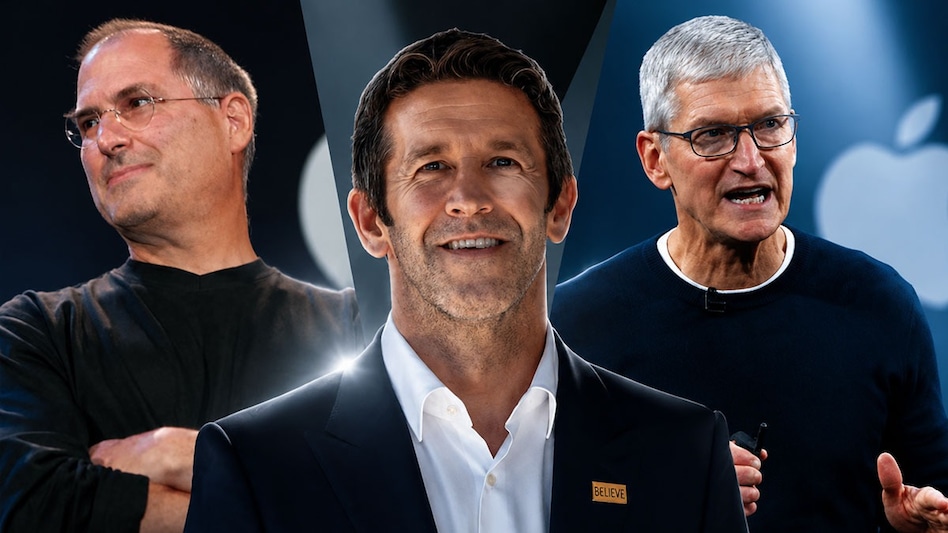 Tim Cook build his reputation around strategic Apple's supply chain, but now it comes with several road blocks which now comes under Ternus.
 Global debt hits $365 trillion: Why inflation masks the world’s rising debt burden
 'Going to look very different in 365 days': US Labor Dept watchdog warns amid H-1B crackdown
 El Niño's weather paradox: How one climate event causes floods and droughts
 EPFO ₹25,000 ceiling: How much PF will be deducted from your salary from October 2026?
 SIR notice received? ECI changes hearing rules; BLO may now visit your home
 R Veeramani Case: Granite Tycoon Faces Widening POCSO Probe In Chennai
 Gen Z And Money: Why Young Investors Want Quick Returns Over Long-Term Wealth Creation
 How Is Alexa+ Different? Will It have Ads Even If You Pay? Exclusive Chat
 Demand Robust Across Segments | Production To Ramp Up, Exports To Expand: Vivek Srivatsa
 GST Council To Meet On October 7: Invoice Matching, ITC & UPI MDR Tax In Focus
 IPO rush: Four IPOs conclude today; check subscription status, other details of issues still open
 Meesho shares slip 7% as Nomura assigns 'reduce' call; here's what the brokerage says
  Sensex, Nifty extend losing streak to seventh week, longest since 2020: What's next?
 Suzlon in bear grip: Oversold signals emerge near 52-week low for the stock
  EIL shares jump 7% to hit record high; stock up nearly 62% in six months: What's driving the rise?
 Muthoot Fincorp becomes BCCI’s title sponsor for home cricket till 2028
  Special FD vs regular FD: The extra interest may not be worth the lock-in
 LPG, CNG, PNG prices today (September 27): Check latest rates in Delhi, Mumbai, Kolkata, other cities












