















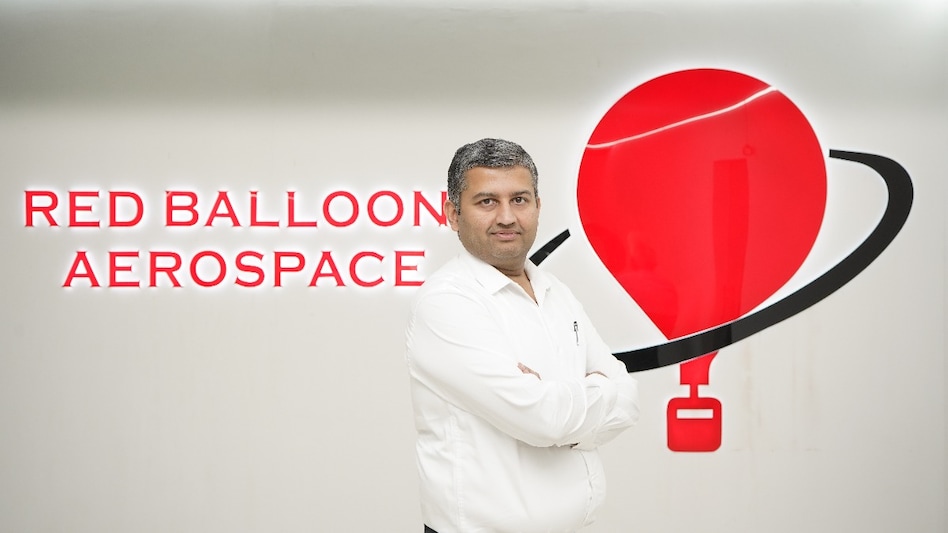
 CVS Kiran, co-founder and chief executive officer of Red Balloon Aerospace.
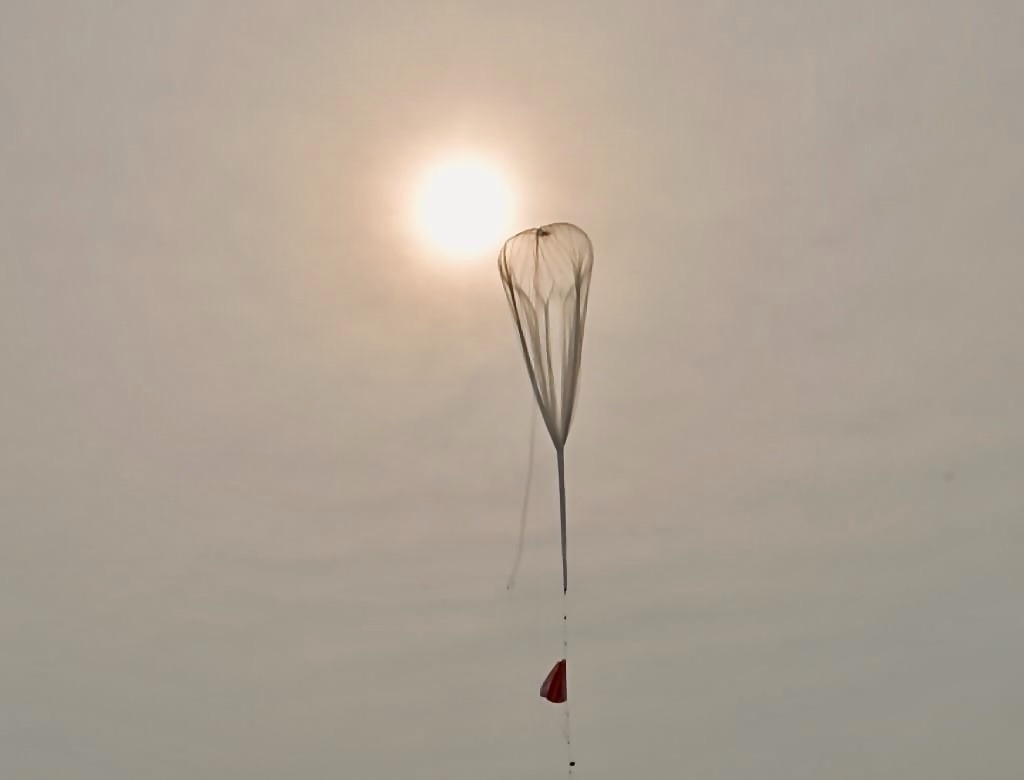
India has entered the small group of nations with indigenous stratospheric super-pressure balloon capability, as Red Balloon Aerospace launched what it calls the country’s first near-space commercial balloon platform.
The Vijayawada-based startup said its VISTA platform rose nearly 25 kilometres above Earth while carrying payloads from seven Indian and international partners. The mission included biological experiment systems, propulsion technology demonstrations, earth observation sensors, onboard computing platforms and navigation validation systems.

 BRICS Summit 2026: PM Modi warns against turning critical supply chains into geopolitical tools
  'Need to reflect 2026, and no longer 1945': UN endorses PM Modi’s push for UNSC overhaul in BRICS 2026
 'India to overtake US within 25 years...': US economist sees Asian century taking shape
 AI safety warning: Sam Altman, Elon Musk back Anthropic CEO’s call to slow down frontier AI. Why?
 Will the Tata companies with interest in Tata Sons be impacted on Tuesday and how?
 “BRICS’ Relevance Is Growing”: PM Modi As 18th BRICS Summit Draws To Close
 “BRICS Must Involve Citizens”: PM Modi On Expanding Friendship, Partnership And Cooperation
 Gen Z Wealth Creation: Why Patience, Long-Term Investing & Compounding Matter For Young Investors
 Mastercard’s Vision For India’s Digital Economy
 BRICS Summit 2026 LIVE | PM Modi Announces Integrated Early Warning System For Global Crises
 Avoid jewellery; stick to ETFs, bars and coins for investment this festive season: Navneet Damani
 SEBI’s CAS proposals: Expert weighs in on new expiry-day settlement price methodology
 Large caps stocks under pressure as rising US bond yields, crude prices weigh on foreign flows
  SEBI proposes bringing unexecuted Iceberg orders into closing auction
 SEBI proposes new expiry-day settlement formula for derivatives after CAS concerns“BRICS’ Relevance Is Growing”: PM Modi As 18th BRICS Summit Draws To Close
 PM Modi Meets Philippines President Marcos On Sidelines Of BRICS Summit 2026
 Russian President Vladimir Putin Departs Delhi After Participating In BRICS Summit 2026
 Indian-origin CEO spent ₹3.5 crore on girlfriend, then sued her to get it back after break-up
 PM Modi Meets Kazakhstan President Tokayev | India-Kazakhstan Partnership Gets Big Boost


