


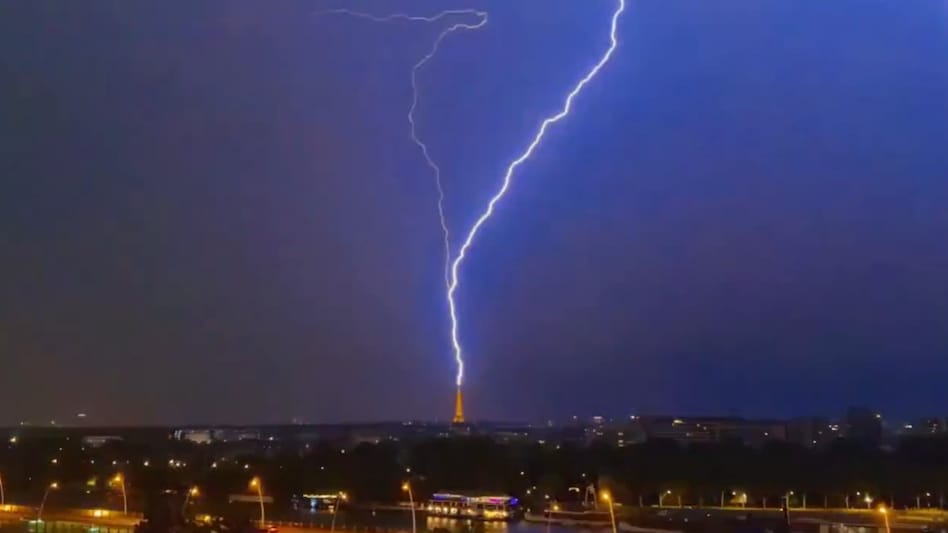
 Lightning hits the Eiffel Tower during a thunderstorm in Paris on July 27. The storms are expected to bring an end to one of France’s most extraordinary heatwaves.
Europe's relentless heatwave has entered a dangerous new phase. After days of record-breaking temperatures that pushed thermometers past 40°C in several countries, violent thunderstorms, frequent lightning, giant hail, flash floods and damaging winds have swept across parts of the continent, exposing the volatile nature of an atmosphere supercharged by extreme heat.
The dramatic shift from blistering sunshine to destructive storms has left meteorologists warning that Europe's weather is becoming increasingly erratic. While thunderstorms have brought temporary relief from the oppressive heat, they have also triggered widespread disruption, infrastructure damage and fresh safety concerns across multiple countries.

 Bitter Friday for Nestlé: Russia seizes assets as Moscow targets Western firms over Ukraine support
 From selling gold to spending ₹3.5 lakh: iPhone 18 Pro fever hits India as fans queue up on sale day
 Jefferies' Christopher Wood sees gold at $10,000 'sooner or later'; likes India's small, midcaps
 NSE IPO fully subscribed on Day 2; QIB, NII quotas booked 1.3 times each
 Warren Buffett steps down as Chairman after 60 years: What changes at Berkshire Hathaway now
 “Unacceptable And Unprofessional”: MEA Rejects Pakistan’s Claims Over INS Kolkata Collision
  Commodity Trading For Beginners: How MCX & NCDEX Work | Trading Basics | Money Today
 US Fed Rate Hikes A Headwind For Foreign Flows? | Jibi Jacob | Jefferies
 ₹25 Billion FII Outflow: What Could Bring Foreign Investors Back? | Jefferies' Jibi Jacob
 India’s Private CapEx Picks Up: Christopher Wood On The Market Outlook
 Jindal Supreme, SS Retail, Hero Motors IPOs subscribed up to 181 times on final day; details here
 Sensex, Nifty post sixth weekly loss; TCS, Titan among top laggards, slip up to 4%
 How AI collapse could benefit Indian equity market; Jefferies' Christopher Wood explains
  Banks are no more secular growth story, prefer NBFCs: Chris WoodJefferies' Christopher Wood sees gold at $10,000 'sooner or later'; likes India's small, midcaps
 Air India's incoming CEO weighs merging budget arm AI Express to rein in swelling costs: Report
 Darkness at 9 pm: Pakistan shuts markets, slashes allocations amid severe fuel & gas crisis
 Tata Electronics partners with Japanese, Malaysian firms to boost semiconductor manufacturing in India
 What Will Define the Next Generation of Finance Leaders?
  Tata Electronics, L&T Semiconductor team up to expand India’s semiconductor manufacturing












