












 Strait of Hormuz won't be closed, says Iran, but also lays a condition
 Strait of Hormuz won't be closed, says Iran, but also lays a condition
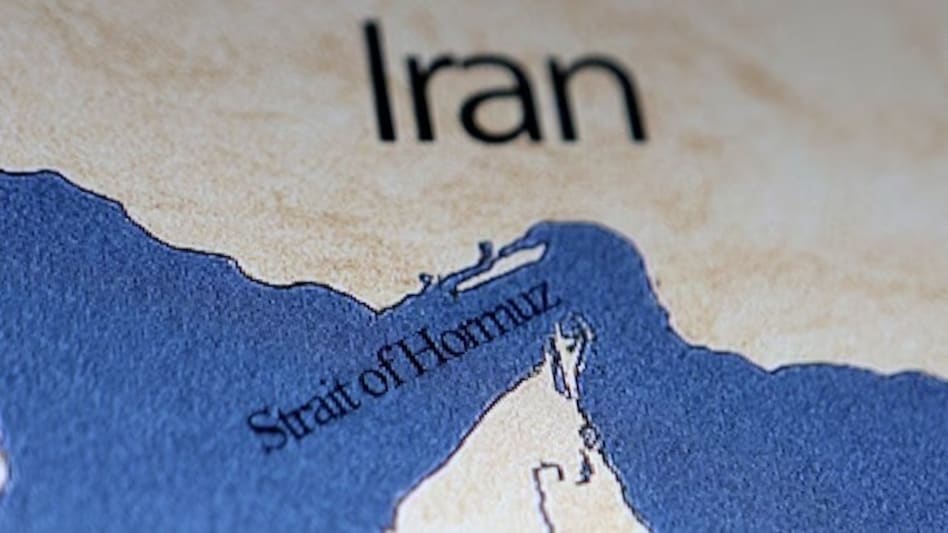
Iran war: The Strait of Hormuz won’t be shut but ships must coordinate with the Iranian navy to pass through the waterway. Tehran spoke about the strait on two different occasions.
Iran’s UN Ambassador Amir Saeid Iravani said on Thursday that it was not going to close the strait but added that it was Iran’s right to preserve the security of the key shipping route. Iravani said, "We are not going to close the Strait of Hormuz. But it is our inherent right to preserve the peace and security in this waterway."
Iran fully respects and remains committed to the principle of freedom of navigation under the law of the sea, said Irvani but added that the current situation is not the result of Iran's lawful exercise of its right of self-defence. "Rather, it is the direct consequence of the destabilising actions of the United States in launching aggression against Iran and undermining regional security."
Meanwhile, the country’s foreign ministry spokesperson Esmaeil Baghaei said to Mehr news agency that Iran does not want the strait to become insecure. "The security of the Strait of Hormuz is of vital importance to Iran, because the country’s security is tied to the security of the region. With the longest coastlines on the Persian Gulf and the Sea of Oman, Iran has always borne costs to protect this strategic waterway," said Esmaeil Baghaei.
"The insecurity created in the region by the United States and the Zionist regime can affect the movement of ships. However, Iran does not want this strait to become insecure, and ships must coordinate with the Iranian navy when passing through so that maritime security is maintained," Baghaei added.
The Hormuz disruption has sent the world into a frenzy, pushing up global energy prices and squeezing down supplies.
 Are NSE Electronic Gold Receipts better than physical gold or Gold ETFs?
  Inside luxury cruise MV Hondius: Where it went, fare, Hantavirus outbreak & deaths
 Hantavirus outbreak: Is India at risk from the Andes strain spreading globally?
 Is gold becoming investors’ favourite safe-haven bet again in 2026?
 Samsung's m-cap is bigger than Reliance, HDFC Bank, Airtel, SBI, other top 10 Indian listed firms put together
 Coforge Q4 Decoded: CEO Sudhir Singh On AI, Deals & FY27 Growth
 Paytm’s Big Turnaround! Analysts Cheer Strong FY26 Performance
 "Hard Facts Over Rhetoric": Air Marshal Bharti Reveals How India Decimated 9 Pak Terror Camps
 Are Smallcaps Ready For Another Big Run? JM Financial AMC Shares View
 A.I. Won’t Destroy IT Jobs? Coforge CEO Reveals The Bigger Opportunity
 Grasim, L&T and BEL: Trading strategy for three stocks| Daily Calls on BTTV
 Bajaj Auto, Moschip Tech, FDC: Expert shares outlook, strategy | Daily Calls on BTTVSamsung's m-cap is bigger than Reliance, HDFC Bank, Airtel, SBI, other top 10 Indian listed firms put together
 NCLT Mumbai admits insolvency plea against Prime Focus; stock zooms 215% in a year
 Expert advice on Multibagger Apollo Micro Systems; Fractal Analytics strategy | Daily Calls on BTTV