


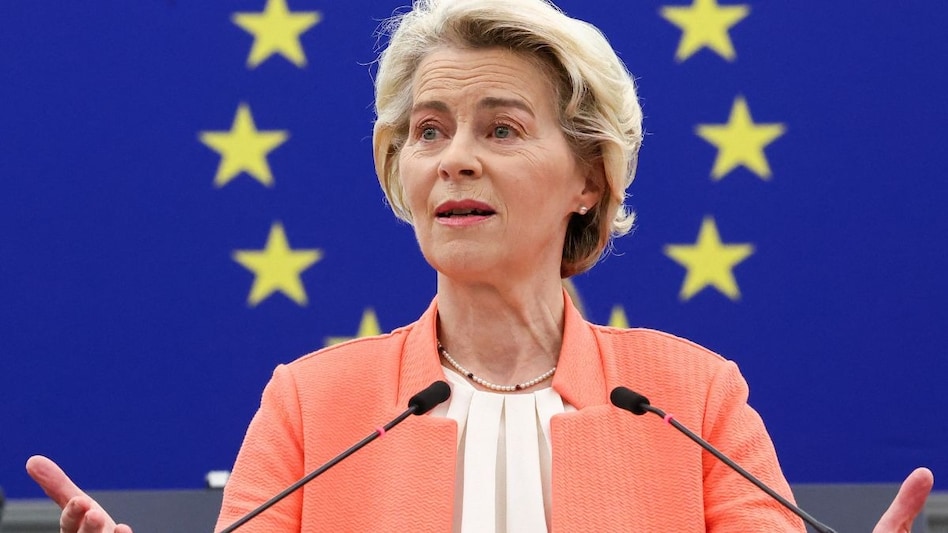
 Commission President Ursula von der Leyen said West Asia remains a critical hub for global energy supplies and trade routes.
 The European Commission has sounded a note of caution over escalating tensions in West Asia, warning that a prolonged crisis could have far-reaching implications for Europe’s economic stability, energy security, and geopolitical positioning.
In a formal statement, Commission President Ursula von der Leyen said the European Union is closely tracking developments in the region, amid concerns that further escalation could disrupt global markets and intensify existing economic pressures within the bloc.

 Capital formation, exports fuel 7.8% Q1 GDP growth
 GRT Jewellers to acquire 74.12% stake in Tribhovandas Bhimji Zaveri for Rs 1,033.71 crore
 India braves global headwinds: Q1GDP surges 7.8% as investment and services fire on all cylinders
  Kotak Bank recommends two internal candidates for CEO post: Report
 'Doomsayers were doomed, India bloomed': PM Modi as GDP growth jumps to 7.8% in Q1 FY27
 Nepal Flood Horror: Sadhguru, Manisha Koirala Stand In Solidarity As Rescue Efforts Continue
 Nepal Flood Horror: Children Found Alive After Days Under Debris, Hope Emerges From Devastation
 India’s 6% Growth Trap: Why Manufacturing Still Struggles To Beat China
 India GDP Growth At 7.8%: Is India’s Growth Story Getting Stronger? | Top Economists Decode
 Midcap Fund Strategy: Where WhiteOak Capital Sees The Biggest Opportunities
 Priority Jewels IPO subscribed 21.23 times on Day 2; check latest GMP, other key details
 Ola Electric shares jump 5%; still down 34% in a year; what's ahead?
 Sensex falls 307 points, Nifty settles below 24,100; what happened today
 Market veteran Ajay Bagga on top sectoral picks; impact of oil prices, monsoon on economy
  Nifty Bank jumps over 600 points in last five minutes; CAS in focusNepal Flood Horror: Sadhguru, Manisha Koirala Stand In Solidarity As Rescue Efforts Continue
 BT Explainer: What are EREVs? Why JSW MG Motor may bring this tech to India next
 Gujarat extends gutkha ban for another year: Tobacco, nicotine products remain banned till Sep 2027
 Modi-Putin Meet In Bishkek: New Push For India-Russia Ties?
 Elevated food inflation could constrain spending on non-food discretionary items, says Monthly Economic Report












