












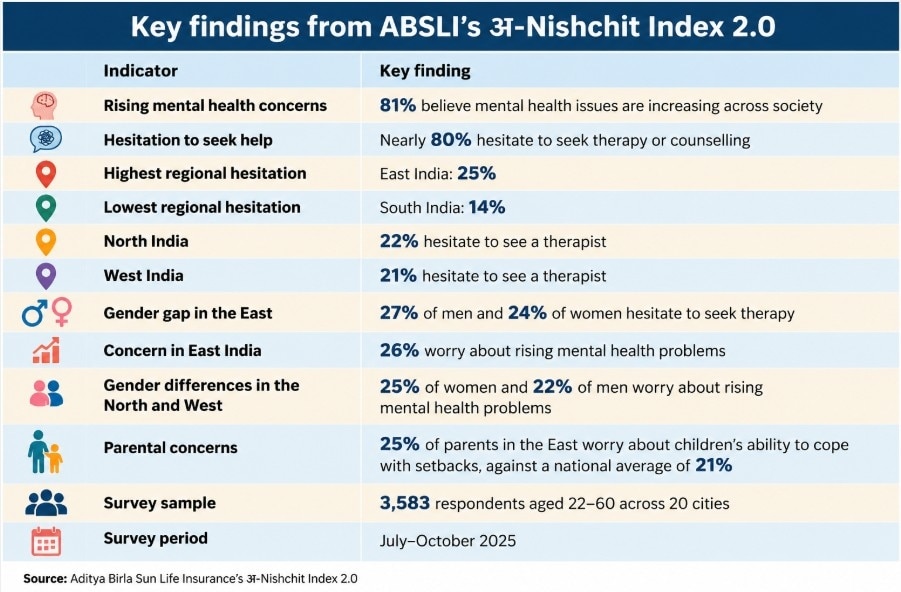



 The survey found that 25% of respondents in East India would hesitate to see a therapist, compared with 22% in the North, 21% in the West and 14% in the South.
Nearly 81% of Indians believe mental health issues are rising across society, yet nearly 80% hesitate to seek therapy or counselling, highlighting a gap between awareness and professional help-seeking, according to Aditya Birla Sun Life Insurance’s अ-Nishchit Index 2.0.
The findings, released ahead of World Mental Health Day on October 10, point to significant regional and gender differences in attitudes towards mental health. The survey covered 3,583 respondents aged 22–60 across 20 cities, with data collected between July and October 2025 by Drshti Strategic Research Services.

 BT BIG STORY: How India’s space startups are building on Isro’s blueprint
 Opposition's march to SC: Delhi police announces 30 key route diversions. Check details
 Delhi Metro closes 6 major stations ahead of Opposition's Supreme Court march today
  Commodities steal the show in 2026, surging 47.4% as gold and Bitcoin slip into negative territory
 India Post's ₹1.94 lakh crore opportunity: Can its vast network become a commercial powerhouse?
 REITs & AI Boom: Can Data Centres And AI-Ready Offices Drive Future Real Estate Growth?
 Should You SIP In REITs During A Market Downturn? Key Risks & Asset Allocation Explained
 REIT Returns Explained: Income, Capital Gains & Risks Investors Need To Know
 REIT Risks Explained: Key Factors Investors Must Check Before Investing In Commercial Real Estate
 Will IRDAI’s Broker Commission Crackdown Make Insurance Cheaper For Consumers?
 Commodities steal the show in 2026, surging 47.4% as gold and Bitcoin slip into negative territory
 BT Market Outlook: The drivers, risks and opportunities for the week ahead
 Market on the back foot, opportunities ahead: where should investors put their money?
 Poonawalla Fincorp Q2 earnings: Net profit zooms 405%, NII at Rs 1,589 crore
  Vedanta, TCS shares to turn ex-dividend; Ola rights issue; 2 stock splits next week
 Mental health in India: Why nearly 80% hesitate to seek therapy despite rising concernsOpposition's march to SC: Delhi police announces 30 key route diversions. Check detailsDelhi Metro closes 6 major stations ahead of Opposition's Supreme Court march today BT BIG STORY: How India’s space startups are building on Isro’s blueprint
 UAE has changed 5 key rules this October, from new restrictions to hefty fines, here's everything residents need to know


