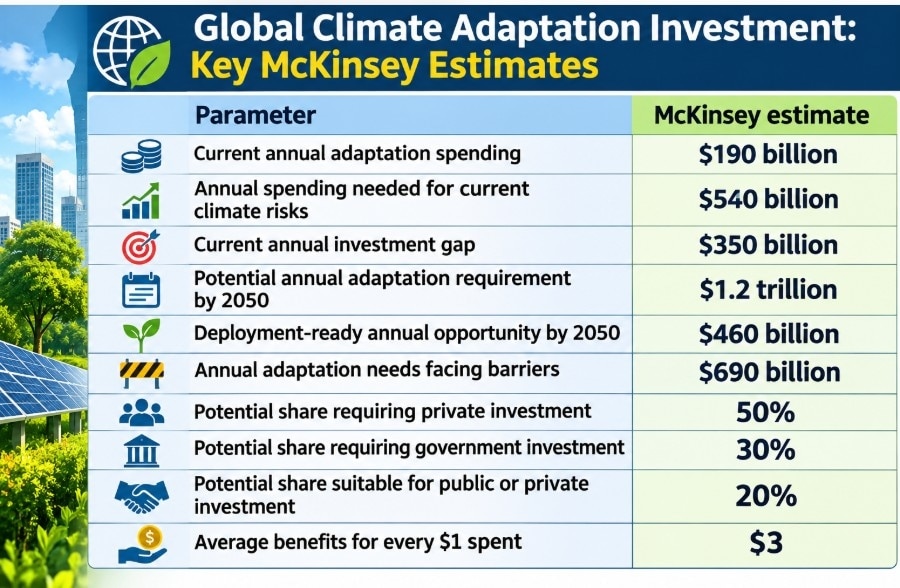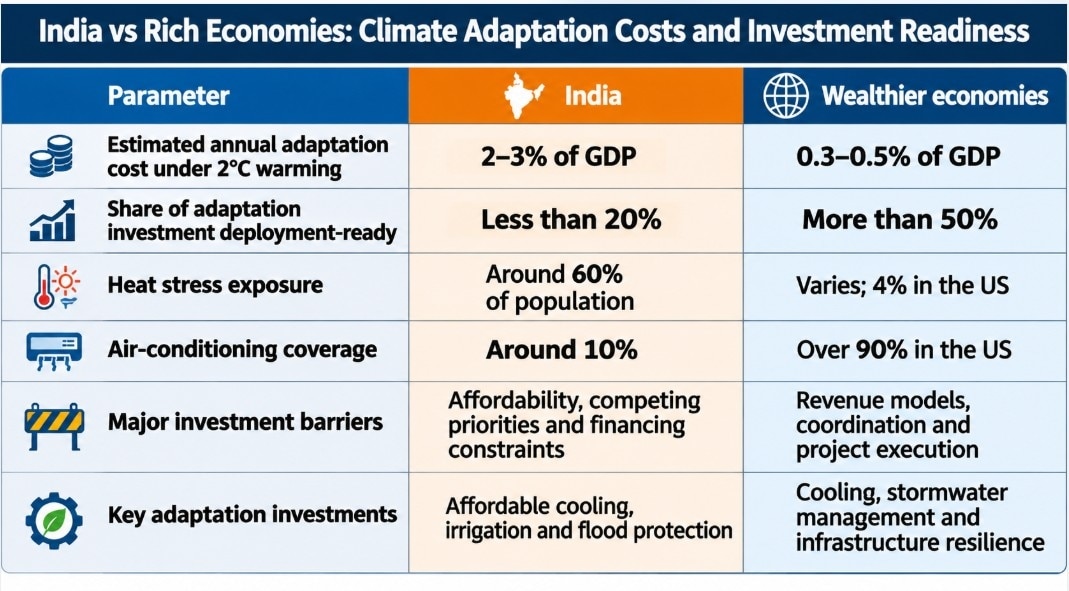




India could face a significantly higher financial burden than developed economies in protecting its population and infrastructure against climate change, with adaptation costs potentially reaching 2–3% of GDP under a 2°C warming scenario, according to a new McKinsey Global Institute (MGI) report. In comparison, wealthier regions such as North America and Europe may need to spend just 0.3–0.5% of GDP.
The November 2026 report, Advancing Adaptation: Breaking Barriers to a Trillion-Dollar Opportunity, highlights how developing economies face greater exposure to extreme weather while having fewer financial resources to invest in protection.

 India may soon install 1 lakh rooftop solar systems every 4-5 days, says Pralhad Joshi
 TVS succession: A question of who gets what
 NSE Q2 results: Net profit jumps 23% to ₹2,578 crore, trading volumes lift revenue
 Odisha targets 74% non-fossil energy mix by 2047, bets on floating solar and storage expansion
 India deserves three national carriers, says Adani Airports CEO: Is Adani the answer?
 Is SIF Right For You? Strategy, Risk And Returns Explained
 India's Gold Demand Crashes 29%: Modi's Appeal, High Prices Hit Buying Appetite
 Trump’s Plan B: How White House Could Govern Without Congress | US Midterm Elections
 32,490 Trees At Risk? Maharashtra’s Saidongar Project Sparks Row
 From Wheat And Bajra To Chillies And Tomatoes: A Farmer’s Solar Experiment In Rajasthan
 NSE Q2 results: Net profit jumps 23% to ₹2,578 crore, trading volumes lift revenue
 BLS Polymers, SFC Environmental shares zoom up to 81% in maiden trade
 India is a market for multibagger stocks, says Shankar Sharma; cautions against calling market bottom
 Upcoming IPOs: Over 20 issues may hit market soon after Rs 1.35 lakh crore fundraise in 4 months
 Zerodha raises instant withdrawal limit to ₹5 lakh: Nithin Kamath says ₹1 lakh crore paid out free
 Ajinkya Rahane's wife Radhika purchases luxury apartment in Dadar for ₹13.96 crore
 Travelling to Indonesia? Beware of fake qr codes and online payment scams
 Gen Z wants more office days than millennials: Why younger workers are embracing the workplace
 TVS-owned Norton to enter India, US markets in coming months; unveils new 450cc motorcycle
 Ramayana 3 on the cards? Here's what Ranbir Kapoor and Namit Malhotra have to say