












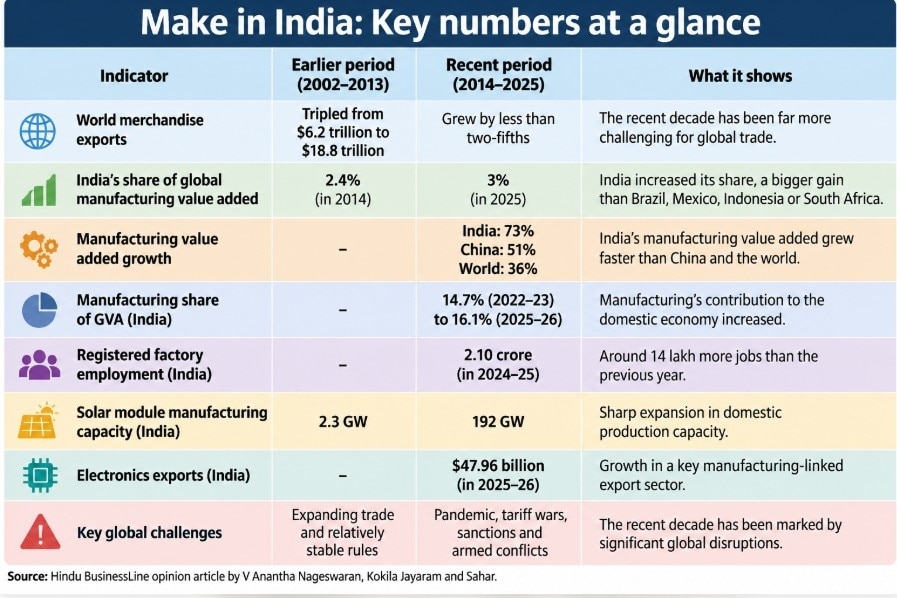



 Despite these headwinds, India’s manufacturing value added grew by 73% over the period cited in the article, compared with 51% for China and 36% for the world.
India’s manufacturing performance between 2014 and 2025 needs to be assessed against a challenging global backdrop marked by the Covid-19 pandemic, tariff wars and geopolitical conflicts, according to an opinion article published in Hindu BusinessLine by Chief Economic Adviser V Anantha Nageswaran, Kokila Jayaram and Sahar.
The authors argue that judging the Make in India initiative against the preceding decade without accounting for the vastly different global environment risks understating the progress made by the country’s manufacturing sector.

 'Shame on you Modi, Shah': CJP as Abhijeet Dipke, Ashutosh Ranka, Saurav Das detained from plane
 RBI's rupee defence: Special dollar window for oil firms, tighter forex derivative rules
 JioBlackRock Flexicap down 6.67% in 2026: 19 fresh buys, 18 exits in September reshuffle
 Small finance banks' profitability set to more than double in FY27 as microfinance stress eases
 '300+ calls and counting': Ahead of CJP protest, Saurav Das alleges Delhi Police leaked his mobile number
 Will IRDAI’s Broker Commission Crackdown Make Insurance Cheaper For Consumers?
 5 Reason Why Cheap Premium Insurance May Not Be The Best Choice
 Health & Life Insurance: How Much Cover Do You Really Need? Expert Explains
 Silver Investment Outlook: Why Gen Z Should Watch This Metal's Long-Term Growth Potential
 Gold Price Outlook: Is This the Right Time to Invest? Expert Sees Potential for New Highs
 Market on the back foot, opportunities ahead: where should investors put their money?
 Poonawalla Fincorp Q2 earnings: Net profit zooms 405%, NII at Rs 1,589 crore
  Vedanta, TCS shares to turn ex-dividend; Ola rights issue; 2 stock splits next week
 IPO rush: Rs 50,000 crore worth IPOs to hit Street by Diwali; Jio, Avada to lead fundraise
 Adani Ports, GMR Airports rise up to 5% amid block deal reports; check details
  'If you are watching this video...': Abhijeet Dipke’s message to CJP supporters goes viral after detention
 India’s 25-minute commute: Why short travel times may hide a deeper jobs crisisSmall finance banks' profitability set to more than double in FY27 as microfinance stress eases
 'I should've won 8 Nobel Peace Prizes, not one': Trump miffed at Nobel snub after Navi Pillay wins 2026 award'300+ calls and counting': Ahead of CJP protest, Saurav Das alleges Delhi Police leaked his mobile number


