











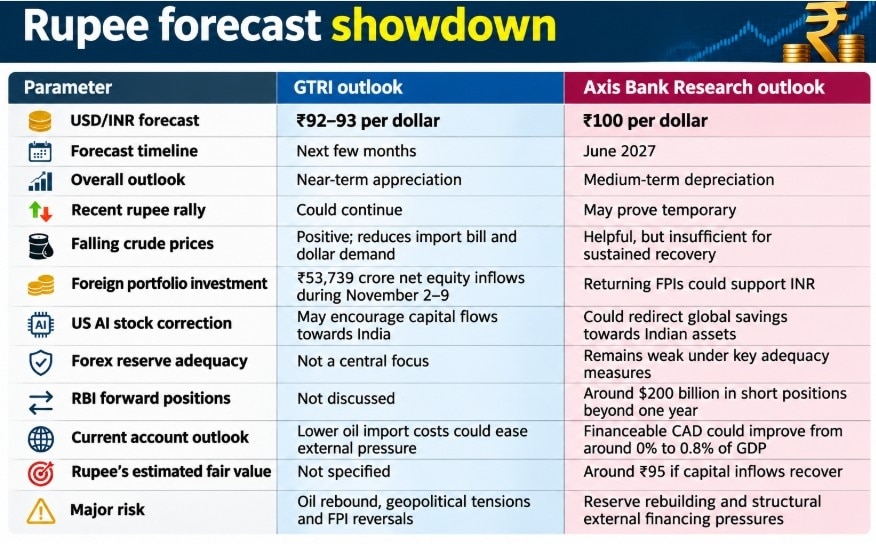



 In its November 11 report, INR: What happens if AI fades?, Axis Bank Research said recent appreciation could lose momentum as underlying fundamentals regain influence.
The Indian rupee strengthened to ₹93.65 against the US dollar on November 11, its highest level in more than six months. The recovery comes amid falling global oil prices and renewed foreign portfolio investment in Indian equities.
However, the Global Trade Research Initiative (GTRI) and Axis Bank Research differ on whether these developments can deliver lasting currency stability.

 Nvidia shares get 60% target cut! What should Indian stock investors know
 Noel Tata steps down as Tata Investment Chairman after 16 years; Bahram Vakil to take over
 Will October inflation breach 6%? What it means for interest rates, EMIs and GDP growth
 India overhauls visa rules: Tourist Visa renamed, 70% fewer form fields, new categories for foreigners
 'RBI may struggle to meet 4% inflation target': Economist flags fastest money, credit growth since 2012-13
 India's Jobless Rate Falls to 5.1%, But Why Is Urban Youth Unemployment Rising to 18.9%?
 Budget 2027: Industry Seeks LTCG Tax Abolition, STCG Cut To 10%, Lower STT Rates
 LIVE Daily Calls: Ask Your STOCK MARKET TODAY QUERIES | Market Update LIVE | Share Market News Today
 U.P. SIR Row: Yogi’s 1.27 Crore Hindu Voter Claim Gives Opposition Fresh Ammunition
 Big Challenge For Vijay Govt: 11 Diwali Murders Put Tamil Nadu Law & Order In Focus

 Cochin Shipyard shares tumble 7%: Weak Q2 earnings overshadow Rs 500 crore MoD order
 Sensex jumps 773 points, Nifty tops 25,250; profit booking trims gainsNvidia shares get 60% target cut! What should Indian stock investors know
 Mutual fund SIP inflows slip marginally to Rs 32,160 crore in October; equity inflows fall 14%
 TVS Motor expands global portfolio with Callisto 110 launch in Istanbul
 Financial Horoscope Today, November 12, 2026: Pisces Will See Their Plans Succeed, Know the Fate of Other Signs
 Land buying plunges 56% in 2026: Why developers are slowing expansion after 3 years of growth
 India–EU FTA's €119 billion trade promise: Could Europe's fiscal troubles threaten Indian exporters?
 Lahore AQI hits 263: Pakistan blames India's Diwali fireworks for toxic air
 Sundar Pichai welcomes Mark Zuckerberg's Meta AI models to Google Cloud with a special message


