


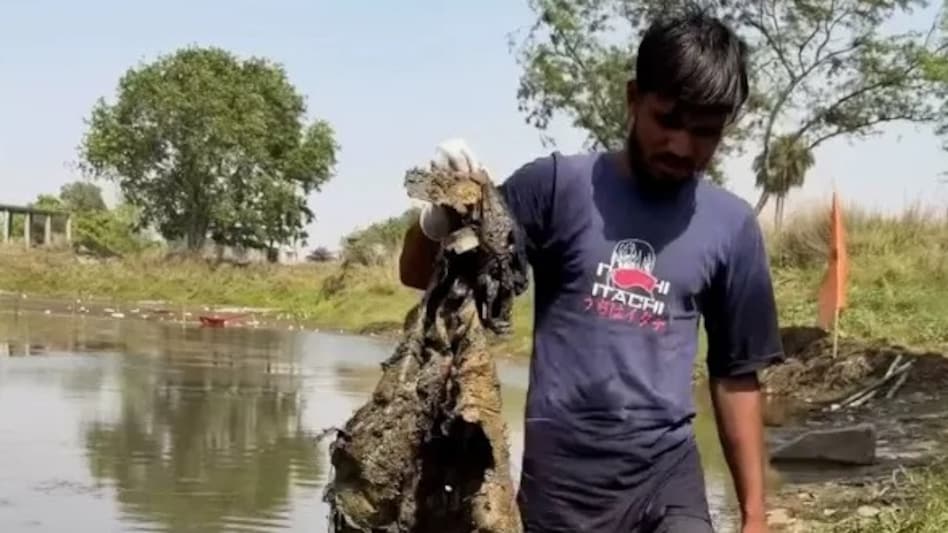
 Akash Gupta-River Cleaner
In the latest edition of Mann Ki Baat, Prime Minister Modi praised Akash Gupta, a 21-year-old native of Uttar Pradesh's Basti area, for leading a community-driven river restoration campaign that transformed a garbage-filled stretch of the Manorama River into a cleaner and healthier water body.
The Prime Minister highlighted Gupta’s work as an example of how ordinary citizens can create extraordinary change through collective action.
Gupta studied up to Class 12 and began the campaign after witnessing the worsening condition of the river he had grown up around. Instead of waiting for authorities to act, he mobilised a small group of friends and started cleaning the river using basic tools such as nets, baskets and spades.
MUST READ: PM Modi On Mann Ki Baat Shares How Students Raised ₹40 Lakh For Indian Soldiers Via 1-Rupee Campaign
Challenges faced during cleanup
The challenge was far from easy. Gupta and his team spent four to five hours daily removing plastic waste, water hyacinth, bottles and other debris from the river. They reportedly faced ridicule from some locals and worked in difficult conditions, often risking injuries from broken glass and contaminated water. Despite the setbacks, they continued the mission.
Success after struggle
The results have been significant. Gupta and his team of volunteers removed more than 500 kilograms of waste during the initial phase of the campaign, while subsequent clean-up efforts led to nearly 700 kilograms of garbage being extracted from the river. In some instances, the team removed 50–60 kilograms of waste in a single day.
ALSO READ: From Sanskrit plaque entrance to a medal room: Inside Neeraj Chopra’s ₹30-crore home in Khandra
What Aakash Gupta and his team achieved in just 39 days goes beyond the revival of the Manorama River. It serves as a powerful reminder that meaningful change can begin with determined local action. While the river’s restoration may seem like a small victory in the broader battle against pollution, its impact is already visible to the communities living along its banks.
Today, residents are once again using parts of the river for daily activities, while animals can be seen drinking cleaner water from the restored stretch. The initiative has also increased public awareness about waste disposal and environmental conservation in the region.

 Rs 4 Lakh crore investor wealth boost! Why stock market is back in green after four days
  Coforge shares gain ahead of Q1 results: Profit may rise 80-90%; Encore integration eyed
 RAF’s conduct during students’ Parliament march under review, say sources
  US-Iran pause attacks for second day; Trump 'giving talks some space' as Hormuz deal discussed
 New paper leak bill in Lok Sabha today, proposes harsher punishment; MPs given draft
 AI Data Centers, Aerospace & Gas Turbines: What's Powering Indo-MIM's Future Growth?
 Best Healthcare Stocks: Gaurang Shah's Outlook On Apollo Hospitals, Fortis & The Manipal Health IPO
 Is Indo-MIM's IPO Valuation Justified? Here's Why The Company Sees Strong Growth Ahead
 Treasury Bills Explained: Why T-Bills Are One Of The Safest Short-Term Investment Options
 FDs vs Markets: Where Should You Keep Your Short-Term Money?
 AU SFB shares at Rs 800 or Rs 1,275? Targets by JPMorgan, Morgan Stanley, MOFSL and others
 Tanfac, Emcure, Privi, HFCL among 8 stocks with fresh brokerage interest for upto 84% rise
 Juniper Green Energy IPO to open on July 30; check price band, issue size & more
 Adani Power vs NTPC: Share price targets, power capacity and capex post Q1 earnings
 MV Electrosystems IPO opens on July 30; check price band, issue size, key dates & more
 OpenAI's GPT-5 was labelled a high-risk AI model over biohazard concerns
 First-time homebuyers beware! Five common home loan traps that could cost you big
 Renting a flat? Who really bears housing society penalties for rule violations, tenant or landlord?AU SFB shares at Rs 800 or Rs 1,275? Targets by JPMorgan, Morgan Stanley, MOFSL and others
 'Jana Nayagan' box office collection day 4: Thalapathy Vijay's farewell film crosses ₹217 crore globally









