


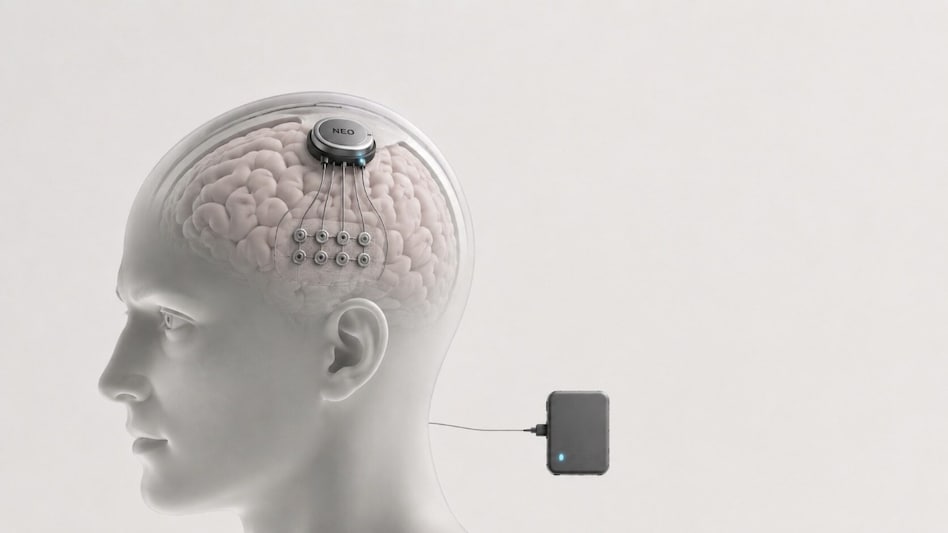
 China has approved NEO, a brain-computer interface for use beyond clinical trials in patients with paralysis caused by spinal cord injuries. (Image created using AI by Divya Bhati)
China has leaped ahead in the global race for neurotechnology, securing the world’s first commercial approval for an invasive brain-computer interface (BCI). The device, named NEO, beat Elon Musk’s Neuralink to the market after receiving the green light from Chinese regulators for medical use.
Developed by Tsinghua University researchers and Shanghai-based Neuracle Medical Technology, NEO is designed to restore hand movements and device control for patients living with paralysis and spinal cord injuries.

 CNG, hybrids and EVs reshape India's car market: What August sales reveal
 Those who pushed India into ‘Fragile Five’ find these figures difficult to digest: PM Modi on 7.8% GDP growth
  New Maruti Suzuki Baleno launched at Rs 6.09 lakh, gets Level 2 ADAS and ventilated seats
 Tata Technologies: Former CEO Patrick McGoldrick sells shares worth nearly Rs 165 crore
 Tata-owned JLR faces financial pressure: Plans 4,000 UK job cuts as sales fall, US tariffs squeeze margins
 Home Loans & Insurance: How Couples Can Structure Them For Tax Efficiency
 Money & Marriage: How Couples Can Divide Household Expenses, Track Spending And Stay On Budget
 Parag Parikh Flexi Cap Fund Underperformance: Is Fund Size Becoming A Major Challenge For Investors?
 Midcap, Smallcap Funds: Strong Profit Growth Could Keep Investor Flows Robust, But Valuations Matter
 Travel Insurance Guide: Where To Buy, How Much Cover You Need & When To Get It
 Tata Technologies: Former CEO Patrick McGoldrick sells shares worth nearly Rs 165 crore
 Tata Power stock: Choice Broking expects recovery, assigns two price targets
  IPO rush next week: 11 issues eye to raise Rs 7,055 crore; 6 IPOs to open on same day, check details
 600% dividend stock: Check dividend per share, record date, payment date and other key details
 56% rally in TBZ stock: Upper circuit led to record high today; here's why
  Maharashtra ‘Dahi Handi’ tragedy: 2 dead, 130 Govindas injured during celebrations
 Japan’s F-2A fighters arrive in India as Veer Guardian 2026 air-combat exercise begins in JodhpurThose who pushed India into ‘Fragile Five’ find these figures difficult to digest: PM Modi on 7.8% GDP growth CNG, hybrids and EVs reshape India's car market: What August sales reveal
 US strikes 3 Iranian oil tankers after attacks on Navy warships; Tehran accuses Washington












