


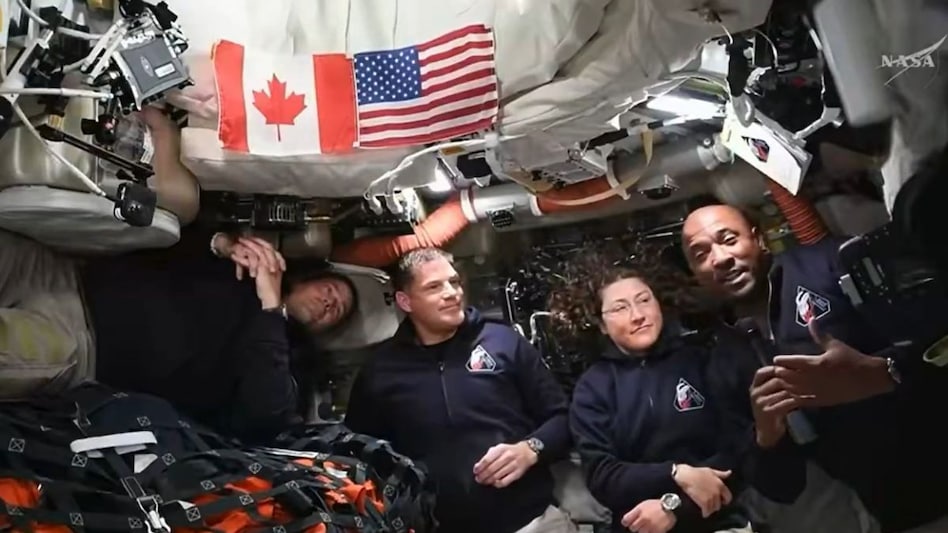
 Mission schedules typically allow about eight hours of sleep each day, though adjusting to the unusual environment can make rest more challenging.
 Sleeping in space is nothing like drifting off in a bed on Earth. For the astronauts aboard Artemis II, rest comes in unusual positions — sometimes even hanging upside down “like a bat.”
The four-member crew — Reid Wiseman, Victor Glover, Christina Koch, and Jeremy Hansen — are traveling around the Moon aboard Orion spacecraft. While the mission marks a major milestone in human space exploration, daily life inside the capsule requires plenty of creativity, especially when it comes to sleep.

 NSE IPO: India's largest exchange gets 5.68x subscription on Day 3; all categories fully booked
 Indian Oil, HPCL, BPCL shares rise as brent crude prices fall for fourth day
  Bank strike next week: Five-day disruption may hit your salary credits
 Tata Sons power struggle: Who will pay for the next legal battle?
 Semiconductor stocks: Centrum's Nilesh Jain prefers CG Power, Syrma SGS; cautious on Kaynes, Dixon
 Top Legal Eagles Flock To Tata Sons & Tata Trusts As Boardroom Clash Heads To Court
 Over Next Three Years Company Expects To Invest ₹15,000 Cr For Deepwater Exploration
 Tata Sons Listing Row: Shapoor Mistry Backs IPO As Noel Tata Pushes ₹25,000-Crore Plan
 Takeda, Dr. Reddy’spartner To Bring QDENGA Dengue Vaccine To India; Launch Expected In H1 2027
 Would You Really Upgrade Your iPhone Just For THIS? | The iPhone 18 Pro Debate
 Dr. Reddy’s, Lupin shares among buzzing stocks as pharma sector back in focus
  3 Warren Buffett quotes for Indian stock market investors today
 Sensex jumps 564 points, Nifty tops 23,400; will this upmove sustain?
 Warren Buffett's message to shareholders: Full text of the farewell letter
  Hero MotoCorp, Delhivery shares set for a rebound: Market expert
  Buying a phone under ₹1 lakh for reels and YouTube? These five models offer the strongest video specificationsTop Legal Eagles Flock To Tata Sons & Tata Trusts As Boardroom Clash Heads To CourtOver Next Three Years Company Expects To Invest ₹15,000 Cr For Deepwater Exploration
 Noel Tata vs Chandrasekaran: How Tata Sons’ boardroom battle turned into a public fight
 Have an Airtel postpaid connection? You may get Apple TV and iCloud+ subscription at no extra cost; Check eligibility












