












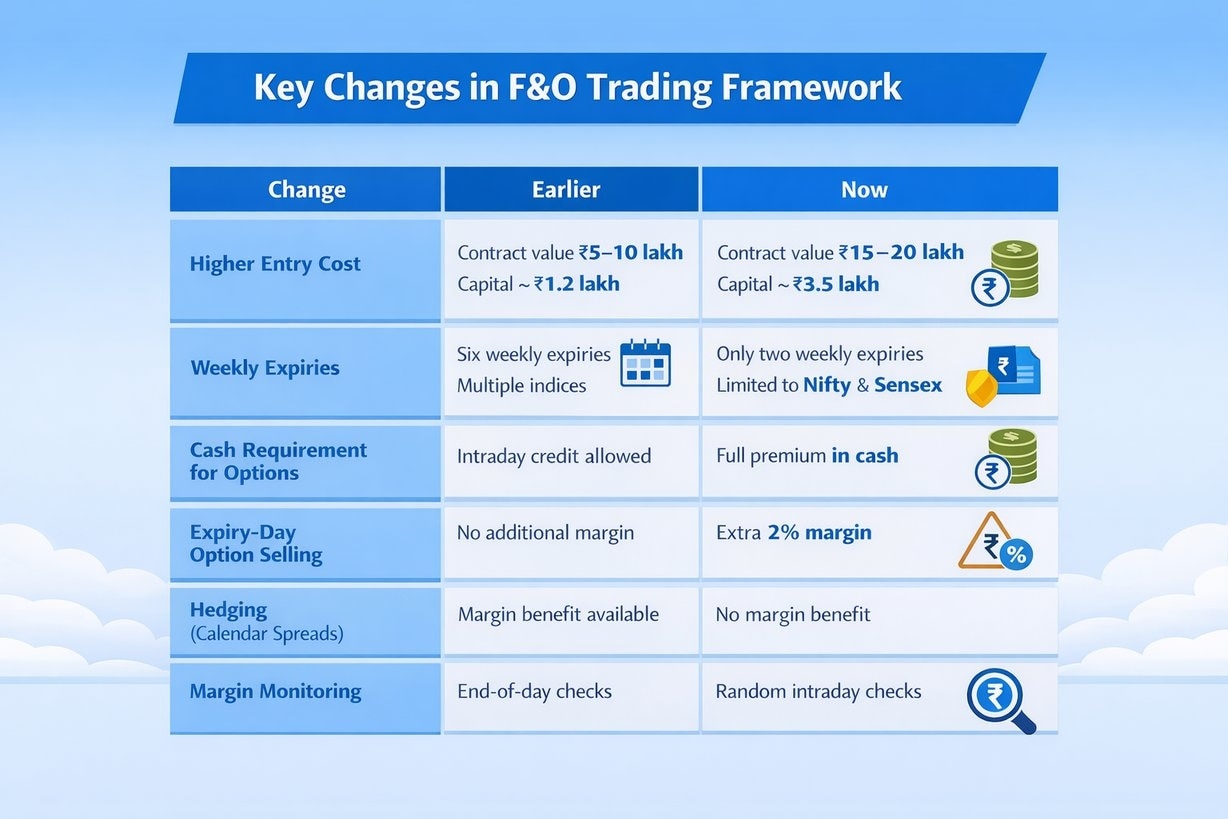



 One of the most significant shifts has been the sharp rise in entry costs.
Small retail traders are increasingly feeling the pressure in India’s futures and options (F&O) market as higher costs, stricter margin norms and reduced trading flexibility reshape the derivatives landscape. The impact is being felt even as the Securities and Exchange Board of India (SEBI) has ruled out any immediate regulatory changes in the equity derivatives segment.
SEBI Chairman Tuhin Kanta Pandey said last week that the regulator will continue with the existing framework, including the current weekly expiry structure. His remarks came after the Union Budget sought to rein in excessive speculative activity through higher transaction taxes. “At this point, we are not contemplating any measures, and the framework that has been put in place will continue,” Pandey said, clarifying that there would be no fresh curbs on futures and options trading and no near-term changes to weekly expiries.

 Aadhaar authentication mandatory for subsidised LPG refills from October 1: Check rules
 Japan’s semiconductor push in India: Why Japanese companies are betting on materials, equipment and technology
  Tata Steel seeks fresh UK government funding as Port Talbot project faces delays
 How big is Apple Pay? US payment giant to enter India as UPI dominates digital payments
 Delhi airport gets its third runway operational; optimise aircraft movement
 CEA On India’s 7.8% Growth, Rural Incomes And Government’s Job Creation Push
  Gold Price Outlook: Why Dollar Weakness Could Keep Gold And Silver Prices Attractive Ahead
 Gold vs Silver Investment Strategy: Is This The Right Time To Buy For Long-Term Returns?
 Corporate Vs Personal Health Insurance: Which Is Better On A Budget?
 Gold Price Outlook: Why Gold Could Rise Despite Global Interest Rate Hikes | Silver Market Update
 Jindal Supreme, SS Retail, Hero Motors IPOs subscribed up to 181 times on final day; details here
 Sensex, Nifty post sixth weekly loss; TCS, Titan among top laggards, slip up to 4%
 How AI collapse could benefit Indian equity market; Jefferies' Christopher Wood explains
  Banks are no more secular growth story, prefer NBFCs: Chris Wood
 Jefferies' Christopher Wood sees gold at $10,000 'sooner or later'; likes India's small, midcaps
 Air India AI171 crash: Pilots seek detailed probe into Boeing 787 electrical systems
 Aastha Spintex advances 1.35 MW solar project at Falcon Yarns facility
 Riyadh airport smoke: Explosions reported after Saudi Arabia issues aerial threat alert
 Who is Deepanshu Shokeen? Meet the independent candidate who won DUSU Vice-President postAadhaar authentication mandatory for subsidised LPG refills from October 1: Check rules


