


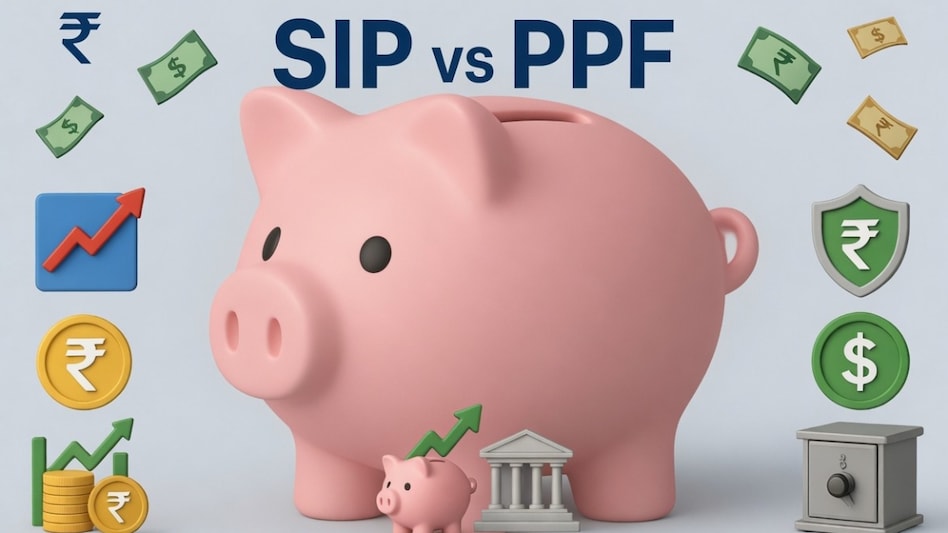
 SIP vs PPF: The mechanics of allocation are more nuanced than simple rules
The debate between SIPs and PPF has persisted in investor conversations for years, often framed as a binary choice. Yet, practitioners argue that the comparison itself reflects a deeper misunderstanding of how portfolios are constructed.
“It’s fundamentally flawed since they represent two distinct asset classes…SIP and PPF are wrappers around very different risk profiles,” says Srinivas Bolisetti, CFP, Founder, Wealthify.me. The distinction is structural. SIPs provide exposure to market-linked growth, while PPF offers capital protection, tax efficiency, and enforced discipline.

 BRICS must remove top 10 trade barriers, secure sea routes for seamless trade, says PM Modi
  RBI may hike repo rate 25 bps in October, another hike likely in December: SBI Research
 NSE's selling shareholders set to rake in bonanza amid a weak broader market
 Modi, Putin review India-Russia ties across trade, defence, energy and space
 Solar scale must now give way to resilient grids, storage and finance: Prahlad Joshi
 Market Commentary: Arun Kejriwal On Nifty, Stocks & The Next Big Move
 Gadkari: FASTag Is More Than Toll Payment, It’s Digital Mobility Infrastructure
 Russia Eyes Bigger India Investments: Sberbank CEO Herman Gref On The Next 2-3 Years
 India’s Cybersecurity Is Still In The Awareness Phase?
 Modi-Putin Meet: Trade Deficit, Defence And The Next Phase Of India-Russia Ties In Focus
 NSE IPO: Haven't applied for shares to trade on own platform, says MD and CEO ChauhanNSE's selling shareholders set to rake in bonanza amid a weak broader market
 Milky Mist shares hit 5% upper circuit; here's what analysts say
 Sensex, Nifty settle lower but recover sharply from intraday lows; here's why
 Quantum AMC bets on cash logistics revival as consolidation boosts pricing power
 Property prices rise across 15 Indian cities in H1 2026: Faridabad, Delhi lead with 18% growth
 BRICS Summit 2026: 5 facts you probably didn't know about the powerful bloc - check here
 UNT names new AI college after Anuradha and Vikas Sinha following ₹191 crore donation
 BRICS Summit 2026: From sattu to handicrafts; Media goodie bag showcasing India’s cultural diversity
 Modi-Putin 'car diplomacy': Aurus ride at BRICS 2026 continues a years-long tradition












