












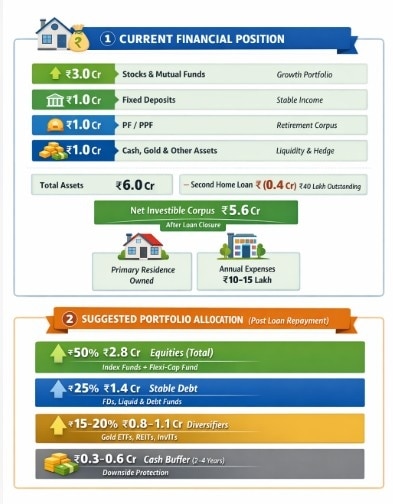



 A sensible approach is to allocate about 50% to equities, 25% to stable debt, and the remainder to diversifying assets for balance and resilience.
Hi, I am a 45-year-old single professional working in IT and planning to exit full-time work in the next 1–2 years. I want to ensure my savings last long and are structured for financial independence. My current assets include ₹3 crore in stocks and mutual funds, ₹1 crore in fixed deposits, ₹1 crore in PF/PPF, and about ₹1 crore in cash, gold and other assets. I own my primary home and have a ₹40 lakh loan on a second home nearing completion. My annual expenses are ₹10–15 lakh. How should I optimally balance the ₹3 crore equity portfolio and ₹1 crore in FDs for long-term sustainability and low stress?
Advice by Siddharth Tamboli, Qualified Financial Advisor at 1 Finance

 New Maruti Suzuki Baleno launched at Rs 6.09 lakh, gets Level 2 ADAS and ventilated seats
 Tata Technologies: Former CEO Patrick McGoldrick sells shares worth nearly Rs 165 crore
 Tata-owned JLR faces financial pressure: Plans 4,000 UK job cuts as sales fall, US tariffs squeeze margins
 Subhash Chandra booked by CBI in alleged ₹1,322 crore LIC Housing Finance fraud case: Report
 Crude oil could crash to $40 after Iran war ends, says US Treasury Secretary Scott Bessent
 Home Loans & Insurance: How Couples Can Structure Them For Tax Efficiency
 Money & Marriage: How Couples Can Divide Household Expenses, Track Spending And Stay On Budget
 Parag Parikh Flexi Cap Fund Underperformance: Is Fund Size Becoming A Major Challenge For Investors?
 Midcap, Smallcap Funds: Strong Profit Growth Could Keep Investor Flows Robust, But Valuations Matter
 Travel Insurance Guide: Where To Buy, How Much Cover You Need & When To Get It
 Tata Technologies: Former CEO Patrick McGoldrick sells shares worth nearly Rs 165 crore
 Tata Power stock: Choice Broking expects recovery, assigns two price targets
  IPO rush next week: 11 issues eye to raise Rs 7,055 crore; 6 IPOs to open on same day, check details
 600% dividend stock: Check dividend per share, record date, payment date and other key details
 56% rally in TBZ stock: Upper circuit led to record high today; here's why
  US strikes 3 Iranian oil tankers after attacks on Navy warships; Tehran accuses Washington
 PM Modi rides Delhi metro, interacts with passengers ahead of SRCC centenary eventNew Maruti Suzuki Baleno launched at Rs 6.09 lakh, gets Level 2 ADAS and ventilated seats
 $60 billion in 10 days: How banks pulled off a last-minute FCNR(B) deposit rushTata Technologies: Former CEO Patrick McGoldrick sells shares worth nearly Rs 165 crore


