


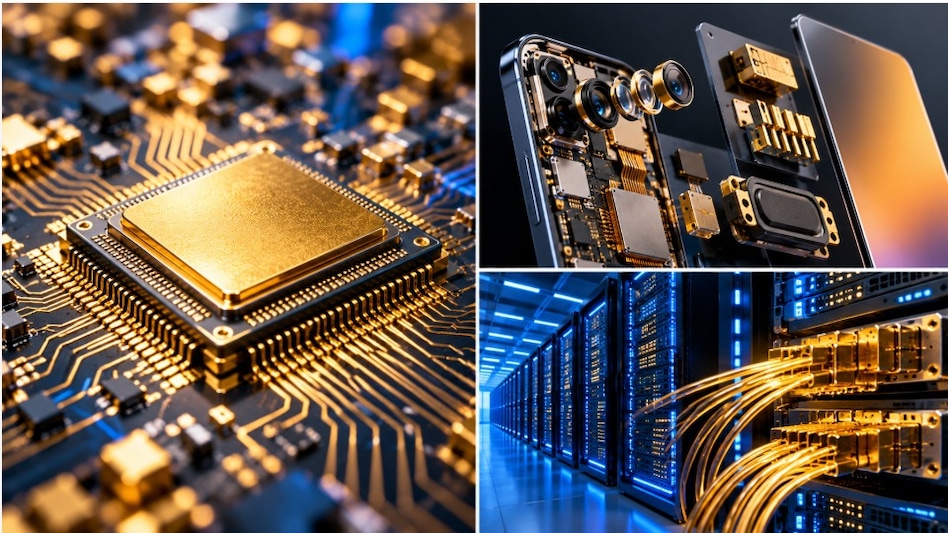
 According to Goldman Sachs, annual technology demand for gold was 323 tonnes in 2025, virtually unchanged from 2024. The electronics sector accounts for around 80% of gold used in industrial applications.
Gold is not just a jewellery and investment asset; it is also a critical material in modern electronics. As artificial intelligence drives demand for increasingly powerful chips and data-centre infrastructure, the precious metal continues to play a role in the high-end technology ecosystem, according to Goldman Sachs’ analysis.
Gold has a combination of properties that makes it useful in electronic applications. It is an excellent conductor of electricity and highly resistant to corrosion and oxidation. It can also be formed into extremely thin wires, films and coatings without losing its performance characteristics.

 GLP-1 drugs are under fresh scrutiny over rare condition; here's what's happening
 IRDAI’s insurance distribution reforms: What changes for insurers, brokers, customers
 SBI announces ATM charge waiver during bank strike; UPI, NEFT, RTGS services to continue
 This is not a tax, cess, surcharge...: FM Sitharaman explains what the new UPI MDR really means
 BT Big Story: The price tag of UPI: Will small shops go back to cash?
 How Is Alexa+ Different? Will It have Ads Even If You Pay? Exclusive Chat
 Demand Robust Across Segments | Production To Ramp Up, Exports To Expand: Vivek Srivatsa
 GST Council To Meet On October 7: Invoice Matching, ITC & UPI MDR Tax In Focus
 Tata Chip Plans Stay On Track Despite Boardroom Rift; Dholera Fab Investment Unaffected
 GLP-1 Drugs Face Eye Safety Concerns: Will Fresh Scrutiny Impact India's Growing Market?
 IPO rush: Four IPOs conclude today; check subscription status, other details of issues still open
 Meesho shares slip 7% as Nomura assigns 'reduce' call; here's what the brokerage says
  Sensex, Nifty extend losing streak to seventh week, longest since 2020: What's next?
 Suzlon in bear grip: Oversold signals emerge near 52-week low for the stock
  EIL shares jump 7% to hit record high; stock up nearly 62% in six months: What's driving the rise?
 Big relief for Delhi commuters! 12 junctions, 20% diversion and 6 Metro upgrades
 iPhone 18 Pro Max’s 2TB storage comes with a catch: It may have slower transfer speed
 India jumps 9 spots to rank 31st in WEF travel & tourism index 2026; Japan tops list
 Historic! Home loans in India are now cheaper than the US -- What NRIs must know
 European gas prices may stay elevated this winter as LNG disruptions persist: Goldman Sachs












