


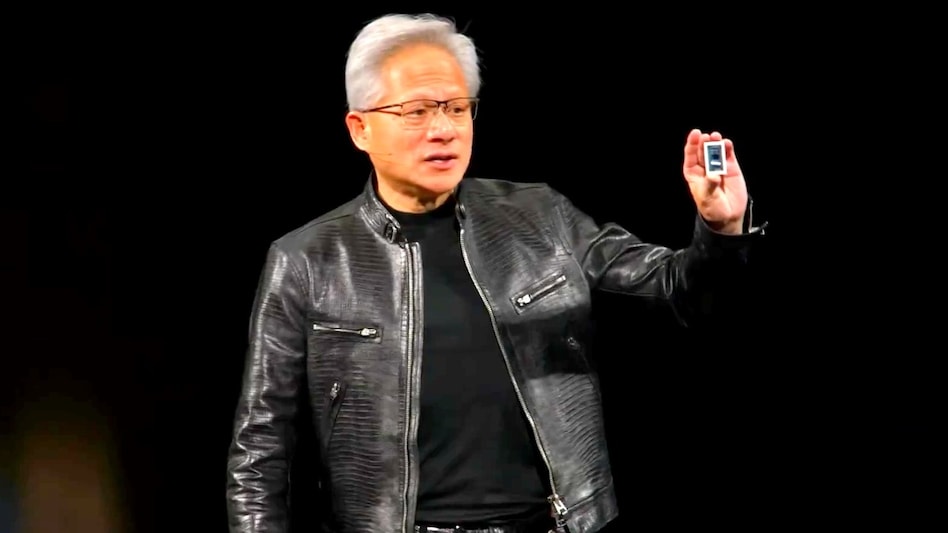
 Nvidia co-founder and CEO Jensen Huang faces scrutiny over alleged Chinese intelligence links.
Jensen Huang is one of the most influential executives in the global technology industry. As the co-founder and CEO of Nvidia, he has transformed a graphics chip company into a critical supplier of processors powering the artificial intelligence boom. Its chips are used by some of the world's biggest technology companies to train and run advanced AI models.
However, the 63-year-old billionaire now faces an unusual controversy involving allegations of Chinese intelligence activity, a businesswoman linked to one of Nvidia's major customers, and questions about US national security. The matter has also taken a personal turn after Huang admitted in a message to employees that he was unfaithful to his wife.

 'I am deeply sorry': NVIDIA CEO Jensen Huang admits infidelity, seeks to rebuild trust; Read his full memo here
 NSE share price targets: Two more Buy ratings, 12th since listing day; what MOFSL, JM say
 Data Patterns: Why defence stock is up 8% today despite 56% fall in Q2 net profit
 BT BIG STORY: After the corner office, what happens to women leaders when they retire?
 ‘All it took were a few photos with Asian faces’: Beijing distances itself from Jensen Huang’s ‘Chinese spy’ narrative
 “50 Crore Lifted Out Of Poverty”: PM Modi Cites World Bank Report
 Banking Stocks Set For Comeback In Samvat 2083? Avinash Gorakshakar Shares His Top Picks
 FIIs May Return To India: Which Sectors Could Attract Fresh Foreign Investor Buying Next?
 Samvat 2083 Outlook | NSE Chief On FPIs, India's Growth, AI, Oil & Investor Protection
 “First Diwali Without Naxalism”: PM Modi Celebrates With Security Personnel In Bastar
 NSE share price targets: Two more Buy ratings, 12th since listing day; what MOFSL, JM sayData Patterns: Why defence stock is up 8% today despite 56% fall in Q2 net profit
 NSE shares: Five reasons to buy this stock; check fresh price targets, upside potential & more
 JK Lakshmi Cement, Birla Corp, HeidelbergCement: Jefferies lowers target prices after Q2 results
 Divis Laboratories, Gland Pharma, Sai Life Sciences shares hit 52-week highs; here's why
 One Delhi, two AQI numbers. Why government and private platforms show such different pollution readings
 Why Bvlgari sees India as a long-term growth engine for its watchmaking business“50 Crore Lifted Out Of Poverty”: PM Modi Cites World Bank Report
 NSE Unveils New Headquarters Design! Mumbai's Skyline Set For An Iconic Addition
 Ramayana box office propels Ranbir Kapoor to this elite club; joins Shah Rukh Khan, Ranveer Singh, Ajay Devgn












