


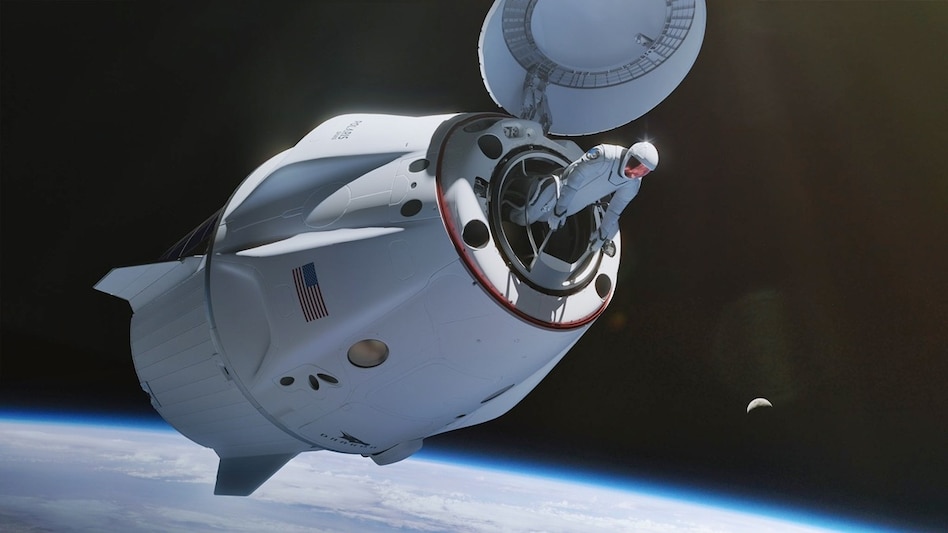
 The spacewalk involved Jared Isaacman and SpaceX engineer Sarah Gillis exiting the Crew Dragon capsule. (Photo: SpaceX)
SpaceX’s Polaris Dawn mission, which concluded with a successful splashdown in the Gulf of Mexico on September 15, 2024, has gone down in history for multiple groundbreaking achievements. The mission, led by billionaire Jared Isaacman, marks significant advancements in commercial space exploration, including the first-ever private spacewalk and the highest orbit a crewed spacecraft has reached since the Apollo era.
One of the mission’s key milestones was the first private spacewalk (also known as an Extravehicular Activity or EVA) performed by civilians. On September 12, Isaacman and Sarah Gillis, a SpaceX engineer and mission specialist, ventured outside the SpaceX Crew Dragon capsule, tethered for safety. The EVA tested SpaceX’s newly developed spacesuits, designed for future commercial space missions. This spacewalk demonstrated the viability of private, non-government-led EVAs and showcased SpaceX’s advanced technology in this field.

 Why Zerodha Fund House is bullish on life cycle funds
 Ex-IMF economist Surjit Bhalla backs 7.8% GDP number: 'No evidence of exaggeration'
 Air India sacks Phuket-Delhi pilot after psychoactive substance test comes back positive
 BT Explainer: Why Volkswagen Group plans to axe 12% of its workforce in India
 NSE IPO update: SEBI approval likely next week; Check expected dates of price band and listing
 #DemocraticNewsroom | '800 Million People On Subsidies': Siddharth Zarabi On India’s K-Shaped Economy
 #DemocraticNewsroom | India Inflation Data: Are Official Numbers Hiding The Real Economic Picture?
 GDP Real Or Fudged? Siddharth Zarabi Defends India’s Growth Numbers With Data
 Financial Planning For Couples: How To Build A Strong Financial Plan, Budget & Wealth Together
 “High Sugar, Salt, Fat”: FSSAI CEO On Proposed Red Warning Labels On Food Packs
 56% rally in TBZ stock: Upper circuit led to record high today; here's why
  Sensex, Nifty snap four sessions of losing streak; RIL, Tata Steel, Bajaj Finance boost sentiment
  Physicswallah shares jump 9% as Motilal Oswal sees 66% upside
 KEC International: At 52-week low, Geojit expects more downside in infra stockNSE IPO update: SEBI approval likely next week; Check expected dates of price band and listing
 PM Modi to join Shri Ram College of Commerce centenary celebrations on Teachers’ Day
 Dreaming of the cockpit? Here’s what it really takes to become a pilot in India
 Blue Aadhaar explained: What changes when your child turns 5
 54 years later: ‘Pakeezah’ returns in 4K after a restoration battle
 Regional music goes global: Spotify report highlights surge in Telugu, Haryanvi, Tamil and more












