


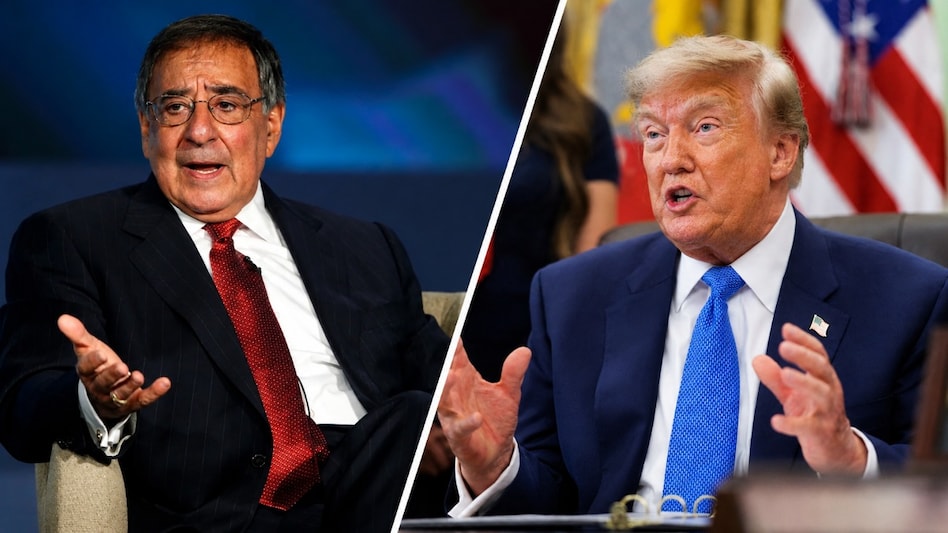
 Former CIA chief Leon Panetta says US should negotiate directly with Iran
Former US Defence Secretary Leon Panetta has criticised Washington for relying on intermediaries such as Pakistan and Egypt in its efforts to negotiate with Iran. He called the approach "nuts" and said the US should have dealt directly with Tehran.
"My god, to have Pakistan or Egypt or others determining how we were going to try to resolve some of these issues was nuts," Panetta said in a conversation with Seth G Jones, the president of the Defense and Security Department at the Center for Strategic and International Studies.

 NTPC and Adani apply under Rs 37,500 crore coal gasification scheme
 Why Titan Company stock is top jewellery pick ahead of festive season
  Chandigarh suspends Uber, Rapido licences for 6 months for failing to comply with rules
 Fake PMO ID, armed bodyguard: Two detained at Mumbai venue ahead of PM Modi event
 ‘Must stay the course during turbulence’: Singapore defends investment in Air India
 “Files Used To Get Stuck”: PM Modi Takes Dig At Delays, Hails 2,800 Km Freight Corridor
 Indegene’s Growth Story: Global Expansion, AI & The Future Of Healthcare Tech
 Ambareesh Baliga Turns Bullish On Specialty Chemicals, Bets On Archean Chemicals & Vinati Organics
 Gold Loan Rise Faces Risk? Ambareesh Baliga Flags Correction Threat For NBFCs
 Hindustan Copper Set To Rise 10-12% From Current Market Price
 Nifty 50 returns have been flat for 2 years. What should investors expect over the next 12 months? DSP mutual fund’s Sahil Kapoor explains
 Hindustan Copper shares jump nearly 5%; what's next on tech charts?Why Titan Company stock is top jewellery pick ahead of festive season
  Archean Chemical, Vinati Organics: Specialty chemical stocks to buy during correction
 Sensex slumps 555 points; Nifty briefly slips below 23,400 amid CAS volatility
 The alleged iPhone 18 Pro Max video looks convincing—but demo units cannot confirm Apple’s final design
 PM Modi lays foundation stone for Gujarat highway projects; Gadkari highlights faster, safer connectivity
 India’s first bullet-train test coach is ready: What it means for the Surat–Bilimora opening target in 2027
 JioBlackRock Mutual Fund launches Balanced Advantage Fund: What’s new for investorsNifty 50 returns have been flat for 2 years. What should investors expect over the next 12 months? DSP mutual fund’s Sahil Kapoor explains












