












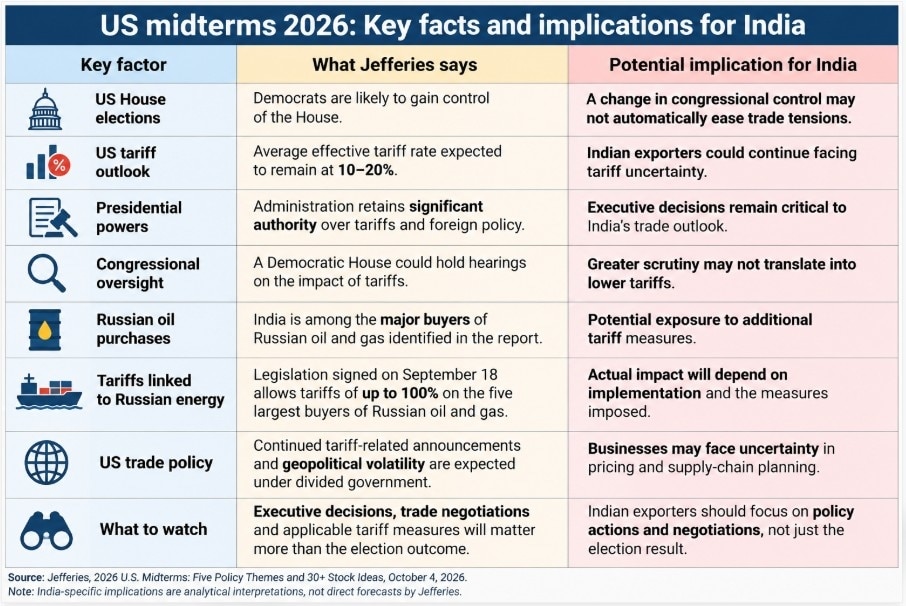



 Jefferies favours a Democratic House win, citing a historical trend in which the president’s party lost House seats in 18 of 20 postwar midterms.
A potential Democratic takeover of the US House of Representatives after the November 2026 midterm elections may not necessarily bring relief to Indian exporters facing tariff uncertainty under President Donald Trump. Even if Democrats gain control of the chamber, the administration is likely to retain significant powers over trade restrictions, foreign policy and tariffs, according to a report by global brokerage Jefferies.
In its October 4 report, 2026 US Midterms: Five Policy Themes and 30+ Stock Ideas, Jefferies expects the average effective US tariff rate to remain within the 10–20% range, even under divided government. The brokerage argues that congressional control is unlikely to translate into a major reversal of Trump's trade agenda because much of the authority to impose tariffs rests with the executive branch.

 BT Weekender: Planning to fly with your pet? You have company
 Russia to supply diesel to US amid fuel crisis; Zelenskyy says deal will prolong Ukraine war
 Delhi traffic advisory for October 10: 30 roads to face diversions amid CJP protest
 'LoP's claims are incorrect': Govt rejects Rahul Gandhi's claim after President Murmu meeting on 'vote chori'
 Gold prices fall 8.5% in September, but ETFs attract $10 billion: What explains the disconnect?
 Silver Investment Outlook: Why Gen Z Should Watch This Metal's Long-Term Growth Potential
 Gold Price Outlook: Is This the Right Time to Invest? Expert Sees Potential for New Highs
 India Slams US PERM Suspension, Says JD Vance’s ‘Indentured Servants’ Remark Is Offensive
 Govt Plans Tighter Rules For Prescription Drug Ads, Pharmacies And Wholesalers In Focus
 Apple May Unveil Touchscreen MacBook, OLED iPad Mini In October: What To Expect
 Market on the back foot, opportunities ahead: where should investors put their money?
 Poonawalla Fincorp Q2 earnings: Net profit zooms 405%, NII at Rs 1,589 crore
  Vedanta, TCS shares to turn ex-dividend; Ola rights issue; 2 stock splits next week
 IPO rush: Rs 50,000 crore worth IPOs to hit Street by Diwali; Jio, Avada to lead fundraise
 Adani Ports, GMR Airports rise up to 5% amid block deal reports; check details 'LoP's claims are incorrect': Govt rejects Rahul Gandhi's claim after President Murmu meeting on 'vote chori'Gold prices fall 8.5% in September, but ETFs attract $10 billion: What explains the disconnect?
 Petrol, diesel prices today (October 10): Check latest rates in Delhi, Mumbai, Chennai, Kolkata & more
 Quote of the Day by Narayana Murthy : 'It is a well-known fact that bringing in technologies in retail sector is good for consumers'Russia to supply diesel to US amid fuel crisis; Zelenskyy says deal will prolong Ukraine war


