

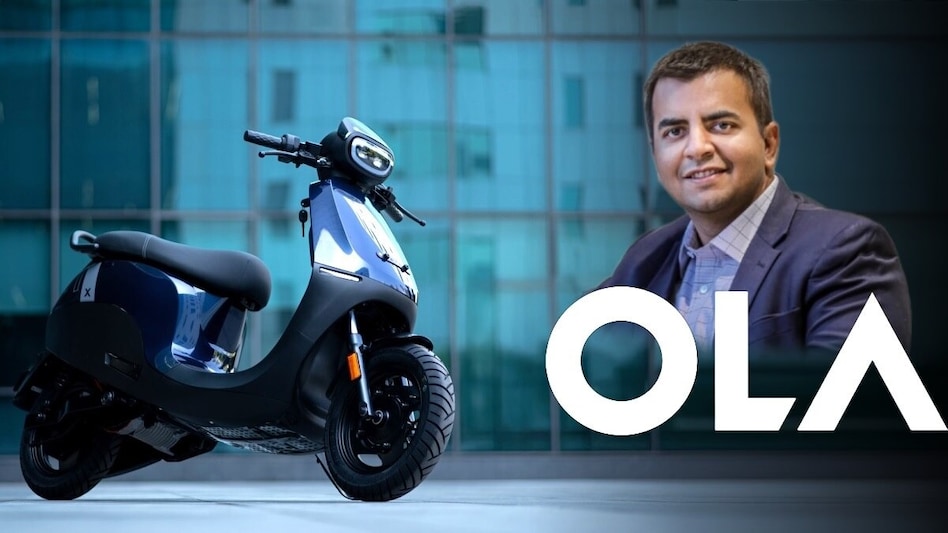
 The Mahashakti launch marks a significant step in Ola's strategy to diversify its in-house cell business beyond electric mobility and tap rising demand for battery storage as India accelerates its clean energy transition.
Bhavish Aggarwal-led Ola Electric Mobility Ltd will launch its utility-scale battery storage platform, Mahashakti, on August 15, marking the company's expansion beyond electric vehicle batteries into India's fast-growing battery energy storage market.
Mahashakti has been designed and manufactured in India to serve applications including renewable energy integration, industrial power, grid infrastructure and data centres, the company said in its shareholders' letter.
The Mahashakti launch marks a significant step in Ola's strategy to diversify its in-house cell business beyond electric mobility and tap rising demand for battery storage as India accelerates its clean energy transition.
 'Vietnam revised GDP by 25% in 2019': Economist explains why last year's estimate changed
 NITI Aayog launches new platforms to scale up electric truck adoption
 'Beginning first round of reductions': JLR confirms 4,000 job cuts over next 2 years
 Honda outsells Hero MotoCorp for second straight month in August
  India goes big on defence: Rs 1.10 lakh crore acquisition plan cleared. What Army, Navy, IAF will get
 Non-Local Electric Bus Software Is A National Security Risk, Warns Eka Mobility Chairman Sudhir Mehta
 Mounjaro Sales Surge 502%: Why GLP-1 Drugs Are Taking Over India’s Pharma Market
 Auto Stocks Outlook: Why Investors Should Be Cautious Despite New Model Launches And Strong Demand
 U.S.-Iran War, Elevated Crude Hit Indian Stocks: Can Nifty Reverse Its Downward Trajectory Now?
 Crude Oil, Gold & Silver: What’s The Next Big Move? | Kunal Shah
 Tata Steel, Hindustan Copper, Lloyds Engineering shares: Expert weighs in; names top pharma, broking bets
 Adani Power secures LoI to acquire GVK Energy; details here
 Two upper circuits for Sterlite Technologies shares as firm discloses FY29 targets
 Sensex falls 383 points, Nifty settles at 23,779; IT, metals among top drags
 APL Apollo Tubes, KDDL, Globus Spirits among 11 stocks to turn ex-dividend tomorrow
 Mercedes-Benz’s new electric bicycle: 100 km range, ₹4.2 lakh price and more
 Nubia launches a phone cooler that can hit -18°C and slash heat during gaming
 Maruti Baleno gets a big reset: new engine, CNG and 34 km mileage
 Axis MF launches Nifty500 Low Volatility 50 Index Fund: Key details, risks and what investors gain
 HUF tax planning: Why choosing the new regime could cost you deductions in 2026-27












