


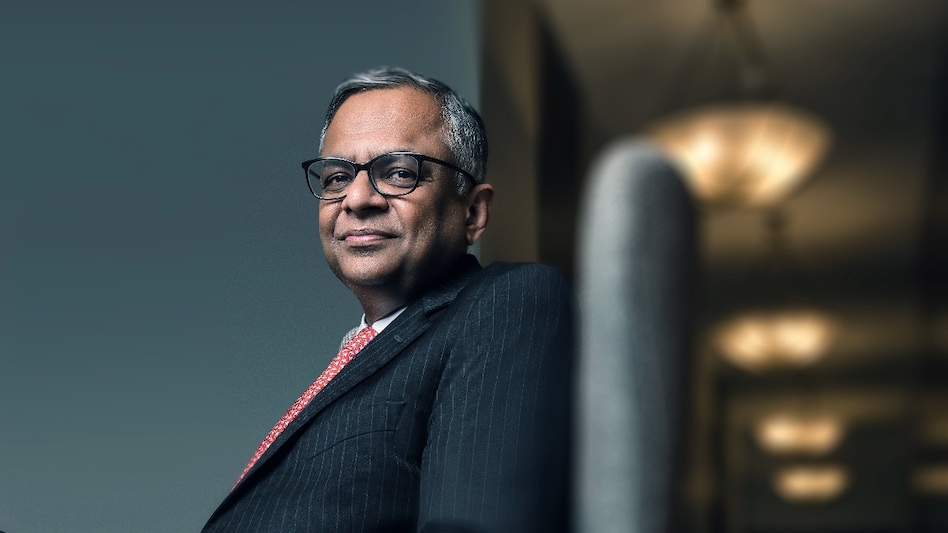
 N Chandrasekaran's comments also offer six clear business and leadership rules on building institutions, managing change and staying disciplined in growth.
As Natarajan Chandrasekaran stepped down as the Chairman of Tata Sons on Wednesday, corporate India is watching the ensuing succession drama at the salt-to-software conglomerate. Fondly known as Chandra, he took the reins of the conglomerate at a particularly fractious time marked by the dramatic exit of Cyrus Mistry following a clash with the late industrialist Ratan Tata over corporate control and governance.
At BT Mindrush 2023, the outgoing Tata Group chairman said that the conglomerate’s next phase will be shaped by artificial intelligence, energy transition, supply chain changes and talent development. His comments also offer six clear business and leadership rules on building institutions, managing change and staying disciplined in growth.

 Tim Cook leaves a trillion-dollar machine. John Ternus must build Apple’s next growth story
 HDFC Bank CEO exit: How share price may react to Sashidhar Jagdishan's decision
 Popular forest trail becomes burial site: Nepal begins mass burials of unidentified victims
  West Asia tensions: Oil prices up 1% following US strike on Iranian launch sites in Hormuz
  Inside Tim Cook’s rise at Apple: The journey from operations to CEO
 FD Or Debt Fund: Which Can Offer Better Returns, Tax Benefits & Liquidity?
 Why Meta Could Be Fined $1.4 Trillion! Instagram-Facebook Could Change Forever
 Gold Price Outlook: Can Festive & Wedding Demand Push Prices Higher In India?
 Gold Price Rally: Why Gold Surged 16% In August; Key Triggers Behind The Comeback
 Gold Vs Silver Vs Sensex Since 2005: Which Investment Delivered Better Returns?
 HDFC Bank shares: Market bets on next MD and CEO; Bharucha, Jimmy Tata, Hitendra DaveHDFC Bank CEO exit: How share price may react to Sashidhar Jagdishan's decision
 Suzlon, BHEL, Waaree Energies: Top stocks to trade — Check key levels, target prices & stop loss
 Nifty, Sensex, Nifty Bank outlook for today: GIFT Nifty down 105 points; key levels to watch
 Top stocks in news: HDFC Bank, RIL, Augmont, M&M, LEAP, Auro Pharma, Cipla, NBCC, Clean Max, Ola
 She inspired him to fly, now they work side by side: The Air India journey of two siblings from ManipurHDFC Bank shares: Market bets on next MD and CEO; Bharucha, Jimmy Tata, Hitendra Dave
 Gold, silver prices today (August 31): Check latest rates in Delhi, Mumbai, Kolkata, other citiesPopular forest trail becomes burial site: Nepal begins mass burials of unidentified victims HDFC Bank CEO exit: How share price may react to Sashidhar Jagdishan's decision












