


 The continued use of cash also means the central bank needs banknotes to last longer.
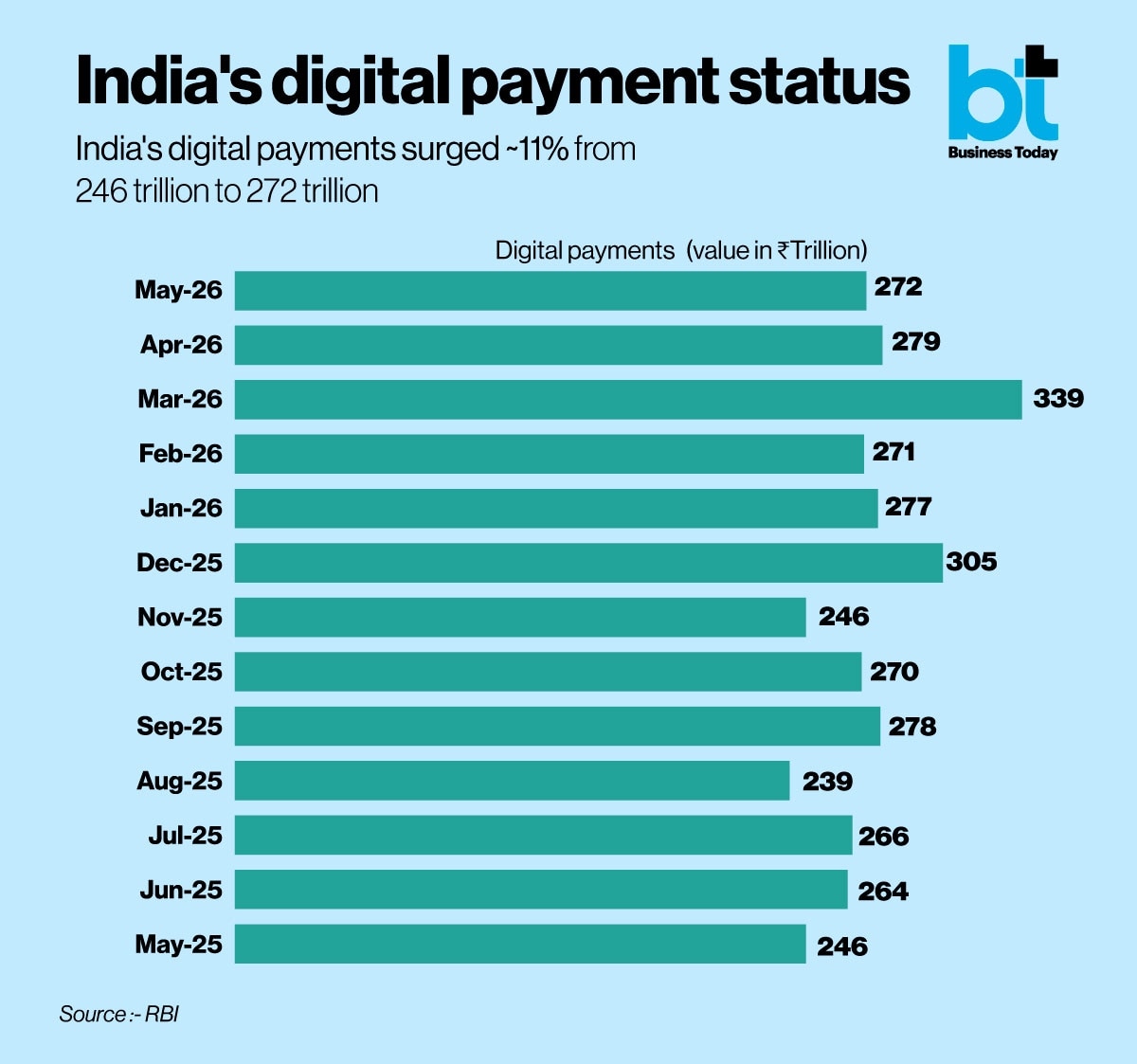
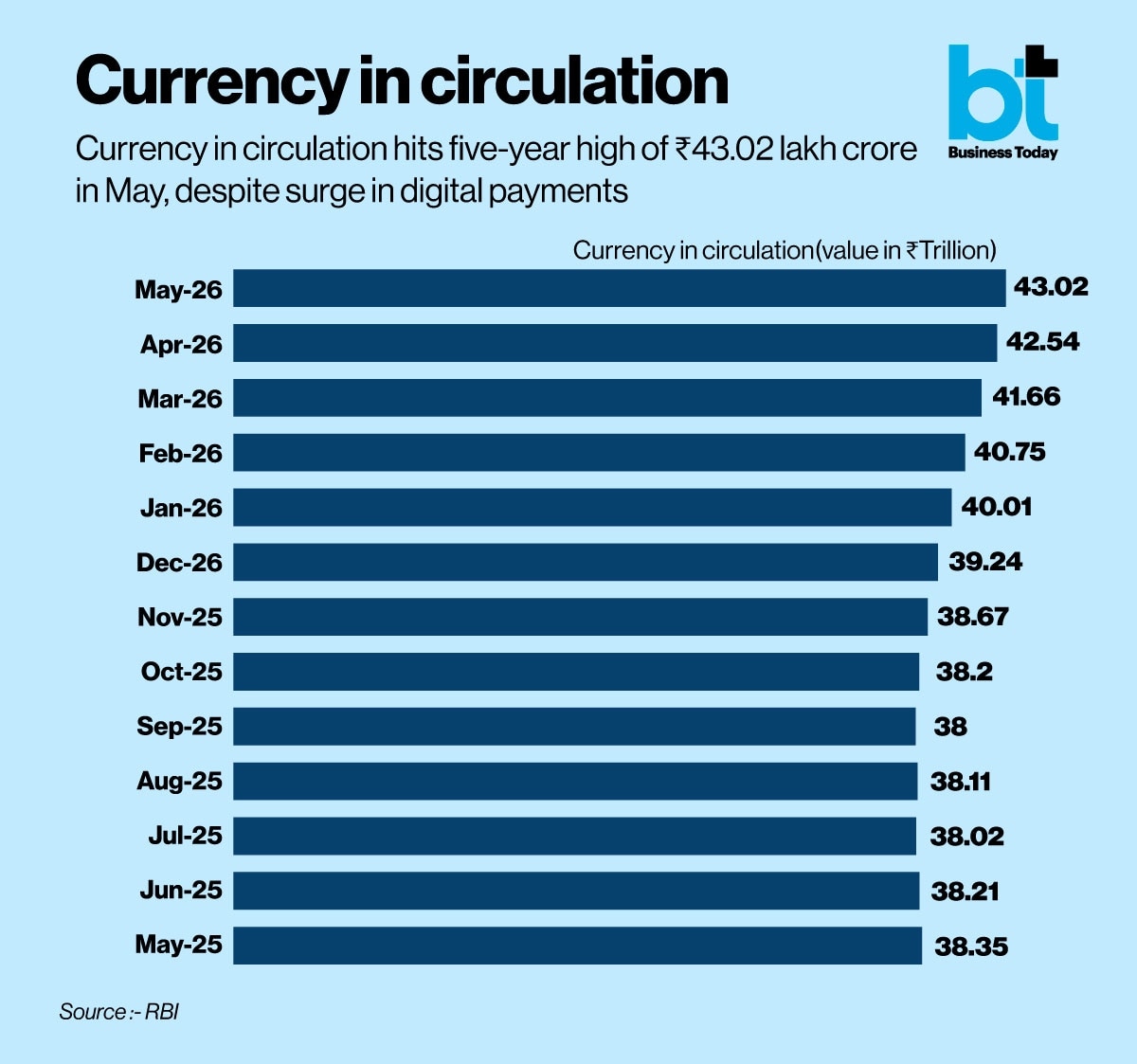
According to Reserve Bank of India (RBI) data, currency in circulation rose to a five-year high of ₹43.02 lakh crore in May 2026, up 12% from ₹38.35 lakh crore a year earlier. The increase came even as digital payments, particularly UPI, became an increasingly important mode of transaction. Meanwhile, digital payments recorded ₹272 lakh crore in value in May 2026, up 11% from ₹246 lakh crore a year earlier.
"That combination makes future demand harder to predict, which complicates our planning for production and distribution capacity," RBI Deputy Governor Shirish Chandra Murmu said.

 Indian Oil, HPCL, BPCL shares rise as brent crude prices fall for fourth day
  Ahead of 3-day bank strike next week, Chief Labour Commissioner calls for meeting
 Tata Sons power struggle: Who will pay for the next legal battle?
 Semiconductor stocks: Centrum's Nilesh Jain prefers CG Power, Syrma SGS; cautious on Kaynes, Dixon
 Will India cut down on Russian crude purchases due to US tariffs? Here’s what we know
 Tata Sons Listing Row: Shapoor Mistry Backs IPO As Noel Tata Pushes ₹25,000-Crore Plan
 Takeda, Dr. Reddy’spartner To Bring QDENGA Dengue Vaccine To India; Launch Expected In H1 2027
 Would You Really Upgrade Your iPhone Just For THIS? | The iPhone 18 Pro Debate
 IPO Rush Drains Secondary Market Liquidity; Ajay Bagga On Primary Market & NSE IPO
 Dr. Reddy's Sees Dengue Vaccine Opportunity As QDENGA Launch Nears
 Sensex jumps 564 points, Nifty tops 23,400; will this upmove sustain?
 Warren Buffett's message to shareholders: Full text of the farewell letter
  Hero MotoCorp, Delhivery shares set for a rebound: Market expert
  Howard Buffett: Key facts about Berkshire Hathaway's new chairman
 Paytm shares: UPI fee changes could aid revenue, margin recovery; what Kranti Bathini saysSensex jumps 564 points, Nifty tops 23,400; will this upmove sustain?Warren Buffett's message to shareholders: Full text of the farewell letter Hero MotoCorp, Delhivery shares set for a rebound: Market expert
  52 cheetahs and counting: Project Cheetah reaches a new milestone after four years
 Pixel 10 gets ₹12,460 cheaper: Here’s the new price and what you get